
Genus · Atractaspididae
Types of snake-eaters
7 species make up the genus Polemon, the snakes commonly called snake-eaters. None are considered dangerous to humans.
About African snake-eaters
African burrowing snakes that specialize in hunting other snakes and limbless reptiles underground.
Polemon is a genus of small to medium African snakes in the family Atractaspididae, the same family that includes the burrowing asps and stiletto snakes. They are commonly called snake-eaters, a name that points directly to their feeding habits. The genus is found across sub-Saharan Africa, with members spread through West, Central, and parts of East Africa.
These snakes are built for a life spent largely underground and in leaf litter. They tend to have smooth, glossy scales, cylindrical bodies, and small heads that are not sharply distinct from the neck, which is a typical pattern among burrowing snakes. Coloration is usually dark and fairly plain, often blackish or brown, sometimes with a pale collar or banding in certain species. Their semi-fossorial design makes them hard to spot, and they are most often encountered in moist forest and savanna habitats where the soil and litter stay damp.
As their common name suggests, Polemon feed heavily on other elongate reptiles, especially other snakes and legless or burrowing lizards. This diet of slender, hard-to-subdue prey is part of why the genus is grouped within Atractaspididae, a family known for rear-positioned venom delivery and specialized feeding on prey encountered in tight underground spaces. Like many family members, they are believed to be egg-laying, though detailed life history information is limited for several of the more obscure species.
On the venom question, honesty matters. Members of Atractaspididae are venomous and rear-fanged, and Polemon should be treated as a potentially venomous, mildly understood group rather than as harmless. Their venom appears adapted to overpowering reptile prey, and they are not considered a major medical threat to people in the way that cobras or vipers are. That is not a license to handle them. The effects of a bite from many of these obscure burrowing snakes are poorly documented, so the safe assumption is to leave any wild snake alone.
If you encounter a Polemon or any snake-eater in the field, observe it from a distance and let it move on. Do not attempt to pick it up, restrain it, or identify it by handling. If a bite occurs from any snake you cannot confidently identify as harmless, treat it as a medical situation, stay calm, keep the bitten area still, and seek care immediately. In the United States contact Poison Control at 1-800-222-1222 or call local emergency services; outside the US use your local emergency number.
Polemon belongs to the Atractaspididae family (Stiletto snakes (burrowing asps)). Burrowing venomous snakes that stab sideways, and cannot be safely held. Small, glossy, uniformly dark, with tiny eyes and a blunt head no wider than the neck. The side-stabbing strike is unique.
Danger: Venomous. Bites cause intense local pain and tissue damage; most are not life-threatening but require medical care. Never attempt to pick one up.
All species (7)
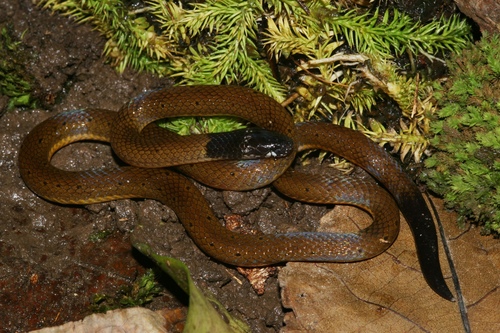 Cameroon Snake-EaterPolemon notatusHarmless
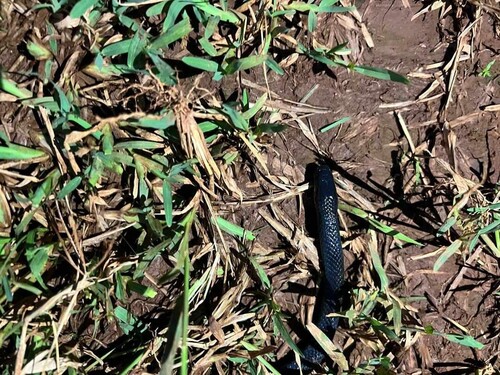 Black Snake-eaterPolemon aterHarmless
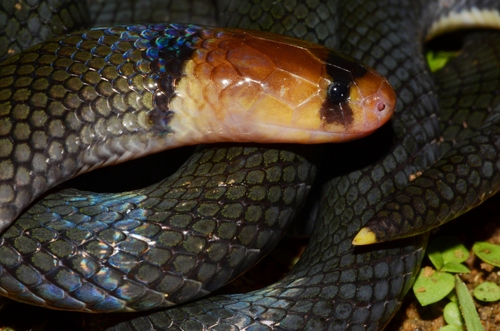 Collared Snake-eaterPolemon collarisHarmless
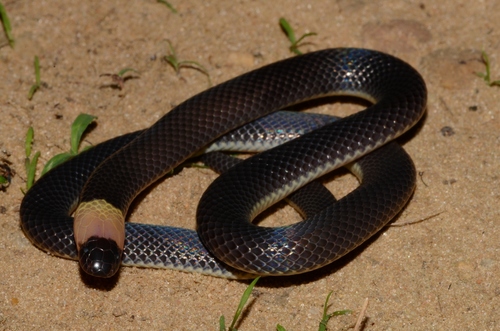 Bocourt's Snake-eaterPolemon bocourtiHarmless
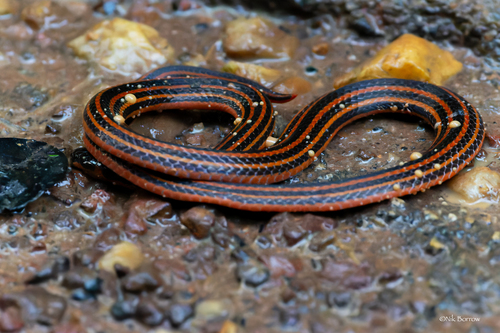 Reinhardt's Snake-eaterPolemon acanthiasHarmless
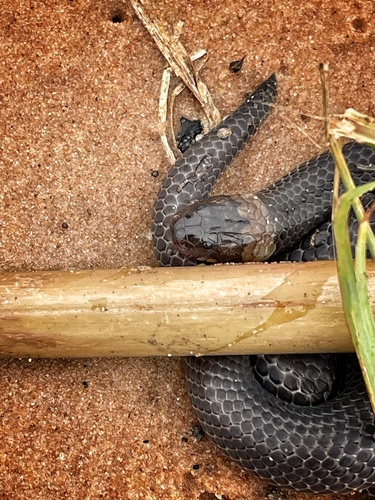 Zaire Snake-eaterPolemon robustusHarmless
- No photoYellow-necked Snake-EaterPolemon fulvicollisHarmless
Keep learning
- What Is a Snake? Anatomy and the BasicsA clear overview of what makes a snake a snake: limbless body plan, anatomy, evolution from lizards, species diversity, and why they are ectothermic.
- How Snakes Move, Hunt, and EatHow snakes move without legs, hunt as ambushers or active foragers, kill by constriction or venom, and swallow prey wider than their head.
- What Do Snakes Eat?All snakes are carnivores. Learn what snakes eat, how diet changes with size and age, how often they feed, and how they hunt and swallow prey.
- Venomous vs Nonvenomous: How to Tell the DifferenceThe folk rules for telling venomous snakes apart, where each one fails, and why location-based identification beats guessing by sight.