
Genus · Colubridae
Types of vine snakes
11 species make up the genus Oxybelis, the snakes commonly called vine snakes. None are considered dangerous to humans.
About American vine snakes
Pencil-thin, sharp-nosed tree snakes of the Americas that hang in the brush like living vines.
Oxybelis is a genus of slender, day-active tree snakes in the family Colubridae, the largest snake family. The common name covers the American or New World vine snakes, including the Green Vine Snake, Cope's Vine Snake, Koehler's Vine Snake, and the Thornscrub Vine Snake. Our database lists 11 species, and study of the group keeps revising species boundaries, with several names having been split out in recent years.
These snakes are found across the warmer parts of the Americas, from the southwestern United States through Mexico and Central America into much of tropical South America. They are arboreal and live in forest, woodland, thornscrub, plantations, and brushy edges, where they move through branches and low vegetation hunting by sight. They are most active during the day.
Members are easy to recognize as a group. The body is extremely long and thin, the head is narrow and tapers to a sharply pointed, elongated snout, and the eye is set forward for good binocular vision. Color varies by species, from a vivid leaf green to brown or gray, often with a paler line along the lower side. The vine-like shape and habit of holding still or swaying gently in the wind make these snakes very hard to pick out against twigs and foliage.
Oxybelis are rear-fanged and mildly venomous. They have enlarged grooved teeth at the back of the upper jaw and a venom suited to subduing small prey. They are not considered dangerous to people and bites are uncommon, but they are not harmless either. A bite from a rear-fanged snake can cause local swelling, pain, or other reactions, and individual sensitivity varies. Do not handle a wild snake to test how it reacts. If a bite occurs, seek medical care; in the US contact Poison Control at 1-800-222-1222, and elsewhere contact local emergency services.
Ecologically they are visual ambush and active hunters that feed mainly on lizards, along with frogs, small birds, and the occasional small mammal, striking quickly and holding prey while the rear fangs work the venom in. Most species lay eggs. Behavior is generally calm and cryptic; when threatened they tend to freeze and rely on camouflage, but they may gape widely to show a dark mouth lining and bluff before they ever attempt to bite.
Oxybelis belongs to the Colubridae family (Colubrids). The largest snake family, and the one most snakes you meet belong to. Typically round pupils, a head only slightly wider than the neck, and no heat-sensing facial pit or rattle. Scales may be smooth and glossy or keeled and matte depending on the species.
Danger: Almost all colubrids are harmless. A small number are rear-fanged with medically significant venom, the boomslang and the twig (vine) snakes of Africa being the dangerous exceptions. Most colubrids will flee or bluff rather than bite.
All species (11)
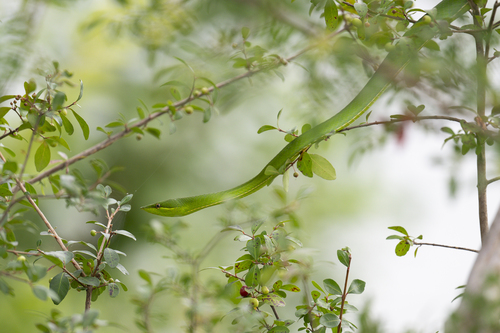 Green Vine SnakeOxybelis fulgidusHarmless
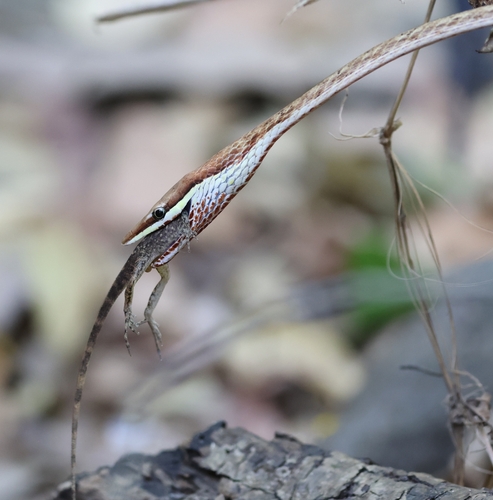 Köhler’s Vine SnakeOxybelis koehleriHarmless
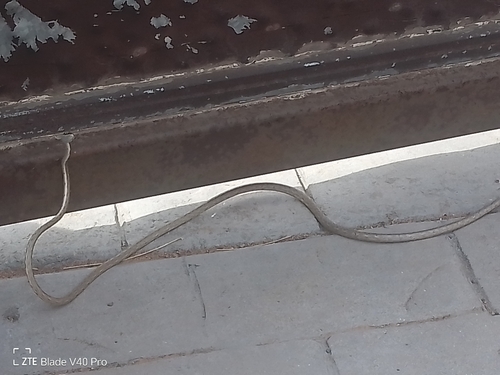 Thornscrub Vine SnakeOxybelis microphthalmusHarmless
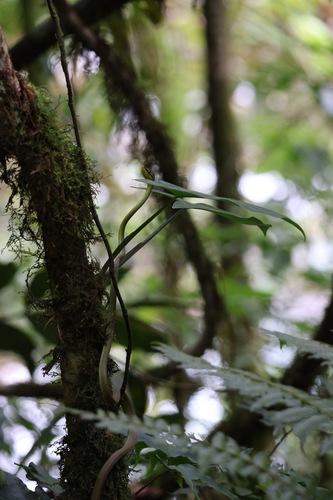 Cope's Vine SnakeOxybelis brevirostrisHarmless
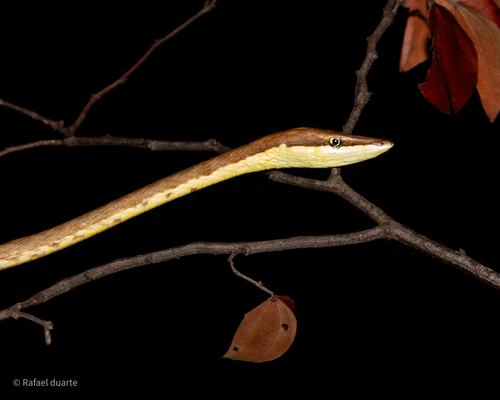 Brown VinesnakeOxybelis aeneusHarmless
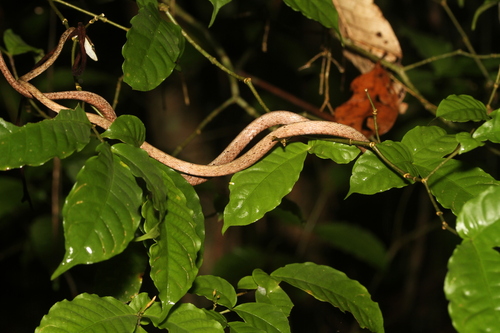 Rutherford's Vine SnakeOxybelis rutherfordiHarmless
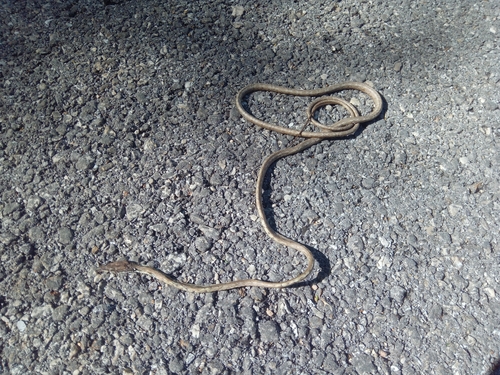 Gulf Coast Vine SnakeOxybelis potosiensisHarmless
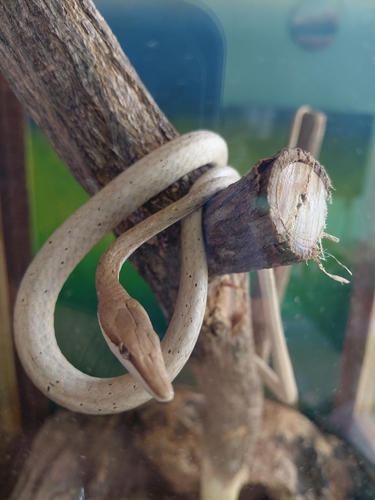 Striped Vine SnakeOxybelis vittatusHarmless
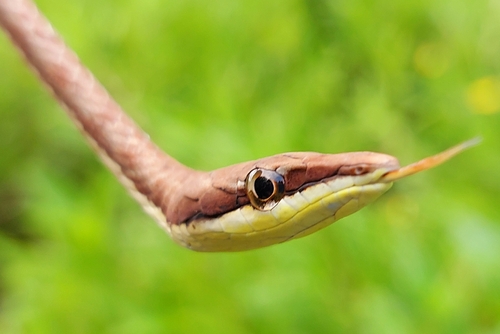 Oxybelis transandinusHarmless
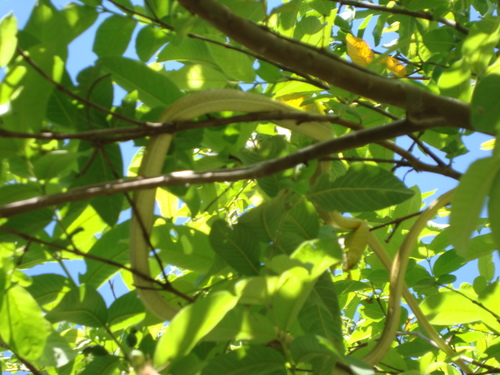 Roatán VinesnakeOxybelis wilsoniHarmless
 Oxybelis inkaterraHarmless
Keep learning
- What Is a Snake? Anatomy and the BasicsA clear overview of what makes a snake a snake: limbless body plan, anatomy, evolution from lizards, species diversity, and why they are ectothermic.
- How Snakes Move, Hunt, and EatHow snakes move without legs, hunt as ambushers or active foragers, kill by constriction or venom, and swallow prey wider than their head.
- What Do Snakes Eat?All snakes are carnivores. Learn what snakes eat, how diet changes with size and age, how often they feed, and how they hunt and swallow prey.
- Venomous vs Nonvenomous: How to Tell the DifferenceThe folk rules for telling venomous snakes apart, where each one fails, and why location-based identification beats guessing by sight.