
Genus · Viperidae
Types of vipers
10+ species make up the genus Atheris, the snakes commonly called vipers. All of them are venomous.
About bush vipers
Atheris are Africa's arboreal vipers, slender tree-dwelling snakes with keeled, shaggy-looking scales and a potent venom.
Atheris is a genus of venomous snakes in the family Viperidae, the true vipers. Like all vipers, its members carry long, hinged front fangs that fold back against the roof of the mouth and swing forward to inject venom. What sets Atheris apart from most vipers is lifestyle: these are the bush vipers, a group built for life in trees and shrubs rather than on the ground. They are found across the forests of sub-Saharan Africa.
The range of the genus centers on the tropical rainforests and forest edges of central, western, and eastern Africa, with species reaching into mountain and highland forests. Typical habitat is dense, humid vegetation, where the snakes coil among branches, vines, and shrubs, often near streams or in the cool understory of rainforest. This arboreal, moisture-loving niche shapes nearly everything about how they look and behave.
In general terms, Atheris are recognizable as small to medium snakes with a broad, triangular head distinct from a narrow neck, large eyes with vertical pupils, and a strongly prehensile tail used to grip branches. Their most famous feature is the scaling: strongly keeled, sometimes upturned scales give many species a rough, bristly, almost leaf-like or feathery texture. Colors vary widely by species and individual, including vivid green, yellow, olive, brown, orange, and slate, which helps them blend into foliage. The database includes members such as the African Bush Viper, the Green Bush Viper, the Great Lakes Bush Viper, and the Usambara Eyelash Viper.
Atheris are venomous, not harmless and not rear-fanged. Their venom is primarily known for effects on blood and tissue, and bites from some species have caused serious systemic problems with no widely available specific antivenom. This is not a snake to handle. Do not pick up, corner, or attempt to relocate a wild venomous snake. If a bite occurs, treat it as a medical emergency: keep the person calm and still, remove rings and tight items, and get to professional medical care immediately. In the US contact Poison Control at 1-800-222-1222 or call local emergency services; elsewhere use your local emergency number.
Ecologically, bush vipers are ambush predators that wait coiled in vegetation and strike at passing prey such as small mammals, frogs, lizards, and occasionally birds, using the prehensile tail as an anchor. They are largely nocturnal and tend to be secretive rather than aggressive, relying on camouflage. Like many vipers in this lineage, Atheris are viviparous, giving birth to live young rather than laying eggs, an adaptation suited to their cool, humid forest environment.
Atheris belongs to the Viperidae family (Vipers & pit vipers). Heavy-bodied venomous snakes with long, hinged, hollow fangs. Broad, triangular head distinct from a narrow neck, heavy body, and (usually) vertical, cat-like pupils. Pit vipers also have a heat-sensing pit; true vipers do not.
Danger: Every viper is venomous, and the family includes some of the world's most medically important snakes. Venom is typically hemotoxic, causing pain, swelling, tissue damage, and bleeding. Treat any viper bite as a medical emergency.
All species (13)
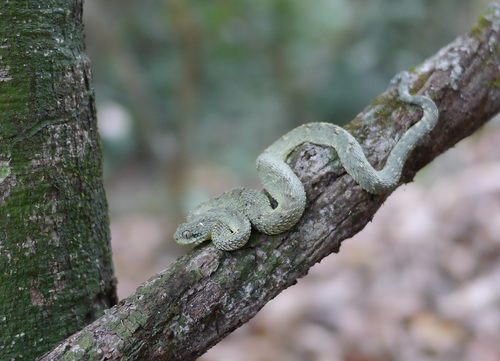 African Bush ViperAtheris squamigeraVenomous
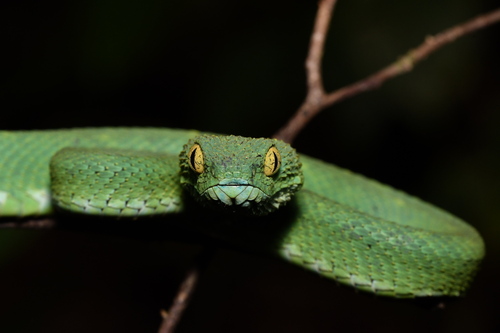 Green Bush ViperAtheris chlorechisVenomous
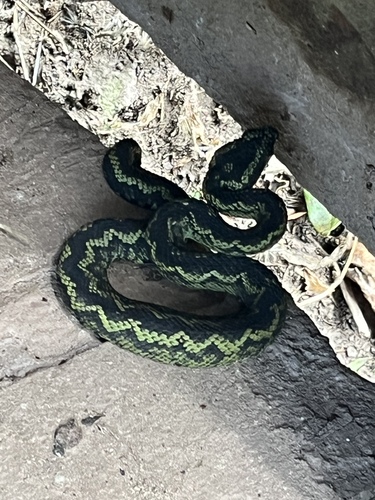 Great Lakes Bush ViperAtheris nitscheiVenomous
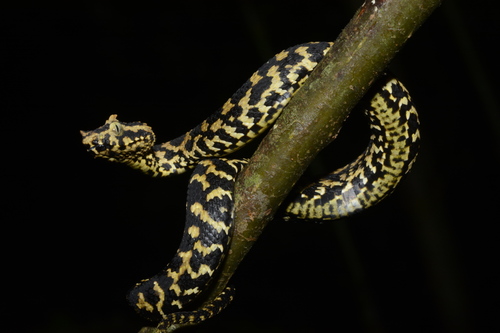 Usambara Eyelash ViperAtheris ceratophoraVenomous
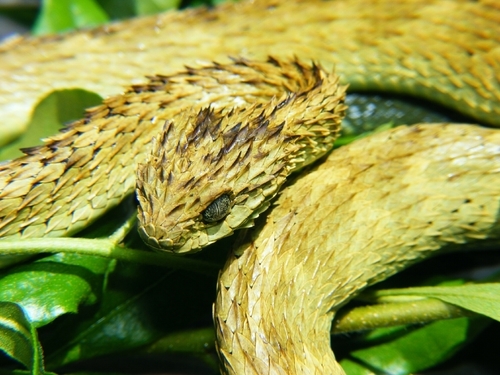 African Hairy Bush ViperAtheris hispidaVenomous
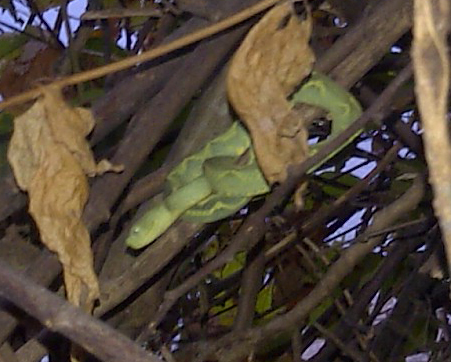 Mt Rungwe bush viperAtheris rungweensisVenomous
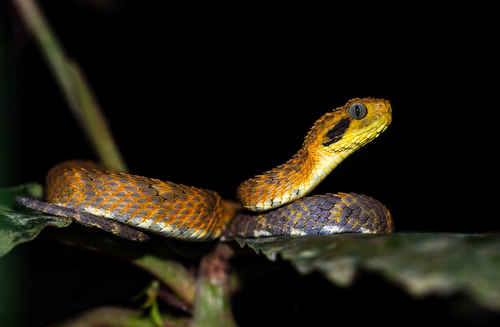 Cameroon bush viperAtheris broadleyiVenomous
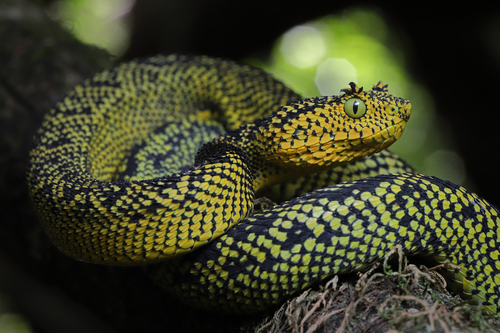 Matilda's horned viperAtheris matildaeVenomous
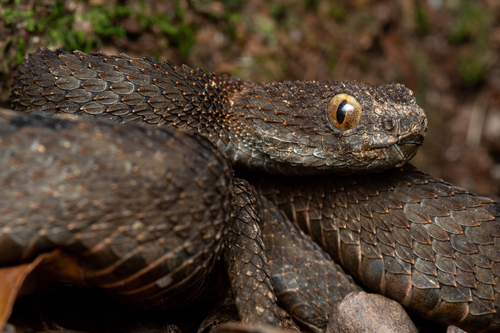 Mount Mabu Forest ViperAtheris mabuensisVenomous
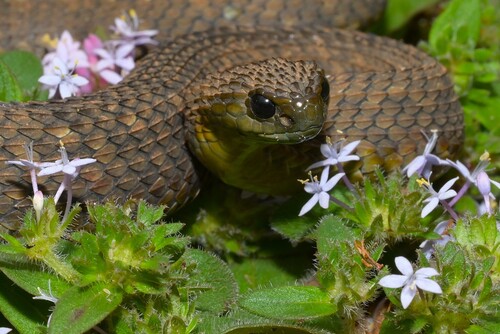 Uzungwe Mountain Bush ViperAtheris barbouriVenomous
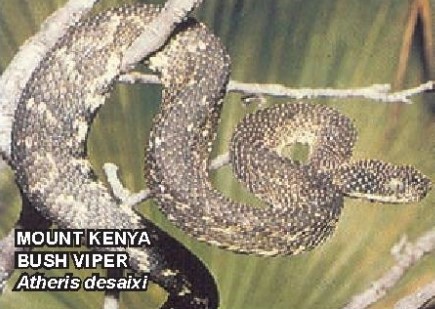 Ashe's Bush ViperAtheris desaixiVenomous
- No photoMongo hairy bush viperAtheris mongoensisVenomous
- No photoKatanga Mountain Bush ViperAtheris katangensisVenomous
Keep learning
- Venomous vs Nonvenomous: How to Tell the DifferenceThe folk rules for telling venomous snakes apart, where each one fails, and why location-based identification beats guessing by sight.
- Are Snakes Dangerous? The Real Risk, in PerspectiveMost snakes are harmless and avoid people. Here is the honest picture of snakebite risk worldwide and how to lower your own.
- Snake Venom Explained: How It Works and WhyWhat snake venom actually is, why it evolved, the main venom types, fang delivery, how antivenom works, and why ranking the most venomous snake is hard.
- How Snakes Move, Hunt, and EatHow snakes move without legs, hunt as ambushers or active foragers, kill by constriction or venom, and swallow prey wider than their head.