
Genus · Atractaspididae
Types of purple-glossed snakes
6 species make up the genus Amblyodipsas, the snakes commonly called purple-glossed snakes. None are considered dangerous to humans.
About purple-glossed snakes
Small, glossy, burrowing African snakes that spend almost their whole lives underground.
Amblyodipsas is a genus of small, secretive snakes in the family Atractaspididae, the same African family that includes the stiletto snakes and other burrowing relatives. Members are commonly called purple-glossed snakes for the iridescent, oily sheen on their dark scales. The genus contains roughly a dozen recognized species across Africa, six of which appear in this database, including the Common Purple-glossed Snake, Natal Purple-glossed Snake, Eastern Purple-glossed Snake, and Kalahari Purple-glossed Snake.
These are fossorial snakes, meaning they live mostly underground. They are found across sub-Saharan Africa, favoring loose or sandy soils, leaf litter, and moist lowland habitats where they can tunnel and hide. Because they spend so much time below the surface, they are rarely seen and are most often encountered after heavy rain, when turning over logs or debris, or during soil disturbance.
In general terms, purple-glossed snakes have smooth, highly polished scales, cylindrical bodies built for burrowing, small heads not distinct from the neck, small eyes, and short tails. The body color is typically dark, ranging from blackish to purplish-brown, with the characteristic glossy iridescence that gives the group its name. Their burrowing build and uniform sheen are the most reliable general field cues, though confident species-level identification usually requires close examination and regional knowledge.
Snakes in the family Atractaspididae are venomous and rear-fanged or have specialized fangs, and Amblyodipsas species are considered mildly venomous with enlarged rear teeth. They are not regarded as a serious danger to people, and bites are uncommon because the snakes are small, reclusive, and not aggressive. Even so, no wild venomous snake should be handled. If a bite occurs, do not attempt home treatment; contact emergency services or, in the United States, Poison Control at 1-800-222-1222.
Ecologically, purple-glossed snakes are adapted to a life spent hunting in soil and under cover. Their diet consists largely of other small, elongate, burrowing animals such as other snakes, legless lizards, and similar prey they encounter underground. Like many atractaspidids they are egg-laying, and their secretive habits mean much of their detailed behavior and reproduction remains poorly documented compared with more visible surface-dwelling snakes.
Amblyodipsas belongs to the Atractaspididae family (Stiletto snakes (burrowing asps)). Burrowing venomous snakes that stab sideways, and cannot be safely held. Small, glossy, uniformly dark, with tiny eyes and a blunt head no wider than the neck. The side-stabbing strike is unique.
Danger: Venomous. Bites cause intense local pain and tissue damage; most are not life-threatening but require medical care. Never attempt to pick one up.
All species (6)
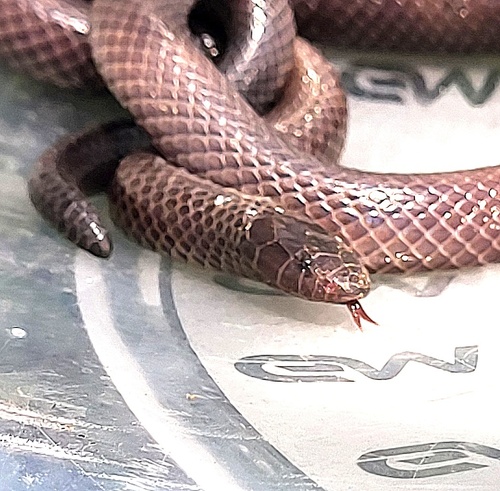 Common Purple-glossed SnakeAmblyodipsas polylepisHarmless
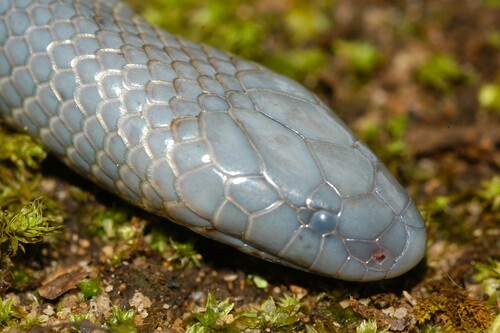 Natal Purple-glossed SnakeAmblyodipsas concolorHarmless
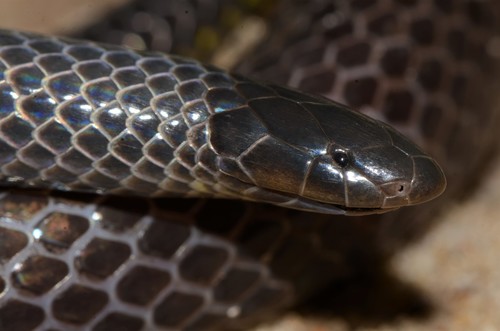 Eastern Purple-glossed SnakeAmblyodipsas microphthalmaHarmless
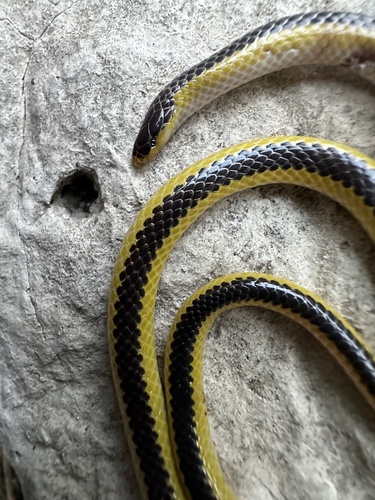 Kalahari Purple-glossed SnakeAmblyodipsas ventrimaculataHarmless
 Dull Purple-glossed SnakeAmblyodipsas unicolorHarmless
- No photoMpwapwa Purple-glossed SnakeAmblyodipsas dimidiataHarmless
Keep learning
- What Is a Snake? Anatomy and the BasicsA clear overview of what makes a snake a snake: limbless body plan, anatomy, evolution from lizards, species diversity, and why they are ectothermic.
- How Snakes Move, Hunt, and EatHow snakes move without legs, hunt as ambushers or active foragers, kill by constriction or venom, and swallow prey wider than their head.
- What Do Snakes Eat?All snakes are carnivores. Learn what snakes eat, how diet changes with size and age, how often they feed, and how they hunt and swallow prey.
- Venomous vs Nonvenomous: How to Tell the DifferenceThe folk rules for telling venomous snakes apart, where each one fails, and why location-based identification beats guessing by sight.