
Regional guide
Snakes in Texas: The 4 Venomous Types and Common Harmless Snakes
A guide to snakes in Texas: the four venomous types (rattlesnakes, copperhead, cottonmouth, coral) plus the harmless snakes you are most likely to see.
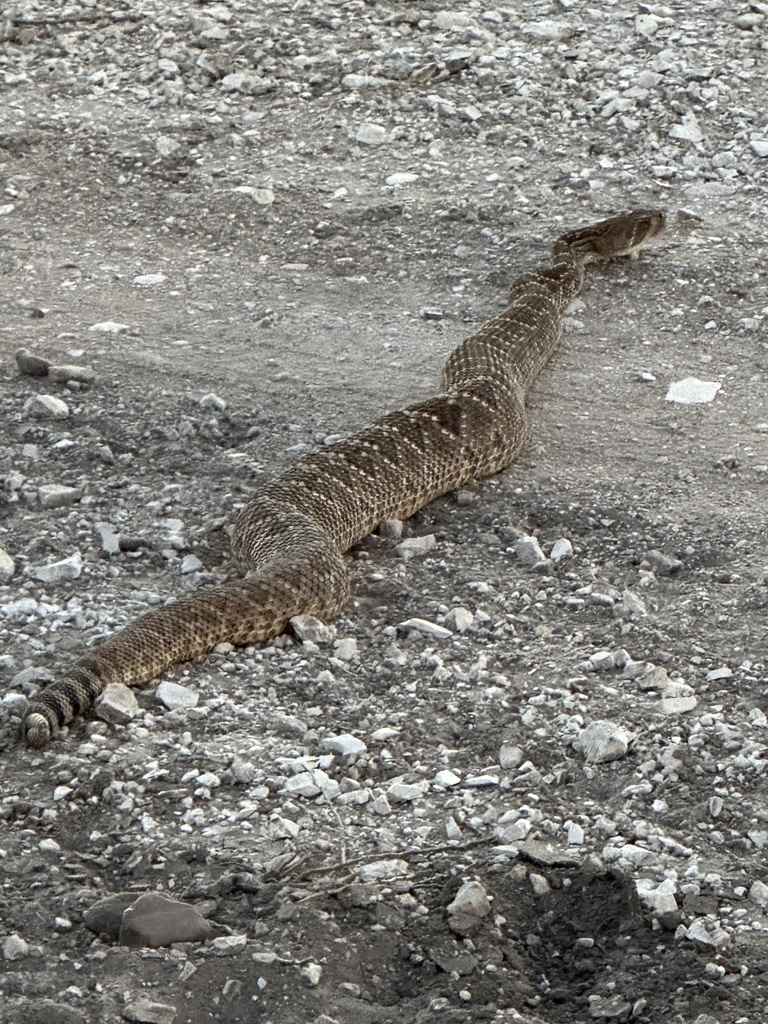
Texas has more snake species than any other U.S. state, a result of its size and the way deserts, hill country, piney woods, and coastal plains all meet within its borders. Most of those species are harmless, and nearly all of the venomous ones fall into just four groups, which makes them easy to learn.
The four venomous types in Texas are rattlesnakes, the copperhead, the cottonmouth, and the coral snake. Three are pit vipers; the coral snake is in a different family entirely. For a full county-level breakdown, see the Texas snake guide.
Rattlesnakes
Rattlesnakes are the most widespread and significant venomous snakes in Texas, with several species across the state. The western diamond-backed rattlesnake is the most common and the one behind most serious bites; it is large, defensive, and found nearly statewide. Rattlesnakes share the pit viper traits of a broad triangular head, vertical pupils, and a heat-sensing facial pit, plus the keratin rattle at the tail tip. Remember that a rattlesnake will not always rattle before it moves.
Copperhead
The eastern copperhead is a pit viper of the eastern and central parts of the state, named for its coppery, tan-to-pinkish color crossed by darker hourglass bands. Copperheads account for many Texas bites because they freeze and rely on camouflage rather than fleeing, so people step near them without noticing. The bite is painful but rarely life threatening to a healthy adult, though every bite needs medical evaluation.
Cottonmouth
The northern cottonmouth, or water moccasin, is a semi-aquatic pit viper found around the swamps, bayous, and slow waters of East Texas. It gets its name from the white lining of the mouth, which it gapes open as a warning. It is heavy-bodied and is often confused with the harmless watersnakes that live in the same places.
Coral Snake
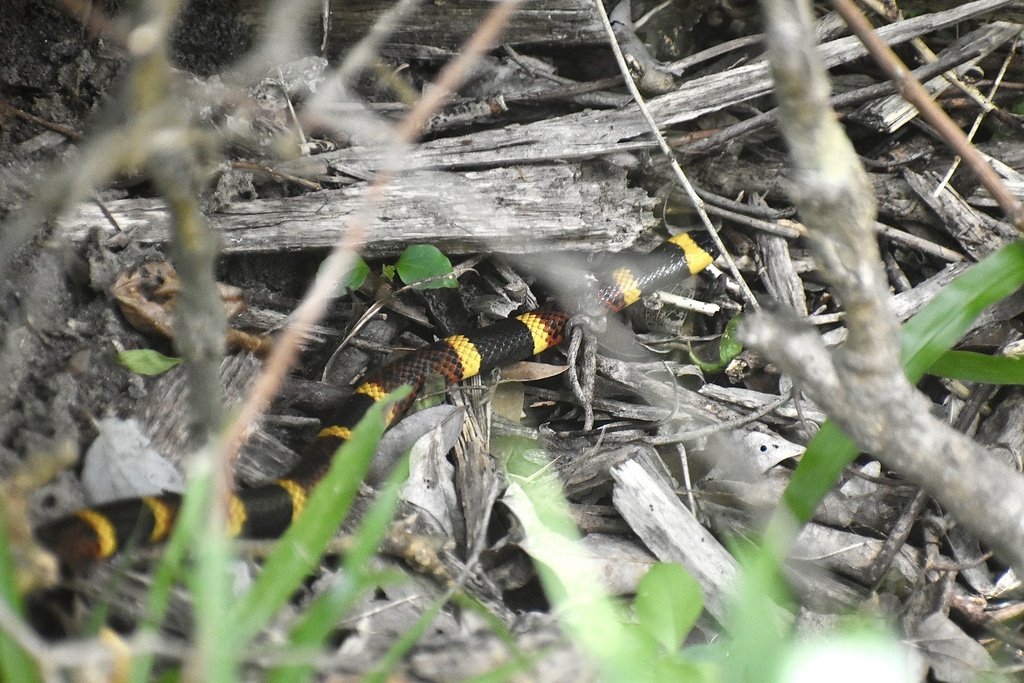
The Texas coral snake is the outlier among the four. It is not a pit viper but an elapid, related to cobras, with potent neurotoxic venom. Instead of a triangular head and rattle, it has a slender body, a rounded head, and bright bands of red, yellow, and black, with the red and yellow touching. It is shy and secretive, and bites are uncommon.
Common Harmless Snakes
Most snakes you encounter in Texas are non-venomous. A few of the species seen most often include:
- The western ratsnake, a large climber that is a strong natural rat and mouse control around homes and barns.
- The North American racer, a fast, slender snake that flees quickly when disturbed.
- The rough greensnake, a thin, bright green, insect-eating snake of shrubs and trees.
- The gopher snake, also called the bullsnake, which can hiss and flatten its head to mimic a rattlesnake but is harmless.
Telling Rattlesnakes From Their Mimics
Several harmless Texas snakes, especially the gopher snake and bullsnake, will coil, hiss loudly, and even vibrate the tail in dry leaves to imitate a rattlesnake. This bluff fools predators and people alike. The reliable difference is the actual rattle and the pit viper head shape, but in practice the safest approach is simply to leave any snake you cannot confidently identify alone.
When Are Texas Snakes Most Active
Texas snakes are most active from spring through fall, with activity peaking as temperatures warm. In the hot summer months, many species, including rattlesnakes, shift toward dawn, dusk, and nighttime to avoid the heat, so a warm evening is a more likely time to encounter one than midday. Cooler months see snakes retreat to dens and burrows, though a mild winter day can still tempt one out to bask. Knowing this seasonal rhythm helps you stay alert at the right times near suitable habitat.
Staying Safe Around Texas Snakes
The four venomous types are responsible for very few deaths in Texas, and most bites happen when people try to catch or kill a snake. The simplest prevention is to give any snake room to leave. Watch where you put your hands and feet around brush, rocks, and water, and wear boots when working in tall grass or clearing debris.
To see exactly which species live in your county, use the Texas guide, browse the venomous snakes list, or try the identification tool when you have a photo.