
Species spotlight
Eastern Coral Snake Facts: Banding Rule and Hidden Venom
The eastern coral snake is a secretive US elapid with neurotoxic venom. Learn the red-touch-yellow banding rule, where it lives, and how to identify it safely.
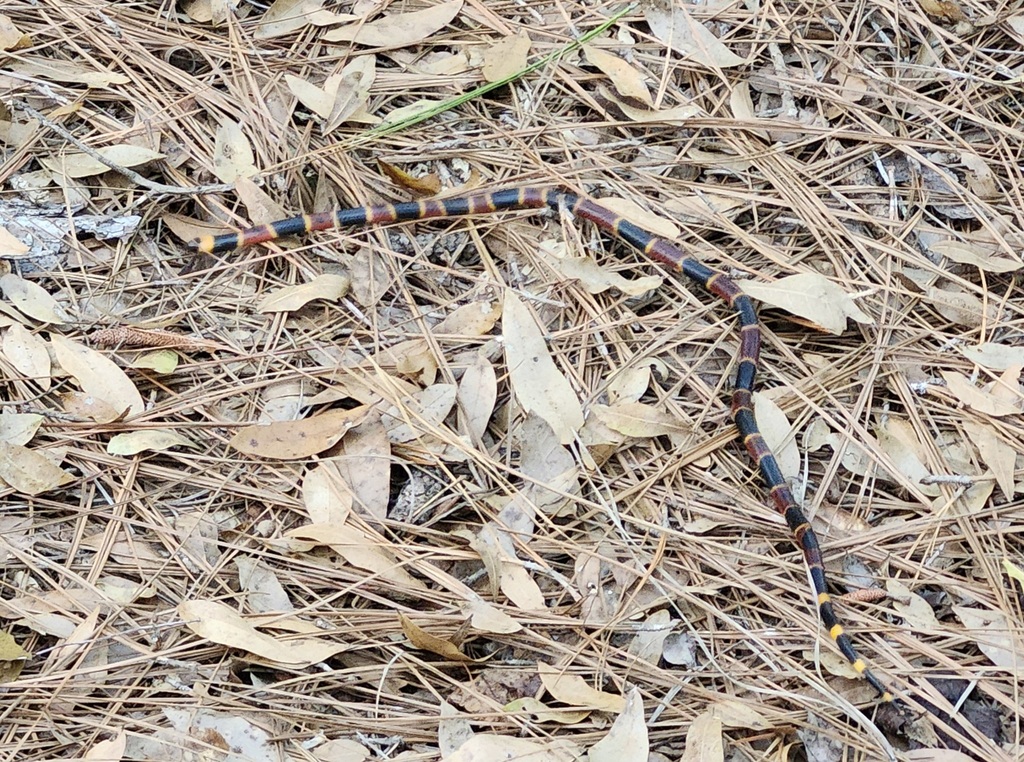
The eastern coral snake, Micrurus fulvius, is the brightly banded outlier among venomous snakes of the United States. While most are pit vipers, the coral snake is an elapid, a relative of cobras and mambas, with potent neurotoxic venom. It is also shy and secretive, spending most of its time underground or in leaf litter, so bites are rare. Its famous warning colors and the rhyme that goes with them are the heart of identifying it.
Where the eastern coral snake lives
Eastern coral snakes live in the southeastern United States, from the Carolinas through Florida and west along the Gulf Coast. They favor sandy, well-drained habitats: pine flatwoods, scrub, hammocks, and the edges of suburban yards with loose soil and ground cover. You can see what else shares its range on our United States snakes page and across our state and county pages.
This is a burrowing, secretive snake. It spends much of its life hidden under leaf litter, logs, and loose soil, hunting other small snakes and lizards, which is why people so rarely see one.
Size and appearance
Eastern coral snakes are slender and small to medium, usually about 2 to 3 feet long. The body is smooth-scaled and glossy, with a blunt black snout and a head barely wider than the neck, very unlike the broad triangular head of a pit viper.
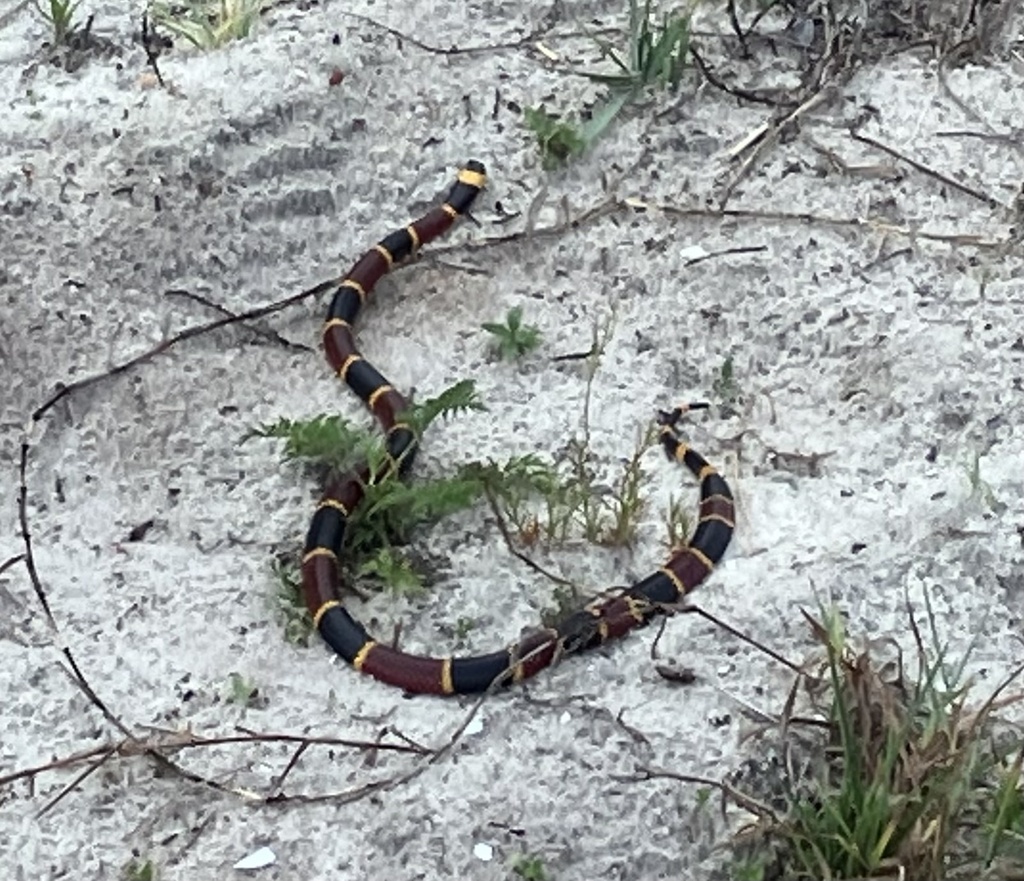
The color is unmistakable: wide red and black bands separated by narrow yellow rings, encircling the whole body. The snout is black, and the bands of red and yellow touch each other.
Venom and danger to people
Coral snake venom is neurotoxic, acting on the nervous system rather than primarily destroying tissue. A serious bite can lead to slurred speech, drooping eyelids, difficulty swallowing, and in severe cases respiratory failure, sometimes with a delay before symptoms peak. It is a genuine medical emergency that requires prompt care.
Bites are uncommon, though, because the snake is shy, often flees, and has small fixed fangs that need a sustained grip to deliver venom. The great majority of bites happen when people try to pick one up. Never handle a coral snake or any banded snake you cannot positively identify. For broader context, see the most venomous snakes guide and the four types of venomous snakes in the US.
How to identify an eastern coral snake
Use these features together, from a safe distance:
- Red, yellow, and black bands that fully encircle the body
- Red bands touching yellow bands, never black
- A black snout, not a red one
- A slender body with a narrow head and round pupils
- Smooth, glossy scales rather than keeled ones
The classic memory aid is the banding rule: red touches yellow, dangerous fellow; red touches black, friend of Jack. On a true coral snake the red and yellow rings sit next to each other. The harmless scarlet kingsnake and scarlet snake mimic the colors but have red touching black. This rhyme is reliable only in the United States, so see our deep dive on red touches yellow and the full eastern coral snake profile.
Notable facts
- It is an elapid, related to cobras and mambas, not a pit viper
- Its venom is neurotoxic and can act with a delay
- It spends most of its life hidden underground or in leaf litter
- It often eats other small snakes
- Harmless kingsnakes mimic its colors but reverse the band order
The eastern coral snake is dangerous but rarely encountered, and almost never a threat to someone who simply leaves it alone. Learn the banding rule, never handle a banded snake you cannot confirm, and let this secretive burrower go its way. Keep exploring with the identification tool or the snakes index.