
Safety
The 4 Types of Venomous Snakes in the United States
Nearly every venomous snake in the U.S. belongs to one of four groups: rattlesnakes, copperheads, cottonmouths, and coral snakes. Here is how to recognize each.
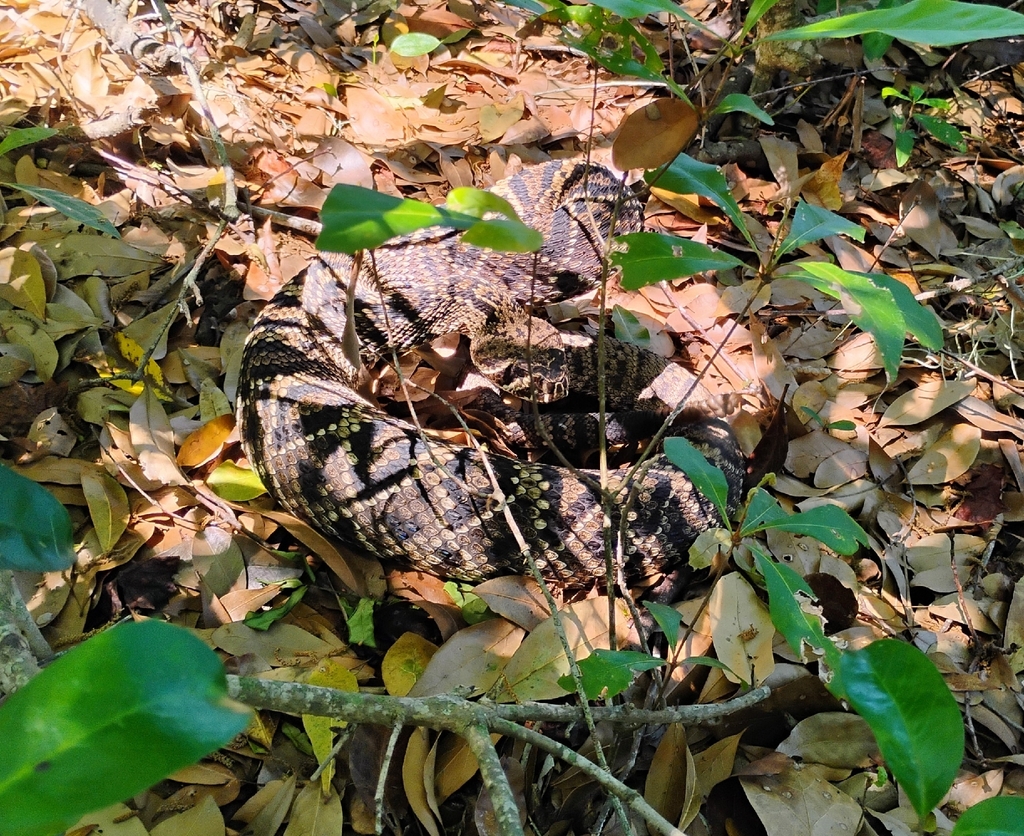
The United States is home to thousands of snake encounters each year, but almost all of the venomous species fall into just four groups. Three of them are pit vipers, rattlesnakes, copperheads, and cottonmouths, and the fourth is the coral snake, which belongs to a different family entirely. Learning these four categories covers nearly every venomous snake you could meet in the country.
1. Rattlesnakes
Rattlesnakes are the most widespread venomous group, found from coast to coast in dozens of species. The obvious feature is the rattle at the tip of the tail, a set of interlocking keratin segments that buzz as a warning. They also have the pit viper traits: a broad triangular head, vertical pupils, and a heat-sensing pit. Note that a rattlesnake will not always rattle before it moves, so the rattle is a helpful sign but not a guarantee. See the western diamond-backed rattlesnake and the timber rattlesnake for two common examples.
2. Copperheads
Copperheads are pit vipers of the eastern and central states, named for their coppery, tan-to-pinkish color crossed by darker hourglass-shaped bands. They are responsible for many U.S. snakebites, partly because they freeze and rely on camouflage rather than fleeing, so people step near them without noticing. Their bite is painful but rarely life threatening to a healthy adult, though every bite still needs medical evaluation. Read more on the eastern copperhead profile.
3. Cottonmouths
Cottonmouths, also called water moccasins, are semi-aquatic pit vipers of the Southeast. They get their name from the white lining of the mouth, which they gape open as a warning. They are heavy-bodied and often confused with harmless watersnakes; if you want to tell them apart, see the northern cottonmouth profile or our dedicated comparison guide. Like other pit vipers, they have the triangular head, vertical pupils, and facial pit.
4. Coral snakes
Coral snakes are the outlier. They are not pit vipers but elapids, relatives of cobras, with a potent neurotoxic venom. Instead of a triangular head and rattle, they have a slender body, a rounded head, and bright bands of red, yellow, and black. In the U.S. species, the red and yellow bands touch, which is the basis of the old rhyme. They are shy and reclusive, and bites are rare. Learn the banding rule on the eastern coral snake page.
How to use this
Knowing these four groups lets you quickly place almost any venomous snake in the country. But the most reliable answer is local: most counties have only one or two venomous species, and many have none at all. Check exactly what lives near you with the county browser, and use the identification tool when you have a photo.