
Identification
Coral Snake or King Snake? The Red-Touches-Yellow Rule
Red touches yellow, kill a fellow. Red touches black, friend of Jack. Here is what that rhyme means, why it works in the U.S., and where it does not.
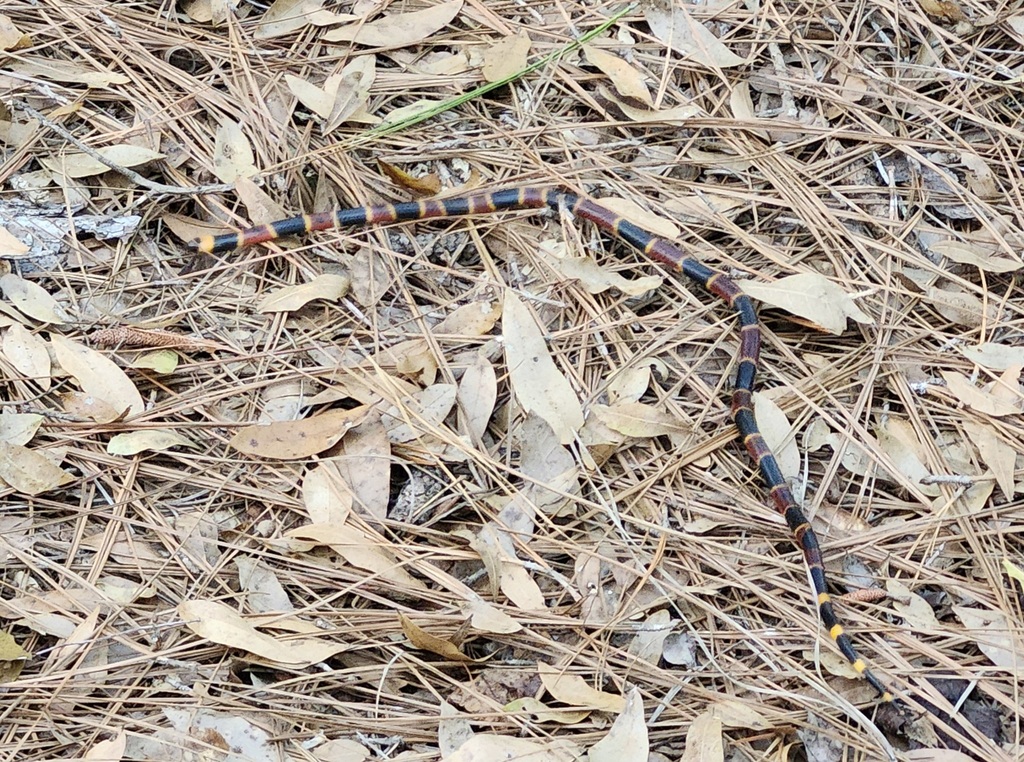
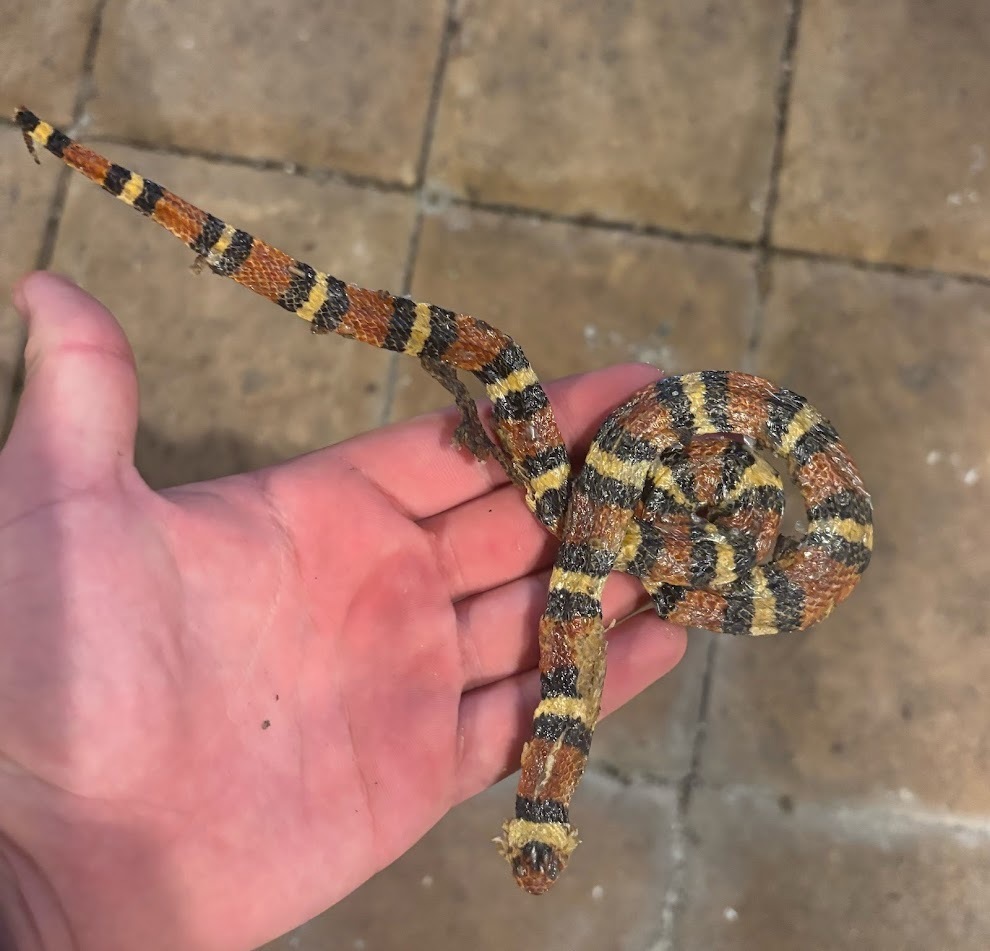
Few snakes spark as much confusion as the venomous coral snake and its harmless mimics, the scarlet king snake and the scarlet snake. All three wear bold bands of red, yellow or white, and black. For the native species of the United States, an old rhyme captures the difference, and it is worth understanding exactly what it does and does not promise.
The rhyme
The most common version goes:
- Red touches yellow, kill a fellow. On a U.S. coral snake, the red and yellow bands sit next to each other.
- Red touches black, friend of Jack. On harmless mimics, the red bands border black bands instead.
So on a native coral snake, the order runs red, yellow, black, yellow, red, with red and yellow touching. On a scarlet king snake, black separates the red from the yellow.
Why it works, and its limits
The rhyme is a genuinely useful memory aid for the three coral snake species native to the United States. But treat it as a backstop, not a guarantee, for three reasons. First, it applies only to U.S. coral snakes; many coral snakes in Central and South America break the pattern entirely, so the rhyme fails outside the country. Second, banding can be irregular on an individual snake, and a stressed or partly hidden snake is hard to read. Third, fear and a quick glance are a bad combination for a rule that depends on which color touches which.
A more reliable tell
Beyond the bands, U.S. coral snakes have a black snout. The harmless scarlet king snake and scarlet snake have a red or lighter snout. Coral snakes are also slender with a blunt, rounded head, and they are shy and secretive, spending most of their time underground or in leaf litter. They rarely bite unless handled, and that is the real lesson: never pick up a banded snake to test the rhyme.
Know your local species
Coral snakes live in the Southeast and parts of the Southwest. If you are outside that range, a red-yellow-black banded snake is almost certainly a harmless mimic. Confirm what actually occurs in your county on the county browser, and read the full eastern coral snake profile. When you have a photo, the identification tool can help narrow it down.
Use the rhyme to inform your caution, never to justify getting closer. If you are not certain, keep your distance and let the snake be.