
Colubridae
Guibe's Flame Snake
HarmlessOxyrhopus guibei
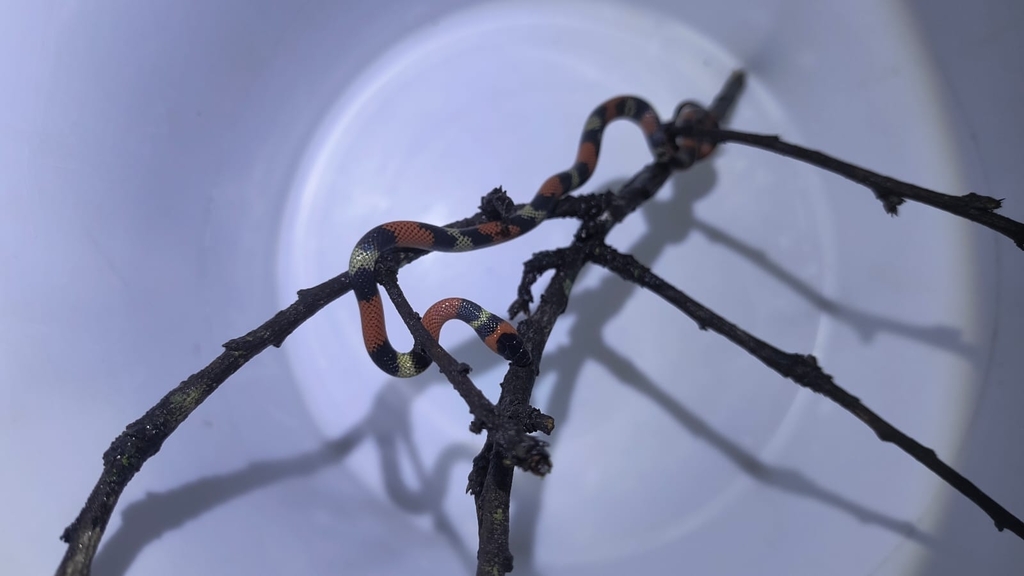
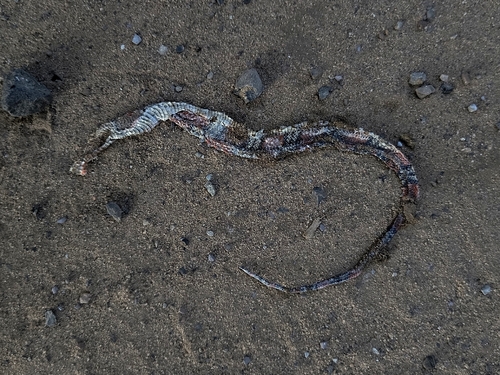
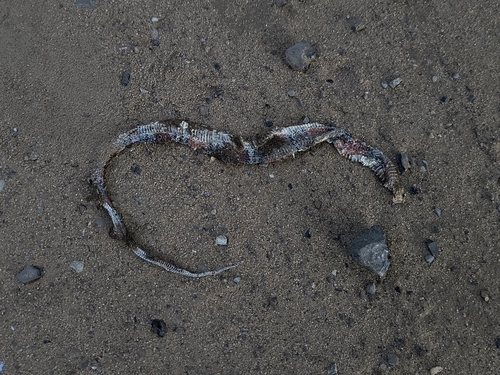
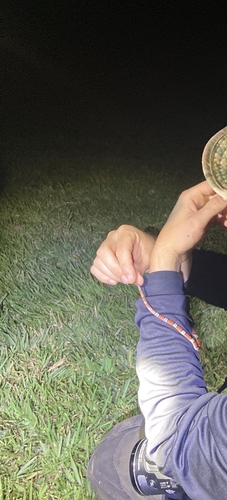
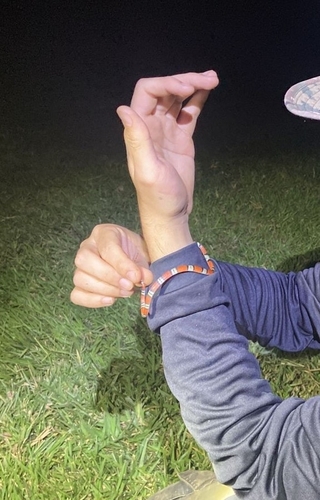
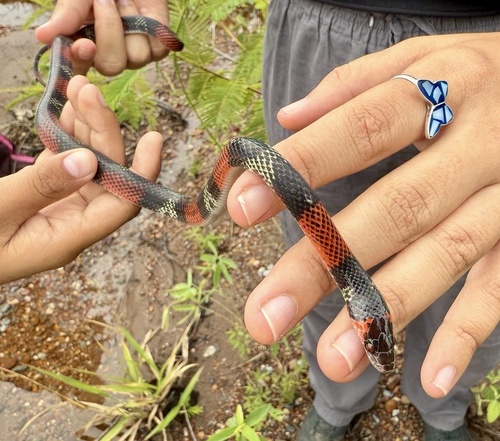
6 photographs of the Guibe's Flame Snake. © Rony Ristow.
The Guibe's Flame Snake (Oxyrhopus guibei) is a non-venomous snake in the Colubridae family.
- Family
- Colubridae
About the Guibe's Flame Snake
Oxyrhopus guibei is a species of snake in the family Colubridae. The species is endemic to South America. It is often called the false coral snake, but this common name can refer to any of a long list of other species, genera, and even entire families of snakes. Many nonvenomous snakes have evolved coloration that mimics that of venomous true coral snakes, a trait which helps them avoid predation.
Etymology
The specific name, guibei, is in honor of French herpetologist Jean Guibé.
Geographic range
O. guibei is native to central sections of South America, in parts of Bolivia, Brazil, Paraguay, and Argentina.
Conservation status
The species O. guibei has been described as common to abundant.
Description
O. guibei can reach 1 m (3.3 ft) to 1.25 m (4.1 ft) in total length (including tail). Females can reach much larger sizes than males.
Habitat
The preferred natural habitat of O. guibei is forest, including forest edges and open areas. The snake is sometimes seen near human activity and habitation, for example, on farms and in backyards.
Behavior
O. guibei is mostly nocturnal, but is sometimes out basking during the day. It spends most of its time on the ground, but it will climb trees at times.
Diet
The diet of O. guibei includes rodents, lizards, and other small animals. Rodent prey items include rats (Rattus sp.), the hairy-tailed bolo mouse (Necromys lasiurus), the house mouse (Mus musculus), the small vesper mouse (Calomys laucha), the delicate vesper mouse (Calomys tener), and hocicudos (Oxymycterus sp.). It will eat the lizard Tropidurus itambere and it has been observed taking white-tipped dove nestlings (Leptotila sp.). Lizards it will swallow alive, but rodents it often constricts first.
Reproduction
The female O. guibei lays eggs year-round, but male and female reproductive activity slows around the end of the rainy season. Clutch sizes range from about 3 to 20, with an average size of about 11. Longer females lay more eggs. Eggs are laid in nest sites such as cavities in rock piles and abandoned rabbit burrows. The female abandons the eggs once they are laid.
Enemies
Predators of the species O. guibei include the laughing falcon (Herpetotheres cachinnans), a bird which specializes in snakes, and Erythrolamprus aesculapii, another species of false coral snake. It has also been observed in the diet of the maned wolf (Chrysocyon brachyurus), which readily eats snakes, including venomous species.
Defensive behavior
O. guibei performs defensive behaviors when threatened, such as "brusque" thrashing, staying still or rushing to escape, compressing or inflating its body, coiling, hiding its head, or producing a cloacal discharge.
Adapted from Wikipedia, available under CC BY-SA.
Frequently asked: Guibe's Flame Snake
- Is the Guibe's Flame Snake venomous?
- No. The Guibe's Flame Snake (Oxyrhopus guibei) is non-venomous and is not considered dangerous to humans. Like most snakes, it will retreat rather than bite when given the chance.
- Is the Guibe's Flame Snake poisonous?
- Snakes are venomous, not poisonous. "Poisonous" means harmful to eat or touch; "venomous" means injecting toxins through a bite. The Guibe's Flame Snake is neither poisonous nor venomous.
- Is the Guibe's Flame Snake dangerous?
- The Guibe's Flame Snake is not dangerous to humans. It has no medically significant venom and bites only defensively if cornered or handled.
- What does the Guibe's Flame Snake eat?
- The diet of O. guibei includes rodents, lizards, and other small animals. Rodent prey items include rats (Rattus sp.), the hairy-tailed bolo mouse (Necromys lasiurus), the house mouse (Mus musculus), the small vesper mouse (Calomys laucha), the delicate vesper mouse (Calomys tener), and hocicudos (Oxymycterus sp.). It will eat the lizard Tropidurus itambere and it has been observed taking white-tipped dove nestlings (Leptotila sp.). Lizards it will swallow alive, but rodents it often constricts first.
- Why is it called the Guibe's Flame Snake?
- The specific name, guibei, is in honor of French herpetologist Jean Guibé.
More Colubridae snakes
 Forest Flame SnakeOxyrhopus petolarius
 Brazilian False Coral SnakeOxyrhopus trigeminus
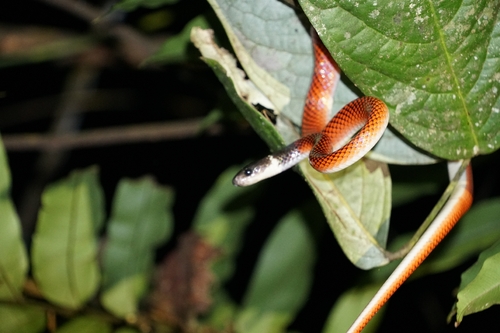 Tschudi's False Coral SnakeOxyrhopus melanogenys
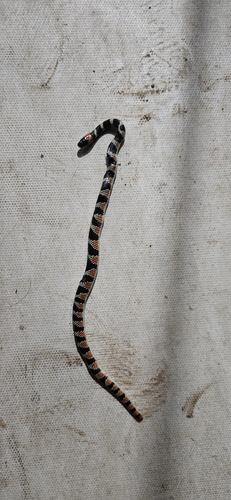 Amazon False Coral SnakeOxyrhopus rhombifer
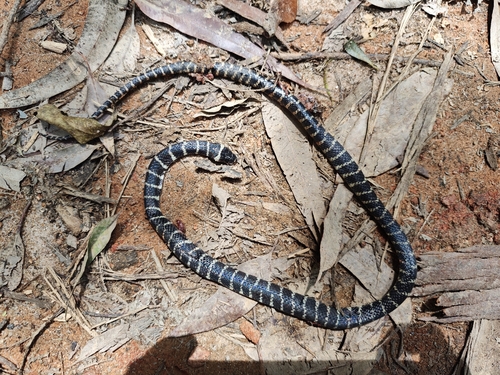 Duméril's False Coral SnakeOxyrhopus clathratus
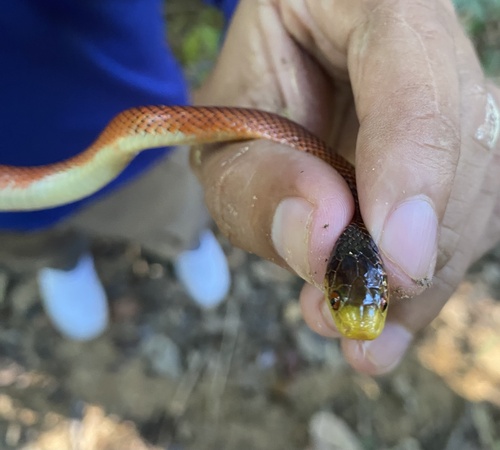 Yellow-headed Flame-SnakeOxyrhopus occipitalis
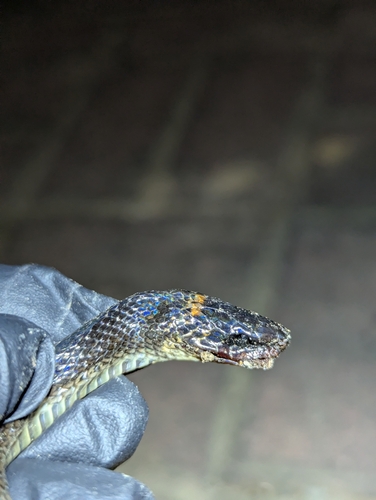 Impostor Flame-SnakeOxyrhopus vanidicus
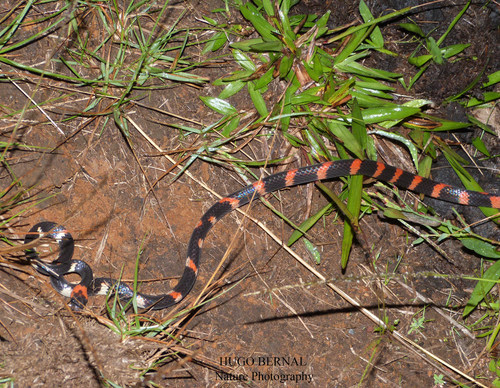 Werner's False Coral SnakeOxyrhopus leucomelas
Classification
How scientists group this snake, from the broadest category down to the exact species. Each step narrows to its closest relatives.
- OrderThe broad group of scaled reptiles: all snakes and lizards
- Squamata
- FamilyA group of related snakes that share key traits
- Colubridae
- GenusA close-knit group of very similar species
- Oxyrhopus
- SpeciesThis exact snake, named in the two-part scientific name
- Oxyrhopus guibei
Keep learning
- What to Do If You Find a SnakeFound a snake at home or on a trail? Here is how to stay calm, give it space, identify it safely, and know when to call a professional.
- Venomous vs Nonvenomous: How to Tell the DifferenceThe folk rules for telling venomous snakes apart, where each one fails, and why location-based identification beats guessing by sight.
- What Is a Snake? Anatomy and the BasicsA clear overview of what makes a snake a snake: limbless body plan, anatomy, evolution from lizards, species diversity, and why they are ectothermic.
- How to Keep Snakes Out of Your Yard and HomeA practical guide to keeping snakes out of your yard and home using habitat changes that work, plus what to skip and what to do if one shows up.
Distribution from GBIF & iNaturalist. Venom status per CDC. Background: Wikipedia. Informational only. Never handle a snake to identify it.