
Genus · Colubridae
Types of coral snakes
10+ species make up the genus Oxyrhopus, the snakes commonly called coral snakes. None are considered dangerous to humans.
About false coral snakes
Oxyrhopus are slender Neotropical snakes that mimic the banded look of deadly coral snakes without packing the same punch.
Oxyrhopus is a genus in the family Colubridae, the largest snake family in the world. The genus belongs to the subfamily Dipsadinae, a sprawling group of New World snakes that includes many rear-fanged species. People most often call its members false coral snakes because their red, black, and pale banding echoes the warning colors of true coral snakes, which are highly venomous elapids. This resemblance is a textbook example of mimicry: by looking like something dangerous, a relatively harmless snake gains protection from predators.
These snakes live across tropical Central and South America, with strong diversity in the Amazon Basin and the surrounding forests and savannas. They favor warm, humid habitats such as rainforest floor, forest edge, and open woodland, and several species do well in disturbed areas near human activity. Many are most active at night or in the low light of dawn and dusk, which is when they hunt and move.
Recognizing an Oxyrhopus in general terms means looking for a slim body, a moderately long tail, and banding in combinations of red, black, and white or yellow. Coloration varies a lot between the roughly 10+ species in our database and even within a single species as it ages, so banding pattern alone is not a reliable way to tell a false coral snake from a true coral snake. That uncertainty is exactly why caution matters: in the field you usually cannot safely distinguish a harmless mimic from a dangerous elapid by color.
Oxyrhopus snakes are rear-fanged. They have enlarged grooved teeth toward the back of the upper jaw and produce a mild venom used to subdue small prey. For people, these snakes are considered of low medical concern and are not regarded as deadly, but rear-fanged does not mean risk-free. A prolonged bite can deliver venom and cause local effects, and individual reactions vary. Never assume a banded snake is one of these harmless mimics, never handle a wild venomous or unidentified snake, and if a bite occurs seek medical help immediately. In the United States contact Poison Control at 1-800-222-1222, or call local emergency services.
Ecologically, false coral snakes are active hunters that feed largely on lizards, along with small rodents, frogs, and sometimes other snakes. They are egg-laying, depositing clutches that hatch into independent young. Their nocturnal habits, mimicry, and broad diet make them successful and widespread members of the Neotropical snake community.
Oxyrhopus belongs to the Colubridae family (Colubrids). The largest snake family, and the one most snakes you meet belong to. Typically round pupils, a head only slightly wider than the neck, and no heat-sensing facial pit or rattle. Scales may be smooth and glossy or keeled and matte depending on the species.
Danger: Almost all colubrids are harmless. A small number are rear-fanged with medically significant venom, the boomslang and the twig (vine) snakes of Africa being the dangerous exceptions. Most colubrids will flee or bluff rather than bite.
All species (15)
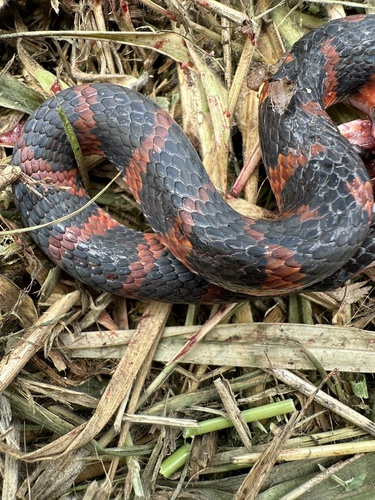 Forest Flame SnakeOxyrhopus petolariusHarmless
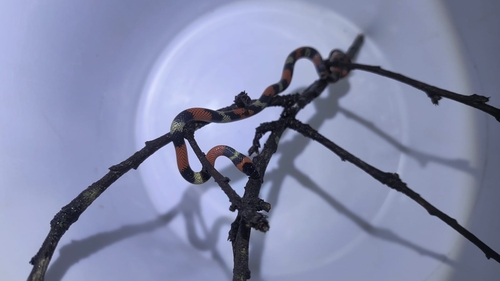 Guibe's Flame SnakeOxyrhopus guibeiHarmless
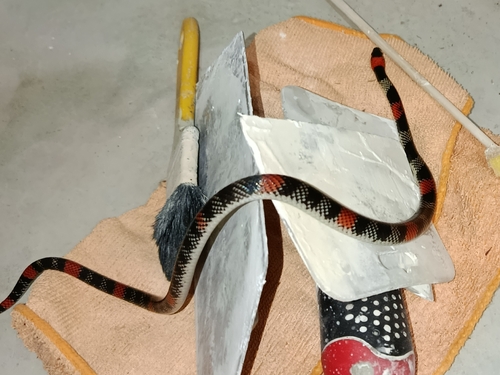 Brazilian False Coral SnakeOxyrhopus trigeminusHarmless
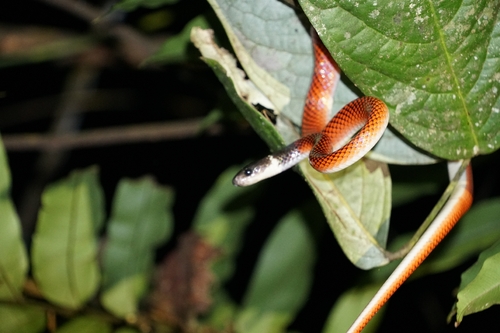 Tschudi's False Coral SnakeOxyrhopus melanogenysHarmless
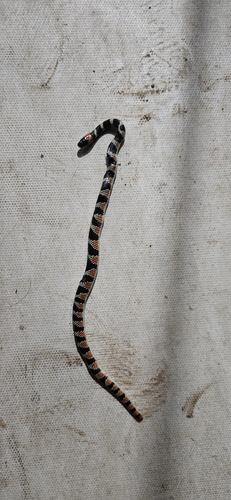 Amazon False Coral SnakeOxyrhopus rhombiferHarmless
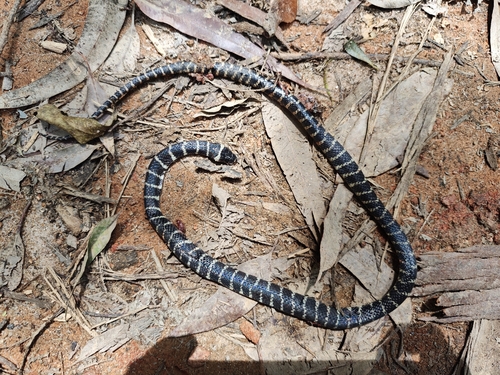 Duméril's False Coral SnakeOxyrhopus clathratusHarmless
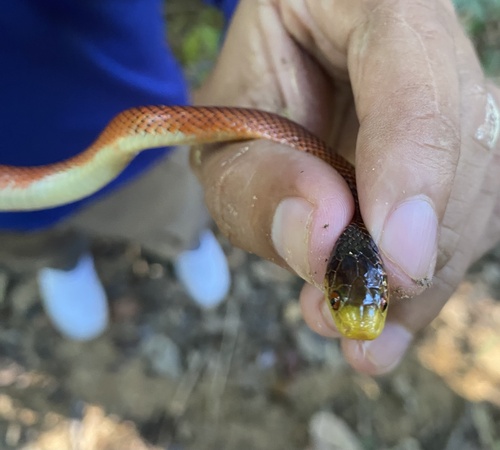 Yellow-headed Flame-SnakeOxyrhopus occipitalisHarmless
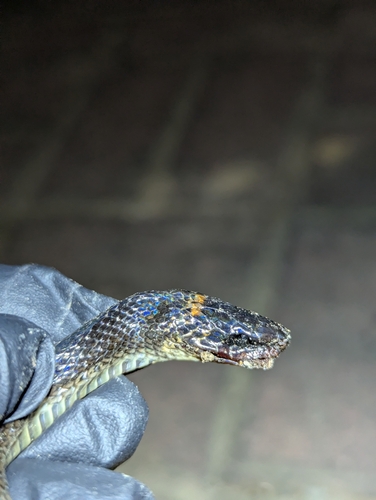 Impostor Flame-SnakeOxyrhopus vanidicusHarmless
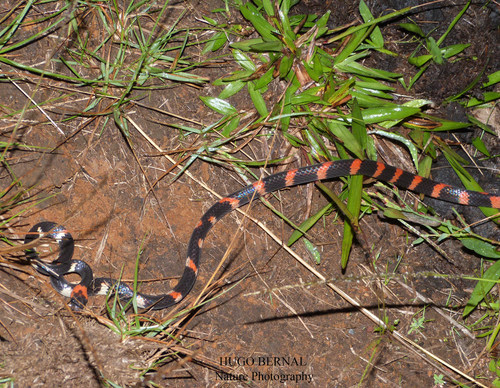 Werner's False Coral SnakeOxyrhopus leucomelasHarmless
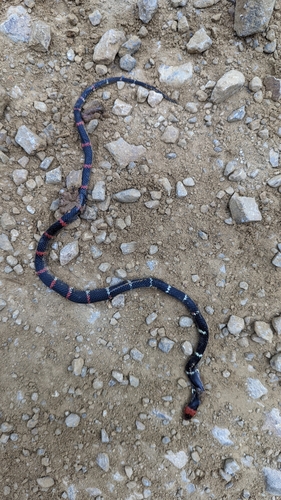 Oxyrhopus erdisiiHarmless
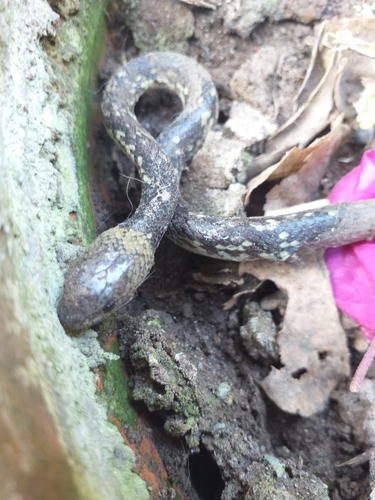 Fitzinger's False Coral SnakeOxyrhopus fitzingeriHarmless
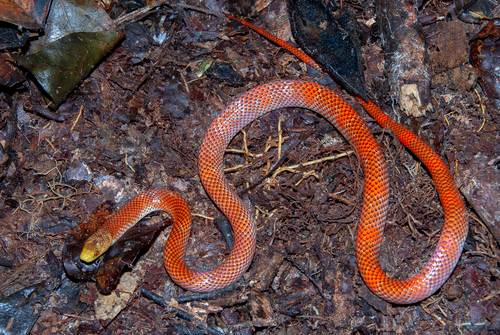 Beautiful Calico SnakeOxyrhopus formosusHarmless
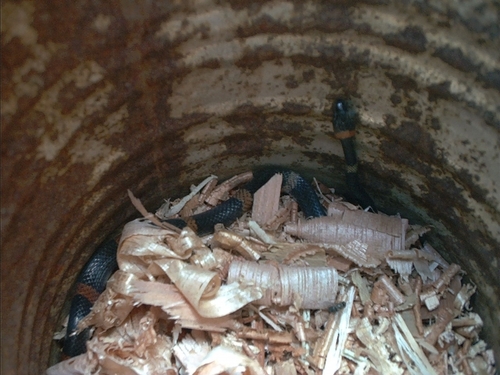 Oxyrhopus embertiHarmless
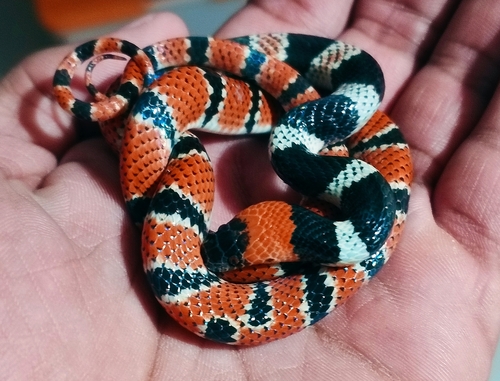 Bibron's False Coral SnakeOxyrhopus doliatusHarmless
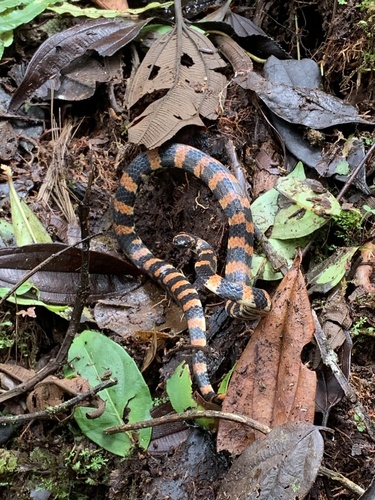 Boulenger's False Coral SnakeOxyrhopus marcapataeHarmless
Keep learning
- What Is a Snake? Anatomy and the BasicsA clear overview of what makes a snake a snake: limbless body plan, anatomy, evolution from lizards, species diversity, and why they are ectothermic.
- How Snakes Move, Hunt, and EatHow snakes move without legs, hunt as ambushers or active foragers, kill by constriction or venom, and swallow prey wider than their head.
- What Do Snakes Eat?All snakes are carnivores. Learn what snakes eat, how diet changes with size and age, how often they feed, and how they hunt and swallow prey.
- Venomous vs Nonvenomous: How to Tell the DifferenceThe folk rules for telling venomous snakes apart, where each one fails, and why location-based identification beats guessing by sight.