
Genus · Colubridae
Types of swamp snakes
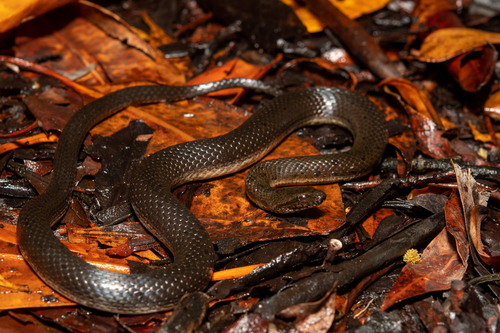
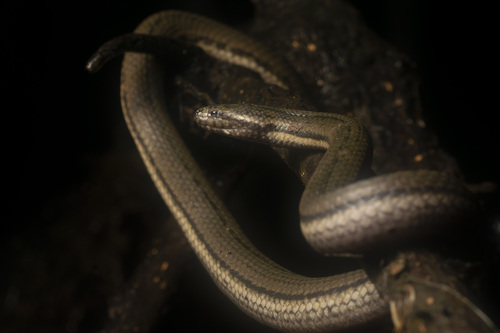
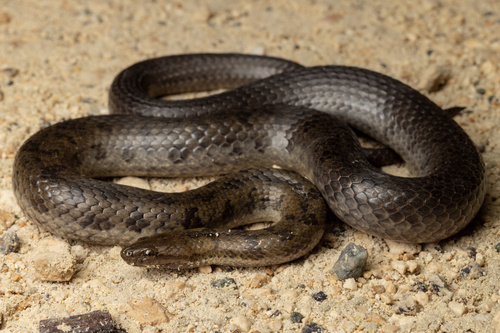
3 species make up the genus Tretanorhinus, the snakes commonly called swamp snakes. None are considered dangerous to humans.
About American water snakes (swamp snakes)
Small, secretive aquatic colubrids of Caribbean and Central American waters that hunt fish and frogs and almost never come ashore.
Tretanorhinus is a small genus in the family Colubridae, the largest and most varied snake family on Earth. The genus is fully aquatic in habit, and its members are often called swamp snakes or American water snakes. They live in and around fresh and brackish water in the West Indies, particularly Cuba, and across parts of Central America and northern South America. Within Colubridae they belong to a lineage of New World water-associated snakes, and like most colubrids they are non-front-fanged, meaning they lack the hollow movable fangs of vipers and cobras.
These are modest, water-shaped snakes. Members typically have a slender to moderately stout body, smallish eyes set high on the head, and nostrils positioned toward the top of the snout, all features that suit a life spent at the surface of slow water. The body is usually patterned in muted browns, grays, and olive tones, often with darker blotching or banding and a paler belly that gives the orangebelly swamp snake its name. The scales are keeled, adding a slightly rough texture that is common among water snakes.
Habitat is the defining trait. Tretanorhinus snakes are found in marshes, swamps, slow streams, ponds, ditches, and coastal lagoons, and some tolerate brackish water near the sea. They are largely nocturnal and highly secretive, spending most of their time submerged or hidden among vegetation, mud, and roots. Because they rarely leave the water, people encounter them far less often than terrestrial snakes, which is part of why several species remain poorly studied.
Diet and ecology fit the aquatic lifestyle. These snakes feed mainly on small fish, frogs, tadpoles, and other small aquatic prey, hunting in the water at night. Reproduction in the genus is egg-laying, in line with many colubrids, though detailed natural-history data for some species is limited. Their role in their wetlands is that of a small predator that helps keep populations of fish and amphibians in check.
On safety, Tretanorhinus snakes are not considered dangerous to people. They are not venomous in the medically significant sense, they are small, and they are inclined to flee into the water rather than confront anything. As with any wild snake, the right approach is to observe and leave it alone rather than catch or handle it. If a bite from any snake ever causes unexpected swelling, pain, or other concerning symptoms, contact emergency care, in the United States US Poison Control at 1-800-222-1222 or local emergency services.
Tretanorhinus belongs to the Colubridae family (Colubrids). The largest snake family, and the one most snakes you meet belong to. Typically round pupils, a head only slightly wider than the neck, and no heat-sensing facial pit or rattle. Scales may be smooth and glossy or keeled and matte depending on the species.
Danger: Almost all colubrids are harmless. A small number are rear-fanged with medically significant venom, the boomslang and the twig (vine) snakes of Africa being the dangerous exceptions. Most colubrids will flee or bluff rather than bite.
All species (3)
Keep learning
- What Is a Snake? Anatomy and the BasicsA clear overview of what makes a snake a snake: limbless body plan, anatomy, evolution from lizards, species diversity, and why they are ectothermic.
- How Snakes Move, Hunt, and EatHow snakes move without legs, hunt as ambushers or active foragers, kill by constriction or venom, and swallow prey wider than their head.
- What Do Snakes Eat?All snakes are carnivores. Learn what snakes eat, how diet changes with size and age, how often they feed, and how they hunt and swallow prey.
- Venomous vs Nonvenomous: How to Tell the DifferenceThe folk rules for telling venomous snakes apart, where each one fails, and why location-based identification beats guessing by sight.