
Genus · Viperidae
Types of massasaugas
3 species make up the genus Sistrurus, the snakes commonly called massasaugas. All of them are venomous.
About pygmy rattlesnakes and massasaugas
Small North American pit vipers with a true rattle and a row of large scales on the crown of the head.
Sistrurus is a small genus of rattlesnakes in the viper family, Viperidae, and the pit viper subfamily Crotalinae. Like all rattlesnakes, its members carry a segmented keratin rattle at the tip of the tail and a heat-sensing pit between the eye and nostril on each side of the face. What sets Sistrurus apart from the larger and more familiar Crotalus rattlesnakes is the head: Sistrurus species have nine enlarged plate-like scales arranged on the top of the head, rather than the many small scales seen across the crown of Crotalus. They are also notably smaller, with a proportionally tiny rattle that produces a faint, insect-like buzz rather than a loud rattle.
The genus is confined to North America. The pygmy rattlesnake ranges across the southeastern United States, while the massasaugas occupy a broad swath from the Great Lakes region and parts of the upper Midwest down through the central plains and into parts of the Southwest and northern Mexico. Habitats span wet and dry ground depending on the species and population, including marsh edges, wet prairies, bogs and fens, pine flatwoods, sandhills, mixed grassland, and open woodland. Some populations favor seasonally wet ground while others prefer drier upland terrain.
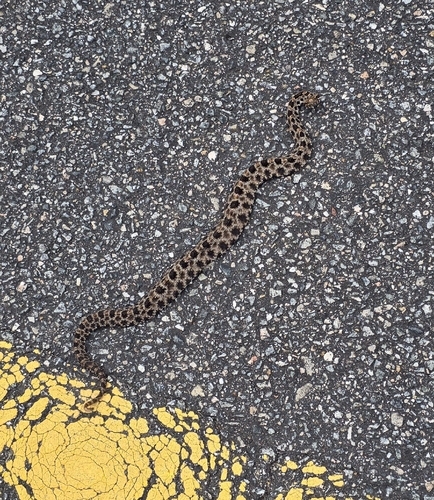
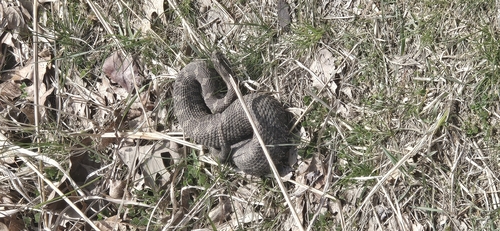
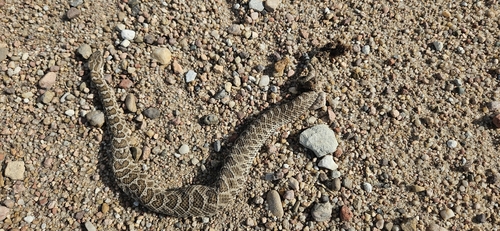
Recognizing a member of this genus comes down to a few general signals taken together: small body size for a rattlesnake, a tiny slender rattle, a blocky head with the distinctive large scales on top, vertical pupils, and a pattern of dark blotches or bars on a gray to brownish ground color. Many individuals are well camouflaged and stay still, so the rattle may be too quiet to hear before the snake is close. Identification of the exact species depends on regional range and detailed scale and pattern features, which are best confirmed by a local herpetological source rather than guessed at.
These are venomous pit vipers. Their venom is generally less potent and delivered in smaller amounts than that of large rattlesnakes, so bites are seldom life threatening to healthy adults, but they are still serious medical emergencies that can cause significant pain, swelling, and tissue damage. Never handle, pick up, or attempt to move a wild rattlesnake of any kind, and do not rely on the quiet rattle as a reliable warning. If a bite occurs, keep the person calm and still, remove tight items near the bite, and seek emergency care immediately. In the United States call Poison Control at 1-800-222-1222 or contact local emergency services. Do not cut, suck, apply a tourniquet, or use ice.
Ecologically, Sistrurus species are ambush predators that feed on small prey such as rodents, lizards, frogs, and large insects, with smaller individuals taking proportionally smaller prey. They use the facial pits to detect warm-bodied animals and strike from concealment. Like most pit vipers they give birth to live young rather than laying eggs, producing small litters. Behavior tends toward secrecy and stillness; they rely on camouflage first and rattle or strike only when pressed. Several populations, especially northern massasaugas, have declined due to habitat loss and are subjects of conservation concern.
Sistrurus belongs to the Viperidae family (Vipers & pit vipers). Heavy-bodied venomous snakes with long, hinged, hollow fangs. Broad, triangular head distinct from a narrow neck, heavy body, and (usually) vertical, cat-like pupils. Pit vipers also have a heat-sensing pit; true vipers do not.
Danger: Every viper is venomous, and the family includes some of the world's most medically important snakes. Venom is typically hemotoxic, causing pain, swelling, tissue damage, and bleeding. Treat any viper bite as a medical emergency.
All species (3)
Keep learning
- Venomous vs Nonvenomous: How to Tell the DifferenceThe folk rules for telling venomous snakes apart, where each one fails, and why location-based identification beats guessing by sight.
- Are Snakes Dangerous? The Real Risk, in PerspectiveMost snakes are harmless and avoid people. Here is the honest picture of snakebite risk worldwide and how to lower your own.
- Snake Venom Explained: How It Works and WhyWhat snake venom actually is, why it evolved, the main venom types, fang delivery, how antivenom works, and why ranking the most venomous snake is hard.
- How Snakes Move, Hunt, and EatHow snakes move without legs, hunt as ambushers or active foragers, kill by constriction or venom, and swallow prey wider than their head.