
Genus · Boidae
Types of boas
2 species make up the genus Sanzinia, the snakes commonly called boas. None are considered dangerous to humans.
About Madagascar tree boas
A small Madagascar-only group of slender, big-eyed boas that hunt in the trees by night.
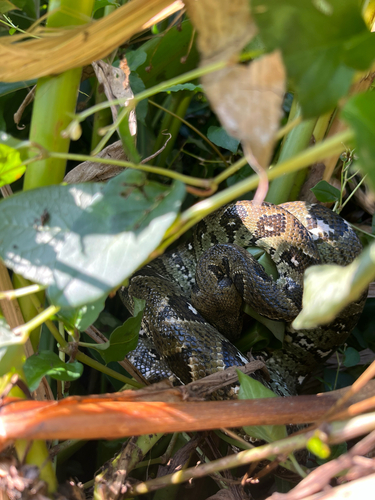
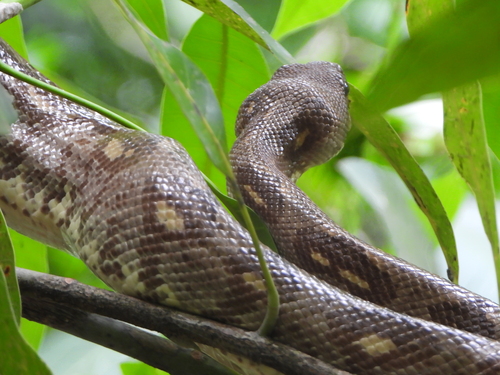
Sanzinia is a genus of boas in the family Boidae, found only on Madagascar. The group is small, with the Madagascar tree boa (Sanzinia madagascariensis) being the long-recognized member and a southern and western population sometimes treated as a second species, the Nosy Komba or western Madagascar tree boa. Like all boas, these are non-venomous constrictors: they have no venom and no fangs, and they kill prey by gripping and squeezing rather than by bite. They sit within the boa family alongside the other Madagascar boas (Acrantophis) and the wider New World and Pacific boa lineages.
These are moderately sized, heavy-bodied snakes, generally reaching several feet in length, with a distinctly triangular head set off from the neck and large eyes suited to a nocturnal life. Coloration runs from green to brown and can shift with age and population, often with a pattern of darker blotches or bands along the body. A hallmark feature shared with many boas and pythons is the row of heat-sensing pits along the lips, which helps them detect warm-bodied prey in the dark. They are largely arboreal, coiling on branches in humid forest and forest edges, though they also use the ground.
As ambush predators they feed mostly on small mammals and birds, taking prey with a strike, coil, and constriction. They give live birth rather than laying eggs, which is typical for boas. They are harmless to people in the sense that they are not venomous and pose no toxic threat, but they are wild animals: a large boa can deliver a painful defensive bite, and wild snakes should be observed and not handled. Sanzinia is protected under international trade rules, and the safe and respectful approach is to leave wild individuals alone.
Sanzinia belongs to the Boidae family (Boas). Powerful non-venomous constrictors that give birth to live young. Heavy body, smooth scales, and (in many species) heat-sensing pits along the lips. No rattle and no fangs.
Danger: Non-venomous and not dangerous to people. Large individuals are strong and can bite defensively, but they are not a venom threat.
All species (2)
Keep learning
- What Is a Snake? Anatomy and the BasicsA clear overview of what makes a snake a snake: limbless body plan, anatomy, evolution from lizards, species diversity, and why they are ectothermic.
- How Snakes Move, Hunt, and EatHow snakes move without legs, hunt as ambushers or active foragers, kill by constriction or venom, and swallow prey wider than their head.
- What Do Snakes Eat?All snakes are carnivores. Learn what snakes eat, how diet changes with size and age, how often they feed, and how they hunt and swallow prey.
- Venomous vs Nonvenomous: How to Tell the DifferenceThe folk rules for telling venomous snakes apart, where each one fails, and why location-based identification beats guessing by sight.