
Genus · Colubridae
Types of bamboo snakes
5 species make up the genus Pseudoxenodon, the snakes commonly called bamboo snakes. None are considered dangerous to humans.
About false cobras (bamboo snakes)
Asian colubrids that flatten their necks and rear up like a cobra when threatened, though they are only mildly rear-fanged.
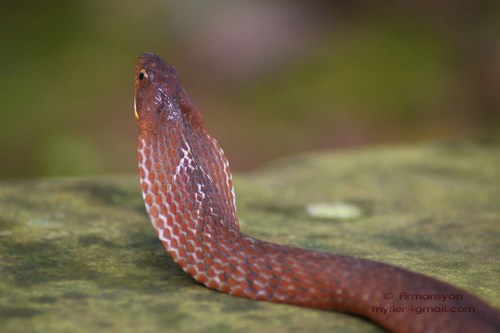
Pseudoxenodon is a small genus of Asian snakes in the family Colubridae, the largest snake family and a catch-all of mostly harmless or mildly venomous species. The genus holds roughly half a dozen species, several of which are commonly called bamboo snakes or false cobras. The latter name comes from their best-known habit: when alarmed, they raise the front of the body and spread the neck into a hood, mimicking the threat display of a true cobra despite having no relation to those elapids.
These snakes live across South and Southeast Asia and southern China, including the Himalayan foothills, with members ranging through countries such as India, Nepal, China, Myanmar, Thailand, Vietnam, and Indonesia. They favor cool, moist, often mountainous and forested terrain, including stream edges, leaf litter, and damp ground at mid to higher elevations. This preference for cooler highland habitat sets them apart from many lowland colubrids in the same region.
Recognizing a Pseudoxenodon in general terms is difficult without local knowledge, because the hooding display is the standout trait rather than any single color pattern. They are slender to moderately built snakes of modest size with large eyes, keeled scales, and often a banded, blotched, or chevron-marked back over brown, gray, or olive tones. Because their cobra mimicry can fool people, any hooding snake in their range should be treated with caution and identified by an expert rather than by appearance alone.
Like most colubrids in this group, Pseudoxenodon species are rear-fanged, meaning they have enlarged grooved teeth set toward the back of the upper jaw rather than the hollow front fangs of cobras and vipers. Their venom is weak and geared toward subduing small cold-blooded prey, and they are not considered dangerous to people. Even so, no wild snake should be handled. A defensive bite from a rear-fanged species can still cause local irritation, and misidentification with a genuinely dangerous snake is a real risk. If a bite occurs, do not attempt first aid measures yourself and seek emergency care immediately. In the United States contact Poison Control at 1-800-222-1222, and elsewhere call local emergency services.
Ecologically these are quiet, ground-dwelling hunters. They feed largely on amphibians such as frogs and toads, along with other small prey they can overpower, which fits their preference for damp habitat near water. Like many colubrids they are egg-laying, and they rely far more on bluff than on biting for defense, using the hooding and neck-flattening display to make themselves look like a far more dangerous animal until the threat passes.
Pseudoxenodon belongs to the Colubridae family (Colubrids). The largest snake family, and the one most snakes you meet belong to. Typically round pupils, a head only slightly wider than the neck, and no heat-sensing facial pit or rattle. Scales may be smooth and glossy or keeled and matte depending on the species.
Danger: Almost all colubrids are harmless. A small number are rear-fanged with medically significant venom, the boomslang and the twig (vine) snakes of Africa being the dangerous exceptions. Most colubrids will flee or bluff rather than bite.
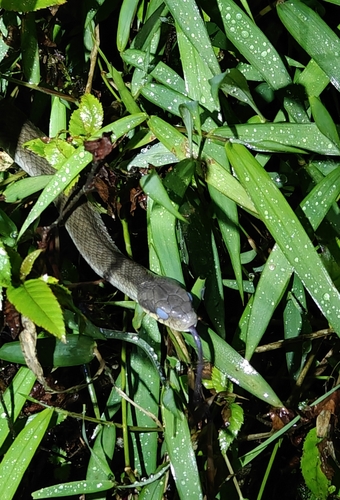
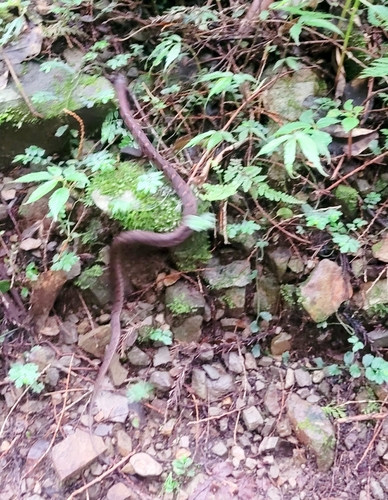
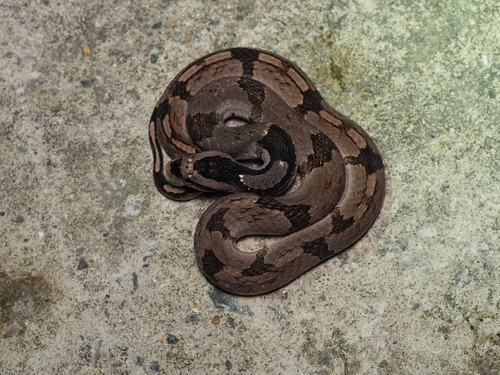
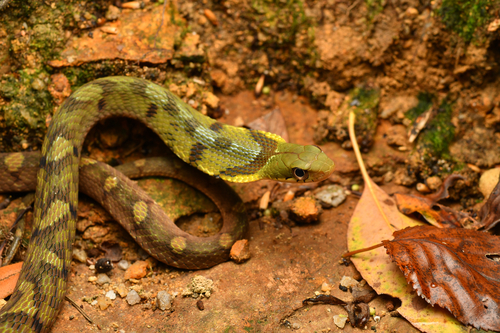
All species (5)
Keep learning
- What Is a Snake? Anatomy and the BasicsA clear overview of what makes a snake a snake: limbless body plan, anatomy, evolution from lizards, species diversity, and why they are ectothermic.
- How Snakes Move, Hunt, and EatHow snakes move without legs, hunt as ambushers or active foragers, kill by constriction or venom, and swallow prey wider than their head.
- What Do Snakes Eat?All snakes are carnivores. Learn what snakes eat, how diet changes with size and age, how often they feed, and how they hunt and swallow prey.
- Venomous vs Nonvenomous: How to Tell the DifferenceThe folk rules for telling venomous snakes apart, where each one fails, and why location-based identification beats guessing by sight.