
Genus · Psammophiidae
Types of skaapstekers
5 species make up the genus Psammophylax, the snakes commonly called skaapstekers. None are considered dangerous to humans.
About skaapstekers
African grassland snakes that are mildly venomous and rear-fanged, but pose little threat to people.
Psammophylax is a small genus of slender, fast-moving snakes in the family Psammophiidae, the group that also contains the sand snakes and whip snakes of Africa and Asia. The common name skaapsteker comes from Afrikaans and means sheep stabber, an old and misleading name, since these snakes do not pose a meaningful danger to livestock or people. They are part of a largely African radiation of agile, ground-active hunters.
Members of this genus are found across sub-Saharan Africa, with a strong presence in southern and eastern grasslands. They favor open habitats such as grassland, savanna, montane meadows, and the edges of marshes, where they move through low cover in search of prey. They are typically diurnal, active in daylight and reliant on speed and keen eyesight rather than ambush.
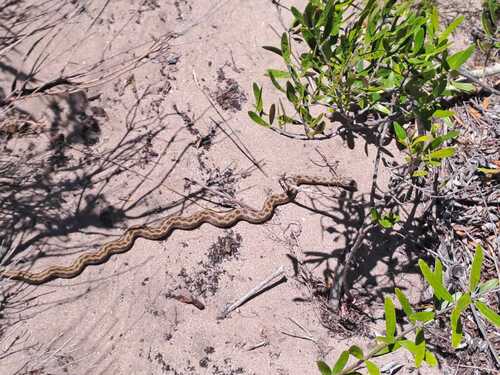
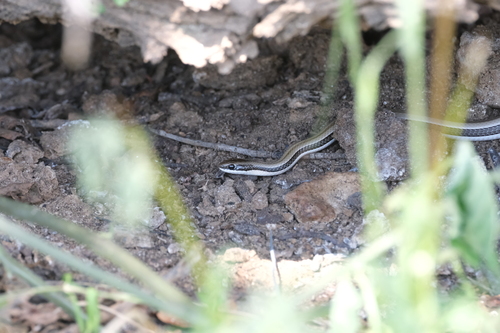
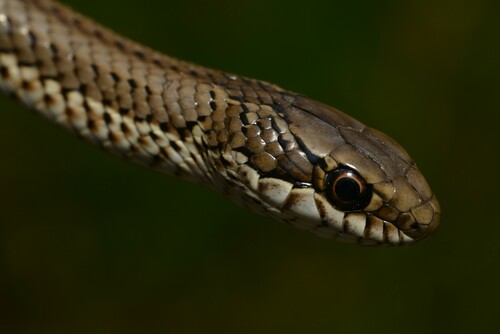
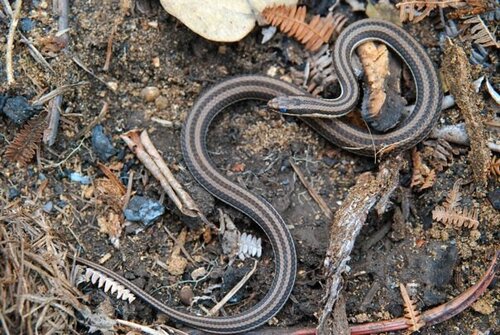
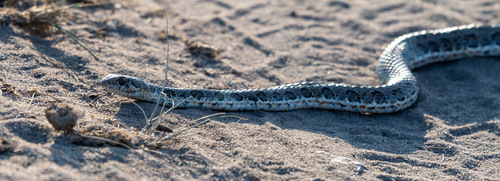
In general terms, skaapstekers are recognizable as slim, smooth-scaled snakes of modest length, often patterned with longitudinal stripes or rows of rhombic blotches running down the back. The striped species show clean lines along the body, while the rhombic forms carry a chain of darker markings. Coloration tends toward browns, grays, and olive tones that blend into dry grass. Identification to species in the field is difficult and benefits from a regional guide.
These snakes are rear-fanged and mildly venomous. They carry enlarged grooved teeth toward the back of the upper jaw and a venom suited to subduing small prey. Bites to humans are uncommon and generally produce only mild, local effects, but no wild snake should be handled. Do not attempt to catch or restrain one. If a bite occurs and any symptoms develop, contact emergency services or, in the United States, Poison Control at 1-800-222-1222, and seek medical evaluation rather than relying on home treatment.
Ecologically, skaapstekers feed on small vertebrates including lizards, frogs, small rodents, and other snakes, overpowering prey with a combination of grip and mild venom. Reproduction in the genus is notable: several species lay eggs, and some show parental attendance of the clutch by the female, a behavior that is unusual among snakes. Their role as active daytime predators makes them an important part of the small-animal food web in African grasslands.
Psammophylax belongs to the Psammophiidae family (Sand & grass snakes). Fast, slender, day-active snakes of open country. Long, slim, and fast, with large eyes and a streamlined head, often striped lengthwise.
Danger: Rear-fanged and mildly venomous; bites can cause local swelling but are not considered dangerous to people.
All species (5)
Keep learning
- What Is a Snake? Anatomy and the BasicsA clear overview of what makes a snake a snake: limbless body plan, anatomy, evolution from lizards, species diversity, and why they are ectothermic.
- How Snakes Move, Hunt, and EatHow snakes move without legs, hunt as ambushers or active foragers, kill by constriction or venom, and swallow prey wider than their head.
- What Do Snakes Eat?All snakes are carnivores. Learn what snakes eat, how diet changes with size and age, how often they feed, and how they hunt and swallow prey.
- Venomous vs Nonvenomous: How to Tell the DifferenceThe folk rules for telling venomous snakes apart, where each one fails, and why location-based identification beats guessing by sight.