
Genus · Colubridae
Types of halloween snakes
2 species make up the genus Pliocercus, the snakes commonly called halloween snakes. None are considered dangerous to humans.
About false coral snakes
Small Central American colubrids that mimic the warning colors of deadly coral snakes without the venom to match.
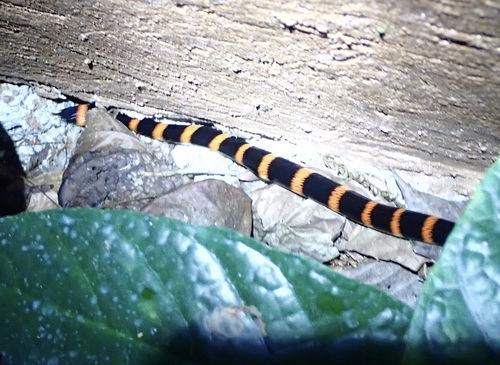
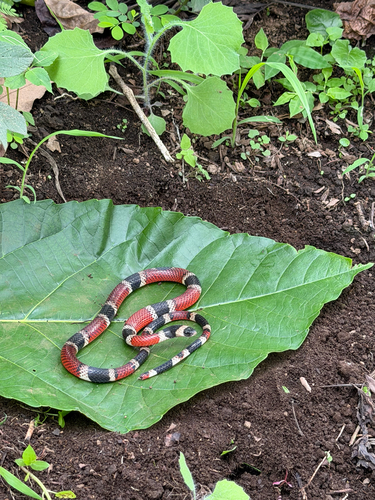
Pliocercus is a small genus of slender snakes in the family Colubridae, the largest snake family and a catch-all for most non-venomous and mildly venomous species. The genus is best known for its coral-snake-style banding, which is why members are commonly called false coral snakes. Two species feature here, the Black Halloween Snake and the Variegated False Coral Snake, both ranging through the forests of Mexico and Central America.
These are forest-floor snakes of lowland and montane wet forest, where they stay close to leaf litter, damp ground, and the cover of logs and debris. They are recognized as small, smooth-scaled snakes patterned in bold rings or blotches of red, black, and pale colors that echo the look of the truly dangerous coral snakes sharing their range. This resemblance is classic mimicry: by copying a venomous model, a harmless snake gains protection from predators that have learned to avoid the warning colors.
Despite the alarming look, Pliocercus poses no meaningful danger to people. These snakes are small, secretive, and not equipped to deliver a medically significant bite, and they feed on small prey rather than threatening humans. Coral snakes themselves, however, are genuinely venomous, and color rings alone are an unreliable way to tell mimic from model in the field. Treat any unidentified banded snake as off-limits, do not handle wild snakes, and if a bite occurs from a snake you cannot positively identify, contact emergency services or US Poison Control at 1-800-222-1222 right away rather than waiting on symptoms.
Pliocercus belongs to the Colubridae family (Colubrids). The largest snake family, and the one most snakes you meet belong to. Typically round pupils, a head only slightly wider than the neck, and no heat-sensing facial pit or rattle. Scales may be smooth and glossy or keeled and matte depending on the species.
Danger: Almost all colubrids are harmless. A small number are rear-fanged with medically significant venom, the boomslang and the twig (vine) snakes of Africa being the dangerous exceptions. Most colubrids will flee or bluff rather than bite.
All species (2)
Keep learning
- What Is a Snake? Anatomy and the BasicsA clear overview of what makes a snake a snake: limbless body plan, anatomy, evolution from lizards, species diversity, and why they are ectothermic.
- How Snakes Move, Hunt, and EatHow snakes move without legs, hunt as ambushers or active foragers, kill by constriction or venom, and swallow prey wider than their head.
- What Do Snakes Eat?All snakes are carnivores. Learn what snakes eat, how diet changes with size and age, how often they feed, and how they hunt and swallow prey.
- Venomous vs Nonvenomous: How to Tell the DifferenceThe folk rules for telling venomous snakes apart, where each one fails, and why location-based identification beats guessing by sight.