
Genus · Colubridae
Types of keelbacks
10+ species make up the genus Opisthotropis, the snakes commonly called keelbacks. None are considered dangerous to humans.
About Asian stream snakes (mountain keelbacks)
Small, secretive Asian water snakes that spend their lives in and around cool, fast-flowing mountain streams.
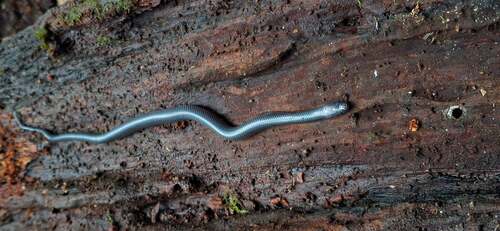
Opisthotropis is a genus of small, semi-aquatic snakes native to East and Southeast Asia. They belong to the broad colubrid lineage, specifically the natricine group of keelbacks and water snakes, the same general branch that includes the familiar garter and water snakes. Our database holds 10+ species in this genus, with members such as Anderson's Mountain Keelback, the Striped Stream Snake, the Bicoloured Stream Snake, and the Sichuan Mountain Keelback.
These snakes are tied to water. They live in and beside clear, cool, fast-flowing streams and brooks, usually in hilly or mountainous forest. They are highly secretive, often nocturnal, and spend much of their time hiding under stones, in gravel beds, or among submerged debris. Because of this hidden lifestyle, many species are poorly documented and known from only a handful of specimens, so detailed natural history for individual species is genuinely limited.
As a group they are recognized by their modest size, slender to moderately stout bodies, and small heads that are barely distinct from the neck, an adaptation to probing under rocks. Many have keeled scales typical of keelbacks, eyes set somewhat high on the head for an aquatic life, and patterning that runs from plain dark brown to stripes or banding depending on the species. Color and pattern vary widely across the 15 members, so identification usually depends on locality combined with scale counts rather than a single field mark.
Opisthotropis snakes are not dangerous to people. They are non-venomous colubrids with no specialized venom delivery, and they are shy, inoffensive animals that prefer to flee or hide rather than confront a human. They pose no medical threat. As with any wild snake, the responsible practice is to observe and not handle, both for the animal's welfare and to avoid unnecessary stress to a creature that does not tolerate handling well.
Ecologically these are predators of small aquatic and streamside prey. Their diet is thought to center on earthworms, aquatic insect larvae, tadpoles, small fish, and similar soft-bodied animals found in and around streams. Like most natricine relatives, several species are believed to lay eggs, though reproduction is unstudied for many. Their behavior is unobtrusive and water-bound, which keeps them out of sight and explains why so much of their biology remains to be described.
Opisthotropis belongs to the Colubridae family (Colubrids). The largest snake family, and the one most snakes you meet belong to. Typically round pupils, a head only slightly wider than the neck, and no heat-sensing facial pit or rattle. Scales may be smooth and glossy or keeled and matte depending on the species.
Danger: Almost all colubrids are harmless. A small number are rear-fanged with medically significant venom, the boomslang and the twig (vine) snakes of Africa being the dangerous exceptions. Most colubrids will flee or bluff rather than bite.
All species (15)
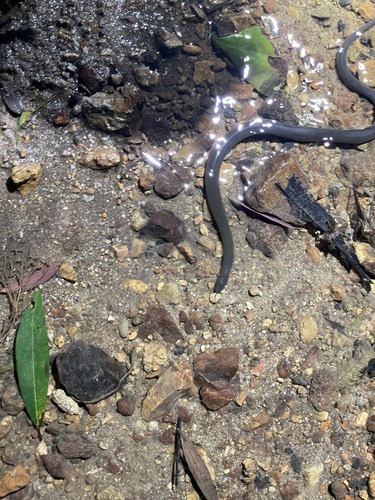 Anderson's Mountain KeelbackOpisthotropis andersoniiHarmless
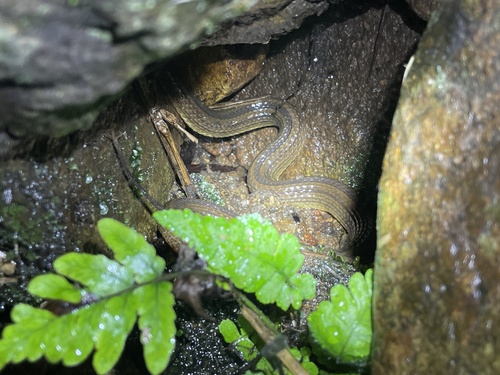 Striped Stream SnakeOpisthotropis kuatunensisHarmless
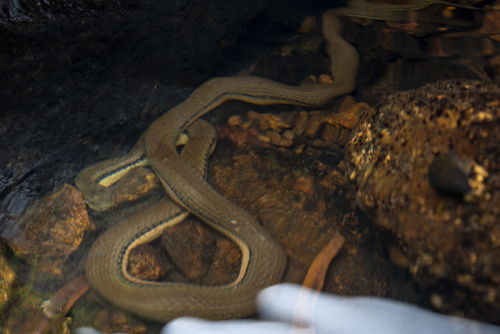 Bicoloured Stream SnakeOpisthotropis lateralisHarmless
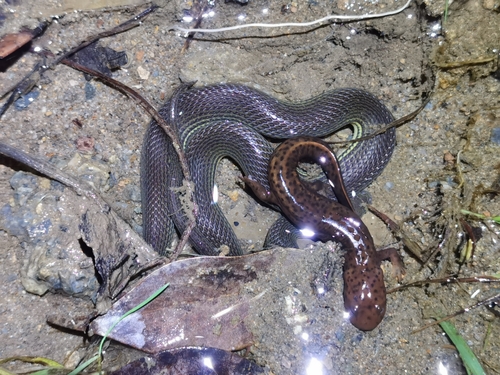 Sichuan Mountain KeelbackOpisthotropis latouchiiHarmless
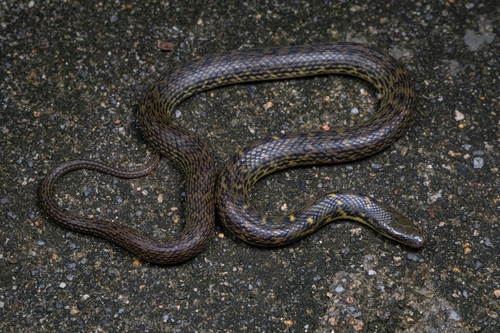 Opisthotropis cheniHarmless
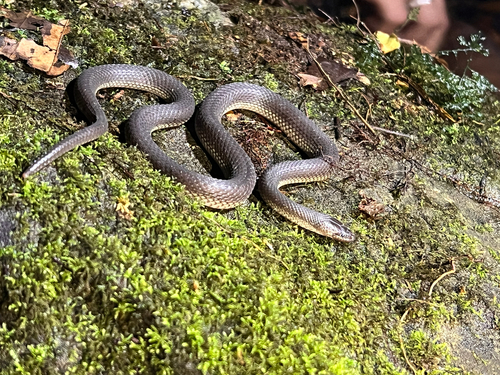 Olive Mountain KeelbackOpisthotropis typicaHarmless
 Opisthotropis hungtaiHarmless
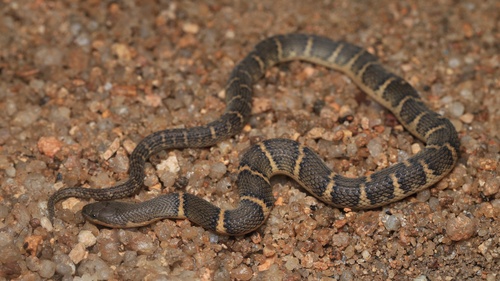 Opisthotropis lauiHarmless
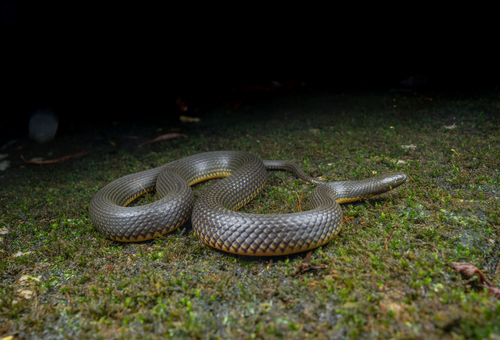 Shenzhen Mountain Stream SnakeOpisthotropis shenzhenensisHarmless
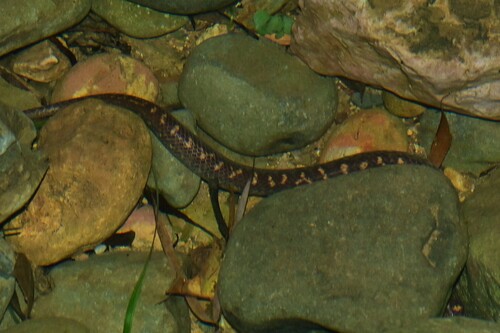 Guangxi Mountain KeelbackOpisthotropis guangxiensisHarmless
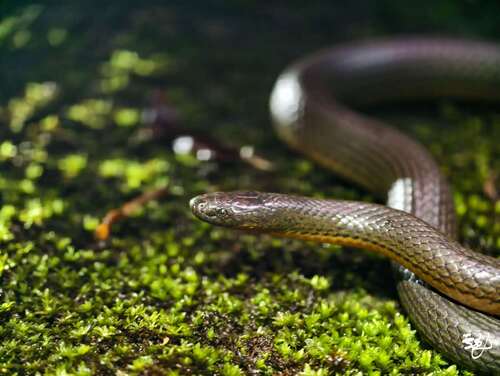 Maxwell's Mountain KeelbackOpisthotropis maxwelliHarmless
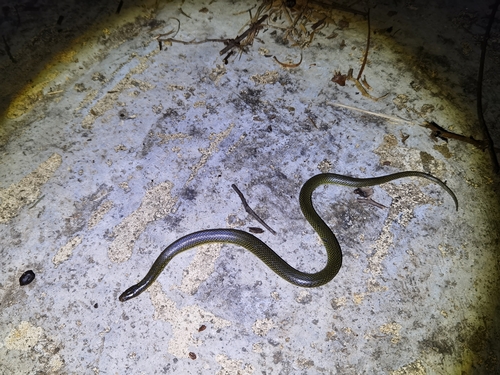 Opisthotropis zhaoermiiHarmless
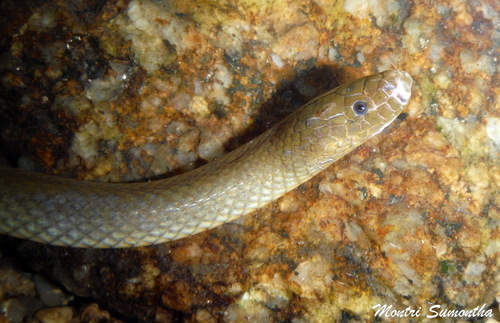 Smith's Mountain KeelbackOpisthotropis spenceriHarmless
 Chapa Mountain KeelbackOpisthotropis jacobiHarmless
 Opisthotropis haihaensisHarmless
Keep learning
- What Is a Snake? Anatomy and the BasicsA clear overview of what makes a snake a snake: limbless body plan, anatomy, evolution from lizards, species diversity, and why they are ectothermic.
- How Snakes Move, Hunt, and EatHow snakes move without legs, hunt as ambushers or active foragers, kill by constriction or venom, and swallow prey wider than their head.
- What Do Snakes Eat?All snakes are carnivores. Learn what snakes eat, how diet changes with size and age, how often they feed, and how they hunt and swallow prey.
- Venomous vs Nonvenomous: How to Tell the DifferenceThe folk rules for telling venomous snakes apart, where each one fails, and why location-based identification beats guessing by sight.