
Genus · Elapidae
Types of cobras
4 species make up the genus Ophiophagus, the snakes commonly called cobras. All of them are venomous.
About king cobras
Ophiophagus is the genus of king cobras, the longest venomous snakes in the world and the only snakes known to build a nest for their eggs.
Ophiophagus is an Asian genus in the family Elapidae, and its name means snake eater. That name is no accident: king cobras feed mainly on other snakes, hunting them by day across the forests of South and Southeast Asia. The genus is best known for sheer size. A king cobra is the longest venomous snake on Earth, with large individuals reaching around 5.5 meters, long enough that a rearing adult can lift roughly a third of its body off the ground and meet a standing person at eye level.
For a long time the king cobra was treated as a single species, Ophiophagus hannah, spread across an enormous range. Recent research has split that lineage into several distinct species. Our database lists four: the Northern King Cobra, the Sunda King Cobra, the Western Ghats King Cobra, and the Luzon King Cobra. All four are venomous, and all share the genus hallmarks of immense length and a hood that is distinctly narrower than the broad hoods of the true cobras in the genus Naja.
The standout piece of king cobra biology is nesting behavior. A female gathers leaves and forest litter into a mound, lays her eggs inside, and then guards the nest until they are ready to hatch. No other snake is known to build a nest this way, which makes Ophiophagus unusual among reptiles as well as among elapids. King cobras are also diurnal, alert, and notably aware of their surroundings, and they hold a prominent place in the mythology and religious traditions of many Asian cultures.
King cobras deliver large quantities of primarily neurotoxic venom. The volume alone makes a bite a serious threat, and a confirmed envenomation is a severe medical emergency that can require substantial amounts of antivenom along with hospital support such as monitoring and breathing assistance. Despite this, king cobras are generally shy animals that prefer to avoid people, and bites on humans are uncommon relative to the snake's fearsome reputation.
Recognition comes down to a combination of features rather than any single mark: extraordinary length, the narrower hood, and the willingness to rear high and hold a steady upright posture when confronted. None of that makes a wild king cobra safe to approach. Treat any king cobra in the wild as dangerous, give it room, and never attempt to handle or corner it. If a bite occurs, it is a medical emergency: contact emergency services and get the person to a hospital that can provide antivenom as fast as possible.
Ophiophagus belongs to the Elapidae family (Cobras, mambas, coral & sea snakes). Front-fanged venomous snakes, many with potent neurotoxic venom. Usually slender with a head barely wider than the neck and fixed front fangs (not the folding fangs of vipers). Coral snakes are boldly ringed; sea snakes have a flattened, paddle-like tail.
Danger: All elapids are venomous and the family is responsible for a large share of fatal snakebites worldwide. Many are shy, but bites can be life-threatening. Treat any bite as a medical emergency.
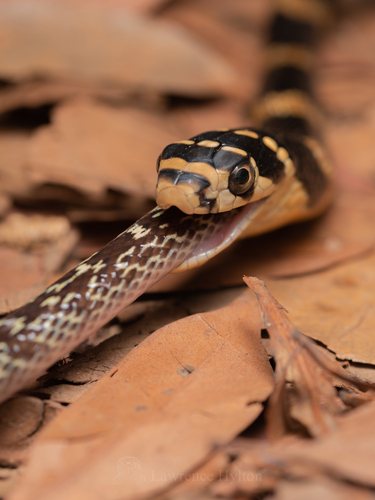
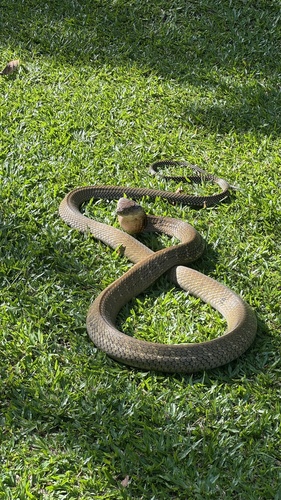
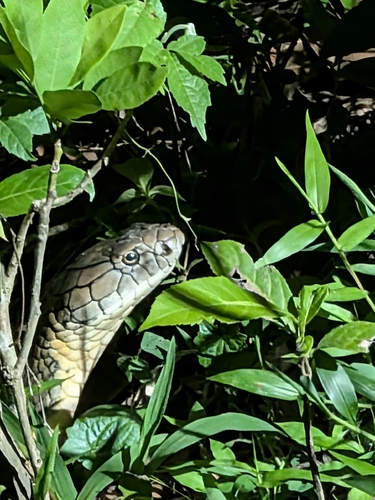
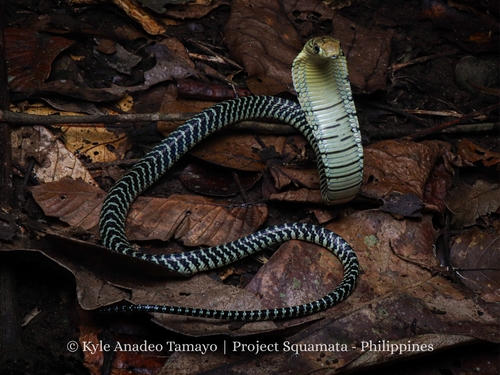
All species (4)
Keep learning
- Venomous vs Nonvenomous: How to Tell the DifferenceThe folk rules for telling venomous snakes apart, where each one fails, and why location-based identification beats guessing by sight.
- Are Snakes Dangerous? The Real Risk, in PerspectiveMost snakes are harmless and avoid people. Here is the honest picture of snakebite risk worldwide and how to lower your own.
- Snake Venom Explained: How It Works and WhyWhat snake venom actually is, why it evolved, the main venom types, fang delivery, how antivenom works, and why ranking the most venomous snake is hard.
- How Snakes Move, Hunt, and EatHow snakes move without legs, hunt as ambushers or active foragers, kill by constriction or venom, and swallow prey wider than their head.