
Genus · Atractaspididae
Micrelaps
3 species make up the genus Micrelaps. All of them are venomous.
About dwarf snakes
Small, secretive burrowing snakes of the Middle East and East Africa with an unusual venom delivery and a low-key, fossorial life.
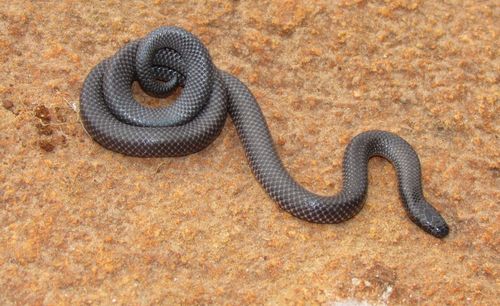
Micrelaps is a small genus of slender, modestly sized snakes placed in the family Atractaspididae, the same family that holds the mole vipers and stiletto snakes. That family is a grouping of African and Middle Eastern burrowing snakes that share a fossorial, secretive lifestyle and rear-positioned or specialized venom fangs rather than the front fangs of true vipers and cobras. Micrelaps fits this picture as a set of small ground-dwelling snakes that spend much of their lives in soil, leaf litter, and under cover. Our database holds 3 species, including Mueller's Snake, the Black-headed Micrelaps, and the Kenya Two-headed Snake.
Members of this genus are found in two main regions. Some species occur in the eastern Mediterranean and Middle East, including parts of the Levant, while others are East African, ranging across countries such as Kenya, Tanzania, and Somalia. Typical habitats reflect their burrowing habits: dry grasslands, savanna, scrub, semi-arid soils, and areas with loose ground that is easy to move through. They are rarely seen in the open and are most often encountered under rocks, logs, or other debris, or after rain brings them closer to the surface.
In general terms, these are small snakes with smooth scales, cylindrical bodies, small eyes suited to a life underground, and short blunt tails. Many carry a contrasting head pattern, often a dark or black cap over the head and neck against a lighter body, which is reflected in names like Black-headed Micrelaps and the common banded appearance some species show. The Kenya Two-headed Snake gets its name from a head and tail that can look similar, a passive defense seen in several burrowing snakes that may confuse a predator about which end is which. These features are shared broadly across the genus rather than diagnostic of any one species.
Micrelaps snakes are venomous and rear-fanged, meaning their enlarged grooved fangs sit toward the back of the upper jaw rather than at the front. This arrangement is built for subduing small prey, and these snakes are not considered a serious danger to people the way front-fanged vipers and elapids can be. That said, venomous is not the same as harmless, and the medical significance of bites from this genus is poorly documented because the snakes are small, secretive, and rarely interact with humans. No wild venomous snake should be handled. If a bite occurs, do not attempt to capture the snake or apply folk first aid; seek emergency care immediately and contact US Poison Control at 1-800-222-1222 or local emergency services.
Ecologically, these are quiet, low-profile predators. Like other small atractaspidids, they feed largely on small prey suited to a burrowing hunter, which can include other small reptiles, amphibians, and invertebrates, using their venom to overcome it. They are not aggressive and rely on concealment, burrowing, and defensive bluffing rather than confrontation. Reproduction in the genus is not well studied across all species, which is common for obscure fossorial snakes, so it is better understood through the broader patterns of small egg-laying burrowing snakes in the region than through detailed records for each species.
Micrelaps belongs to the Atractaspididae family (Stiletto snakes (burrowing asps)). Burrowing venomous snakes that stab sideways, and cannot be safely held. Small, glossy, uniformly dark, with tiny eyes and a blunt head no wider than the neck. The side-stabbing strike is unique.
Danger: Venomous. Bites cause intense local pain and tissue damage; most are not life-threatening but require medical care. Never attempt to pick one up.
All species (3)


Keep learning
- Venomous vs Nonvenomous: How to Tell the DifferenceThe folk rules for telling venomous snakes apart, where each one fails, and why location-based identification beats guessing by sight.
- Are Snakes Dangerous? The Real Risk, in PerspectiveMost snakes are harmless and avoid people. Here is the honest picture of snakebite risk worldwide and how to lower your own.
- Snake Venom Explained: How It Works and WhyWhat snake venom actually is, why it evolved, the main venom types, fang delivery, how antivenom works, and why ranking the most venomous snake is hard.
- How Snakes Move, Hunt, and EatHow snakes move without legs, hunt as ambushers or active foragers, kill by constriction or venom, and swallow prey wider than their head.