
Genus · Lamprophiidae
Types of file snakes
2 species make up the genus Mehelya, the snakes commonly called file snakes. None are considered dangerous to humans.
About file snakes
African file snakes with rough, triangular bodies and a striking ridge running down the spine.
Mehelya is a small genus of African file snakes in the family Lamprophiidae, a large group of mostly African and Madagascan snakes that also includes house snakes, wolf snakes, and centipede eaters. Our database holds two members, the Western Forest File Snake and the Small-eyed File Snake. The genus name has long been tangled with the closely related genus Gonionotophis, and many sources treat file snakes across both names, so the boundaries here reflect ongoing taxonomic revision rather than settled lines. What stays consistent is the file snake body plan: heavily keeled scales and a distinctive ridge of skin along the backbone that gives these snakes a rough, file-like feel and a body that looks triangular in cross section.
These are snakes of sub-Saharan Africa, found across a band of forest, woodland, and moist savanna habitats depending on the species. The Western Forest File Snake leans toward forested and wetter environments in West and Central Africa, while file snakes as a group tend to be secretive, ground-dwelling, and often active at night. You recognize them in general terms by the loose, granular look of the skin, the pale line frequently running down the spine, and the matte rather than glossy appearance. They are not large, flashy snakes; most are slender, modest in length, and easy to overlook in leaf litter or under cover.
File snakes in this genus are non-venomous and harmless to people. They are constrictors that feed largely on other snakes and on small vertebrates, and some file snakes are notable for eating venomous species without apparent harm. They lay eggs rather than giving live birth. Because they pose no danger and play a useful role controlling other snakes, they are best left alone and observed, not handled. As with any wild animal, do not pick up a snake you cannot positively identify, and if a bite from an unknown snake breaks the skin, seek medical care and contact US Poison Control at 1-800-222-1222 or your local emergency services.
Mehelya belongs to the Lamprophiidae family (African house snakes & allies). Common African snakes, including the familiar house snakes. Variable; many are smooth-scaled, secretive, and active at night.
Danger: Mostly harmless. A few are rear-fanged with mild venom of no medical significance.
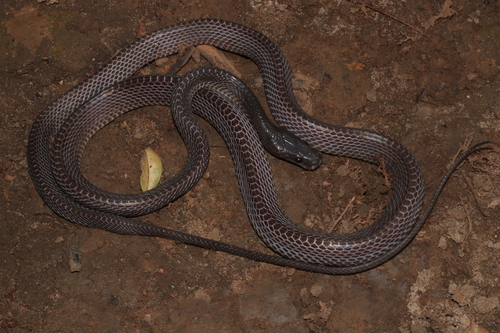
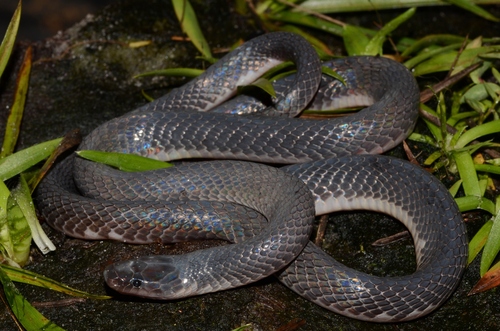
All species (2)
Keep learning
- What Is a Snake? Anatomy and the BasicsA clear overview of what makes a snake a snake: limbless body plan, anatomy, evolution from lizards, species diversity, and why they are ectothermic.
- How Snakes Move, Hunt, and EatHow snakes move without legs, hunt as ambushers or active foragers, kill by constriction or venom, and swallow prey wider than their head.
- What Do Snakes Eat?All snakes are carnivores. Learn what snakes eat, how diet changes with size and age, how often they feed, and how they hunt and swallow prey.
- Venomous vs Nonvenomous: How to Tell the DifferenceThe folk rules for telling venomous snakes apart, where each one fails, and why location-based identification beats guessing by sight.