
Genus · Colubridae
Types of smooth snakes
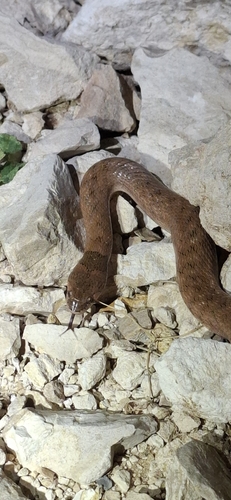
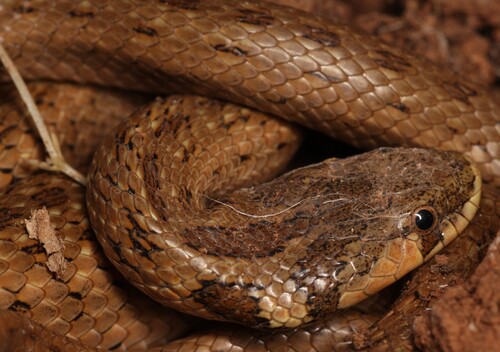
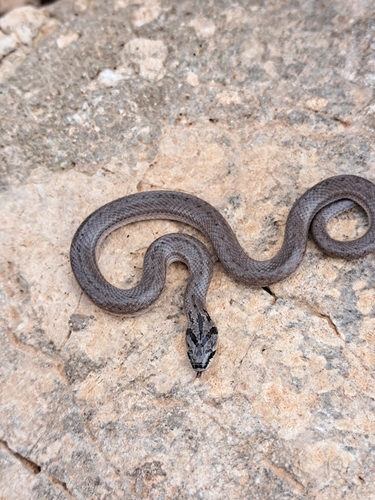
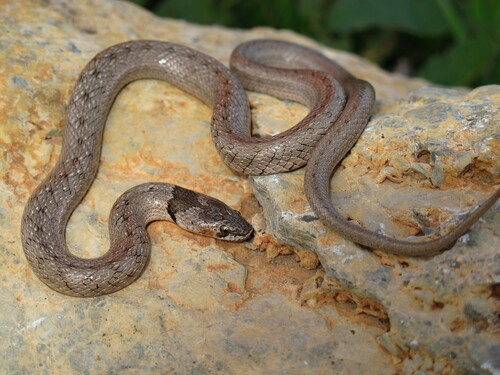
4 species make up the genus Macroprotodon, the snakes commonly called smooth snakes. None are considered dangerous to humans.
About false smooth snakes
Small, secretive rear-fanged colubrids of the western Mediterranean, named for their resemblance to the harmless smooth snakes.
Macroprotodon is a genus of small snakes in the family Colubridae, the largest and most diverse snake family. Members are commonly called false smooth snakes because their slender build and patterning recall the true smooth snakes of the genus Coronella, even though the two are not closely related. The genus is recognized by a flattened head that is barely distinct from the neck, smooth scales, and a characteristic dark collar or blotch across the nape and sides of the head.
The genus is centered on the western Mediterranean. Members occur across North Africa and parts of the Iberian Peninsula, including Spain and Portugal, with populations reaching the Maghreb region of Morocco, Algeria, and Tunisia and some Mediterranean islands. Typical habitat is dry, warm, open country: scrubland, rocky hillsides, sandy soils, stone walls, and the edges of cultivated land where cover and prey are available.
These are small snakes, generally well under a meter in total length, with many individuals around 30 to 60 centimeters. In general terms they show a grey, brownish, or sandy ground color, often with fine darker markings, and the dark neck collar that gives the group much of its field identity. The smooth scales and small size help separate them from the bulkier vipers that share their range, though only a careful look at head shape and markings reliably distinguishes look-alikes.
False smooth snakes are rear-fanged and mildly venomous. They carry enlarged grooved teeth at the back of the upper jaw and a Duvernoy's gland that produces a weak venom used to subdue small prey. They are not considered dangerous to people and are shy, secretive, and largely nocturnal or crepuscular, but no wild snake should be handled. A bite from a rear-fanged colubler can cause local irritation, and the only safe response to any snakebite is to leave the animal alone. If a bite occurs, seek medical care; in the US contact Poison Control at 1-800-222-1222, and elsewhere contact local emergency services.
Ecologically, Macroprotodon are predators of small reptiles. Their diet centers on lizards, including skinks and geckos, along with other small snakes and occasionally small mammals or invertebrates, with the mild venom helping to immobilize struggling prey. They are egg-laying, producing small clutches, and they spend much of the day hidden under stones, in burrows, or beneath debris, emerging to hunt in cooler hours. Their retiring habits mean encounters with humans are uncommon.
Macroprotodon belongs to the Colubridae family (Colubrids). The largest snake family, and the one most snakes you meet belong to. Typically round pupils, a head only slightly wider than the neck, and no heat-sensing facial pit or rattle. Scales may be smooth and glossy or keeled and matte depending on the species.
Danger: Almost all colubrids are harmless. A small number are rear-fanged with medically significant venom, the boomslang and the twig (vine) snakes of Africa being the dangerous exceptions. Most colubrids will flee or bluff rather than bite.
All species (4)
Keep learning
- What Is a Snake? Anatomy and the BasicsA clear overview of what makes a snake a snake: limbless body plan, anatomy, evolution from lizards, species diversity, and why they are ectothermic.
- How Snakes Move, Hunt, and EatHow snakes move without legs, hunt as ambushers or active foragers, kill by constriction or venom, and swallow prey wider than their head.
- What Do Snakes Eat?All snakes are carnivores. Learn what snakes eat, how diet changes with size and age, how often they feed, and how they hunt and swallow prey.
- Venomous vs Nonvenomous: How to Tell the DifferenceThe folk rules for telling venomous snakes apart, where each one fails, and why location-based identification beats guessing by sight.