
Genus · Lamprophiidae
Types of water snakes
6 species make up the genus Lycodonomorphus, the snakes commonly called water snakes. None are considered dangerous to humans.
About African water snakes
African water snakes are harmless, semi-aquatic hunters of frogs and fish that live along streams, swamps, and lake edges across sub-Saharan Africa.
Lycodonomorphus is a genus of African water snakes in the family Lamprophiidae, a large group of mostly African and Madagascan snakes that also includes house snakes, wolf snakes, and many other ground-dwelling species. The genus is tied to fresh water, and its members are usually found close to rivers, streams, marshes, dams, and the vegetated margins of lakes. Our database lists six species, including the Common Brown Water Snake, the Dusky-bellied Water Snake, the Mlanje White-bellied Water Snake, and the Tanganyika Water Snake.
These are small to medium-sized snakes with smooth, glossy scales and a fairly slender, cylindrical body built for slipping through water and dense streamside vegetation. Coloration tends toward plain browns, olives, and grays on the back, often with a paler or contrasting belly that gives several species their common names. There are no broad species-wide patterns that let you identify every member at a glance, so location near water and the smooth, even-colored body are the more reliable general clues.
African water snakes are not venomous. They are non-venomous constrictors and pose no medical danger to people. A cornered individual may bite to defend itself, but the bite is harmless beyond minor superficial marks. There is no venom to worry about, and these snakes are not aggressive toward humans. As with any wild animal, the responsible approach is to leave it alone and let it move off rather than catching or handling it.
Even though this genus is harmless, identification in the field is not always certain, and other snakes share the same wet habitats. If a person is ever bitten by a snake they cannot confidently identify, or if any worrying symptoms appear, treat it as a medical matter and contact emergency services or, in the United States, Poison Control at 1-800-222-1222. Do not rely on guesswork at the water's edge to rule out a dangerous species.
Ecologically, Lycodonomorphus snakes are skilled aquatic and semi-aquatic foragers. They hunt frogs, tadpoles, and fish, and some will take small mammals or other prey near the water, subduing food by constriction rather than venom. Many are active at dusk and after dark, when they enter shallow water to feed. Like most lamprophiids, these snakes lay eggs rather than giving live birth. Their reliance on healthy frog and fish populations makes them a useful indicator of the freshwater habitats they call home.
Lycodonomorphus belongs to the Lamprophiidae family (African house snakes & allies). Common African snakes, including the familiar house snakes. Variable; many are smooth-scaled, secretive, and active at night.
Danger: Mostly harmless. A few are rear-fanged with mild venom of no medical significance.
All species (6)
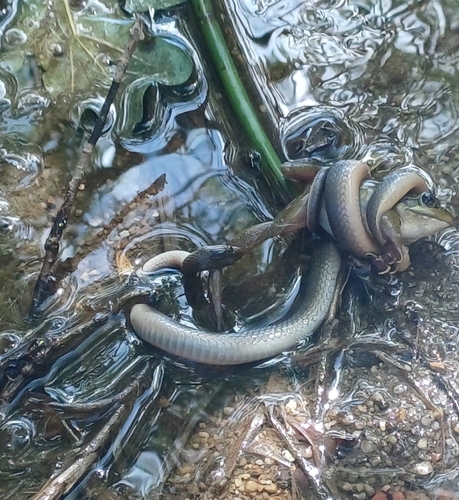 Common Brown Water SnakeLycodonomorphus rufulusHarmless
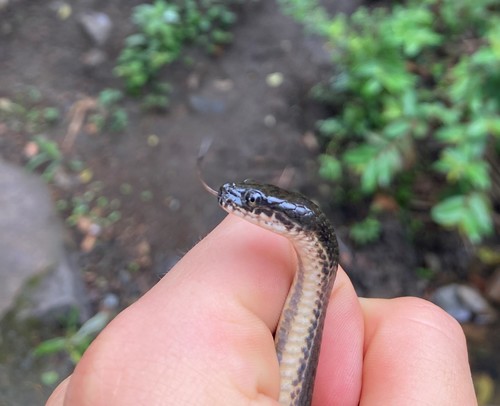 Dusky-bellied Water SnakeLycodonomorphus laevissimusHarmless
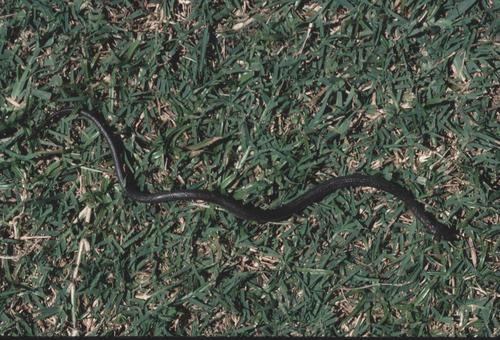 Mlanje White-bellied Water SnakeLycodonomorphus mlanjensisHarmless
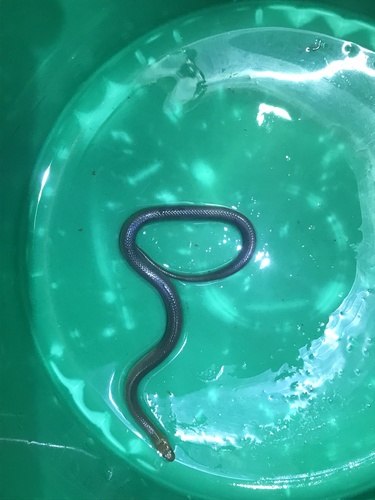 Tanganyika Water SnakeLycodonomorphus bicolorHarmless
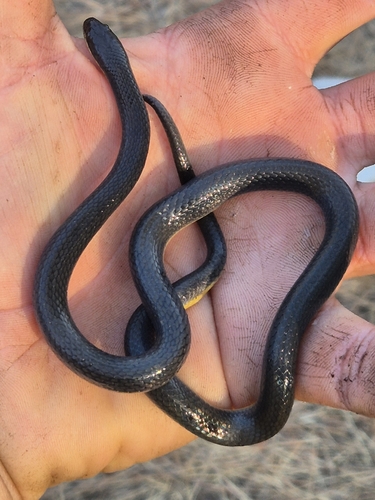 Floodplain Water SnakeLycodonomorphus obscuriventrisHarmless
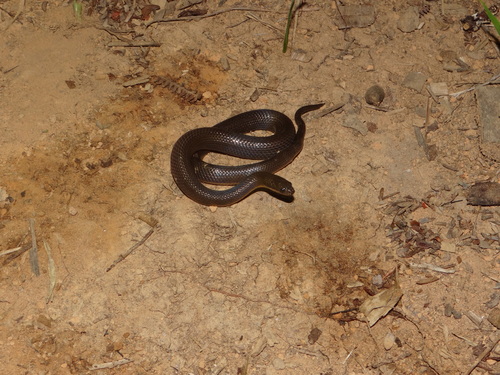 Whyte's Water SnakeLycodonomorphus whytiiHarmless
Keep learning
- What Is a Snake? Anatomy and the BasicsA clear overview of what makes a snake a snake: limbless body plan, anatomy, evolution from lizards, species diversity, and why they are ectothermic.
- How Snakes Move, Hunt, and EatHow snakes move without legs, hunt as ambushers or active foragers, kill by constriction or venom, and swallow prey wider than their head.
- What Do Snakes Eat?All snakes are carnivores. Learn what snakes eat, how diet changes with size and age, how often they feed, and how they hunt and swallow prey.
- Venomous vs Nonvenomous: How to Tell the DifferenceThe folk rules for telling venomous snakes apart, where each one fails, and why location-based identification beats guessing by sight.