
Genus · Colubridae
Types of parrot snakes
20+ species make up the genus Leptophis, the snakes commonly called parrot snakes. None are considered dangerous to humans.
About Parrot snakes
Slender, big-eyed green tree snakes that race through the foliage of the American tropics chasing frogs and lizards.
Leptophis is a genus of slim, fast-moving tree snakes in the family Colubridae, the largest snake family and the one that holds most of the world's harmless and mildly venomous species. The common name parrot snake comes from their bright green coloring and the way many species pair it with bronze, gold, or coppery stripes, recalling the plumage of a parrot. Like most colubrids, they are agile, alert, and built for life above the ground rather than for ambushing prey from a coil.
The genus is a New World group. Its roughly two dozen species range from southern Mexico through Central America and across much of tropical South America, with one species reaching into the extreme southern United States. They are animals of warm, humid country: rainforest, gallery forest along rivers, second growth, plantations, and brushy edges. You are most likely to find them up in shrubs and low trees, draped along branches or moving through tangles of vines during the day.
Recognizing a parrot snake comes down to a combination of build and color rather than any single mark. They are long and whip-thin with a notably long tail, a narrow head that is still distinct from the neck, and large eyes with round pupils that suit a daytime, visually hunting animal. The body is usually some shade of green or bronze-green, often with a dark line running through the eye and pale or golden stripes along the flanks. When threatened, several species put on a striking display: they open the mouth wide to show a dark lining and may flatten or inflate the front of the body.
Parrot snakes are rear-fanged. They carry enlarged grooved teeth toward the back of the upper jaw and a mild venom (a Duvernoy's secretion) that helps them subdue small cold-blooded prey. They are not considered dangerous to people, and the vast majority of encounters end with the snake fleeing. That said, no wild snake should be picked up or handled. A rear-fanged bite can cause local swelling, and individual reactions vary. If a bite occurs, stay calm, do not attempt to capture the snake, and seek medical evaluation. In the United States contact Poison Control at 1-800-222-1222, and elsewhere contact local emergency services.
Ecologically these are active daytime hunters. Their diet leans heavily on frogs and lizards, with some species also taking small birds, eggs, and insects, which they pursue actively through vegetation rather than waiting in ambush. Leptophis are egg-laying snakes, depositing small clutches that hatch into miniatures of the adults. Their speed, camouflage, and bluffing threat display are their main defenses in a forest full of birds and larger snakes that would happily eat them.
Leptophis belongs to the Colubridae family (Colubrids). The largest snake family, and the one most snakes you meet belong to. Typically round pupils, a head only slightly wider than the neck, and no heat-sensing facial pit or rattle. Scales may be smooth and glossy or keeled and matte depending on the species.
Danger: Almost all colubrids are harmless. A small number are rear-fanged with medically significant venom, the boomslang and the twig (vine) snakes of Africa being the dangerous exceptions. Most colubrids will flee or bluff rather than bite.
All species (20)
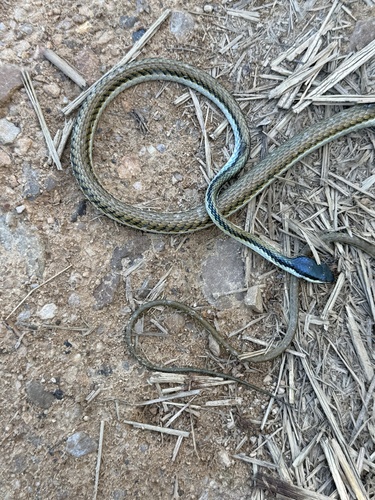 Mexican Parrot SnakeLeptophis mexicanusHarmless
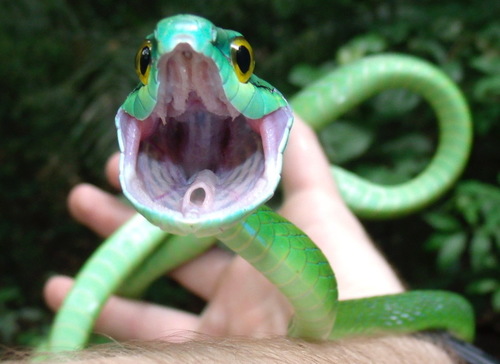 Western Parrot-SnakeLeptophis occidentalisHarmless
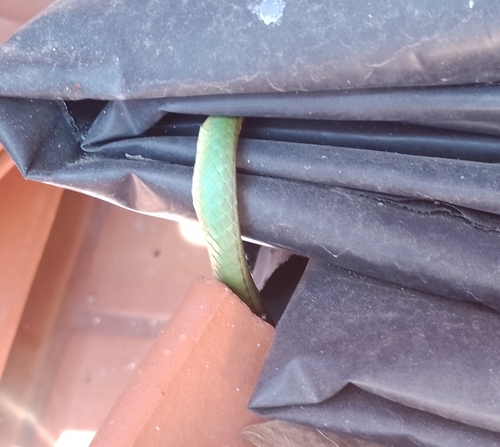 Pacific Coast Parrot SnakeLeptophis diplotropisHarmless
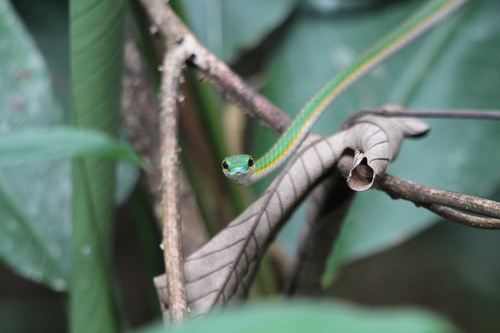 Giant Parrot SnakeLeptophis ahaetullaHarmless
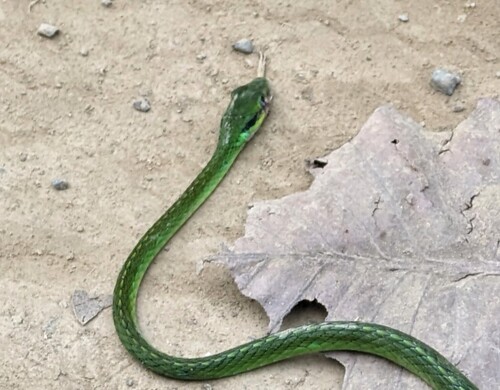 Cope's Parrot SnakeLeptophis depressirostrisHarmless
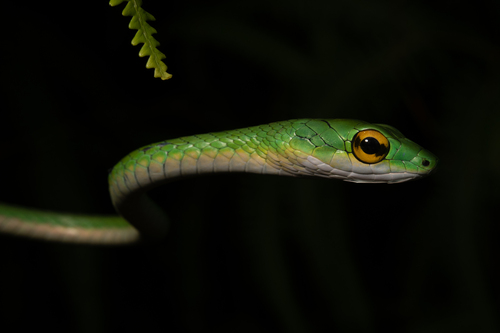 Leptophis praestansHarmless
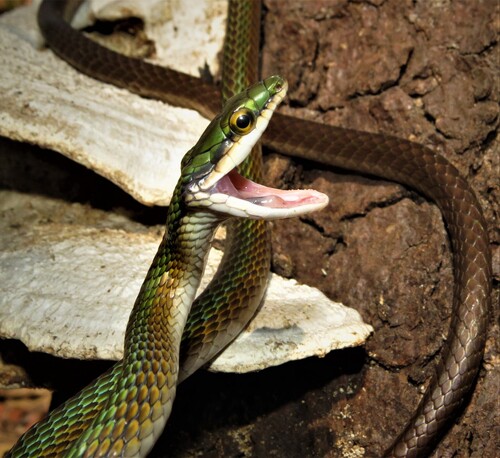 Southern Green Parrot SnakeLeptophis marginatusHarmless
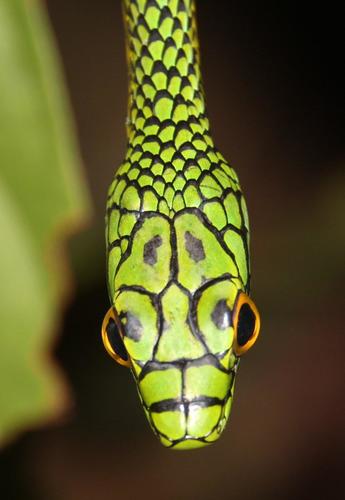 Black-skinned Parrot SnakeLeptophis nigromarginatusHarmless
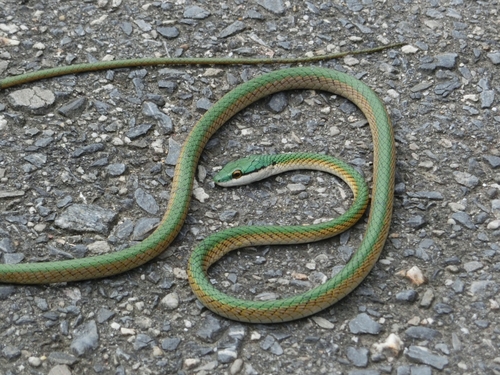 Oliver's Parrot SnakeLeptophis coeruleodorsusHarmless
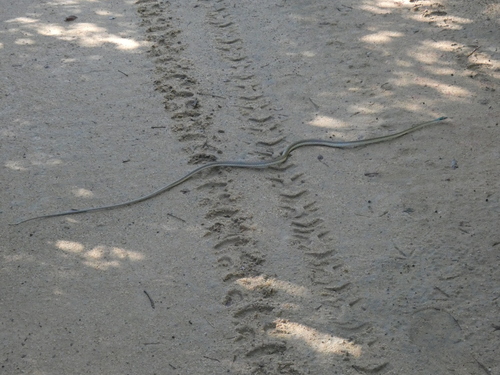 Leptophis liocercusHarmless
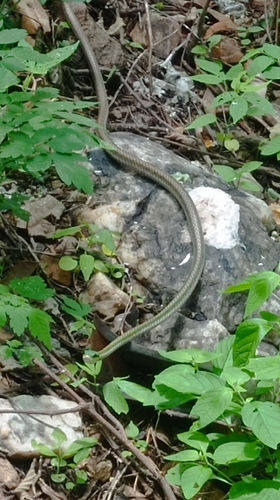 Leptophis dibernardoiHarmless
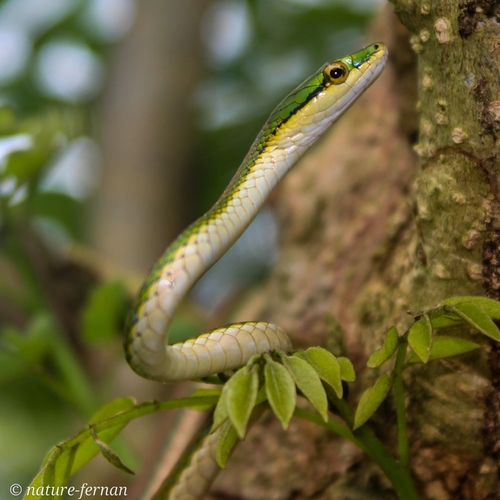 Oliver's Parrot SnakeLeptophis nebulosusHarmless
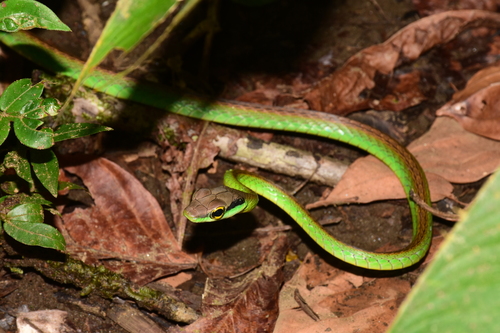 Leptophis urostictusHarmless
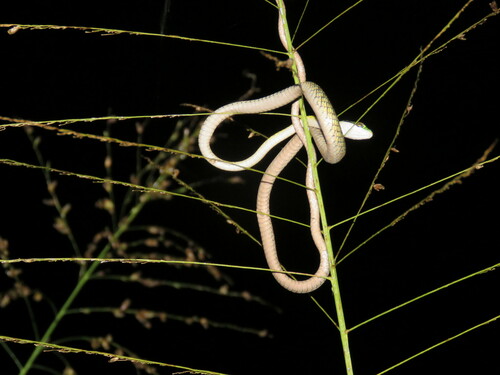 Leptophis bolivianusHarmless
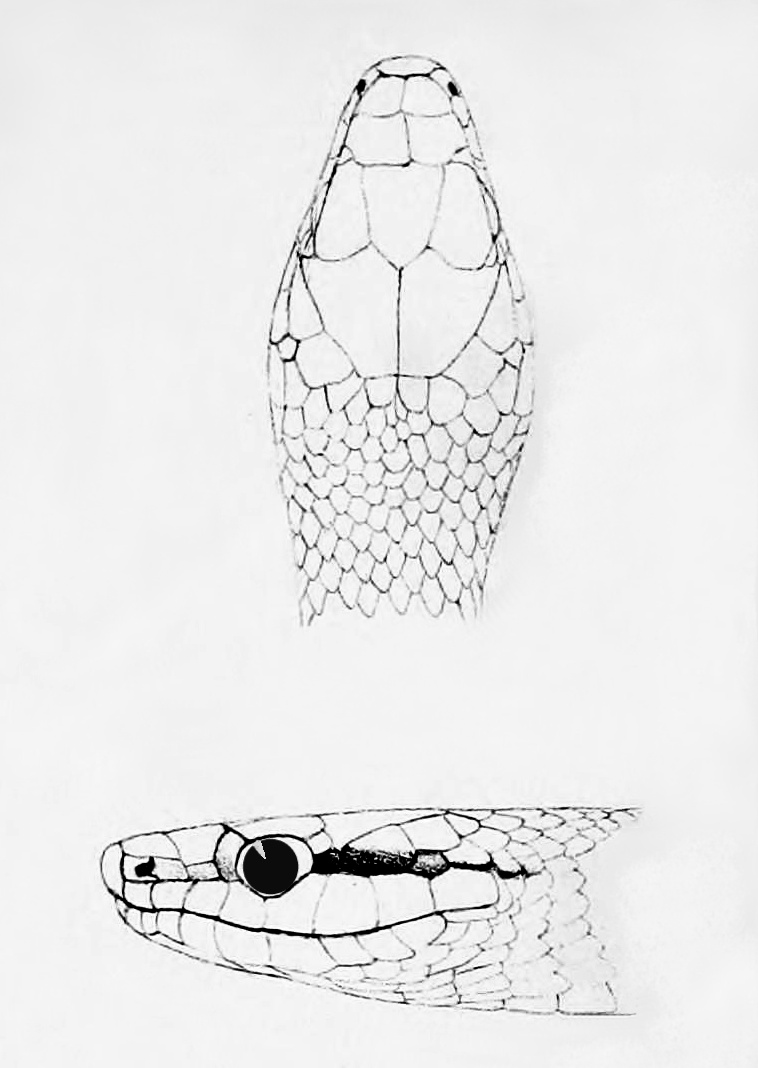 Cloud Forest Parrot SnakeLeptophis modestusHarmless
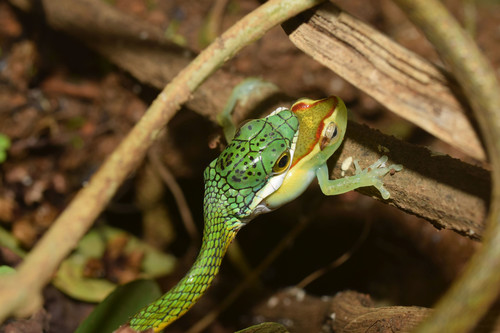 Leptophis bocourtiHarmless
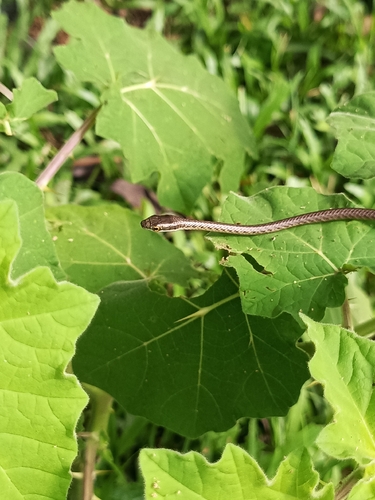 Copper Parrot-SnakeLeptophis cupreusHarmless
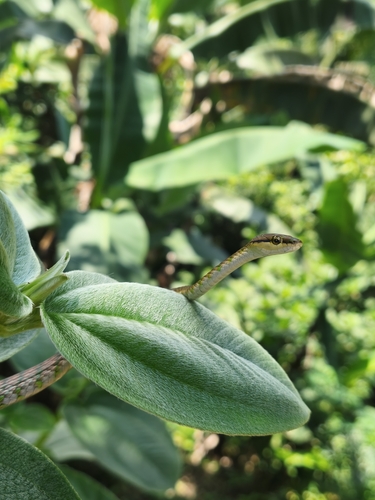 Despax's Parrot SnakeLeptophis rivetiHarmless
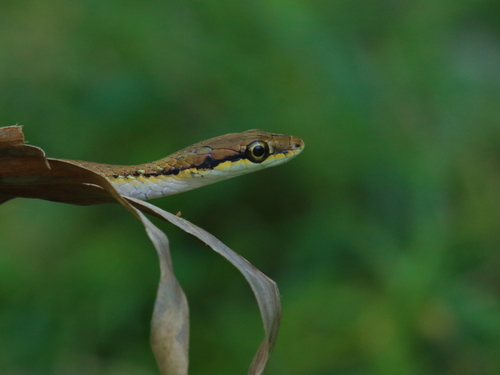 Trinidad upland parrot snakeLeptophis stimsoniHarmless
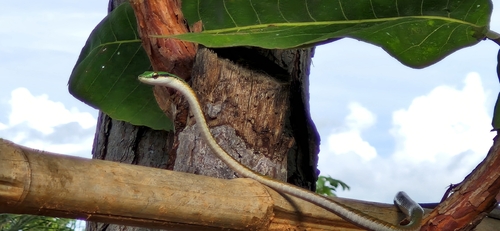 Leptophis mystacinusHarmless
Keep learning
- What Is a Snake? Anatomy and the BasicsA clear overview of what makes a snake a snake: limbless body plan, anatomy, evolution from lizards, species diversity, and why they are ectothermic.
- How Snakes Move, Hunt, and EatHow snakes move without legs, hunt as ambushers or active foragers, kill by constriction or venom, and swallow prey wider than their head.
- What Do Snakes Eat?All snakes are carnivores. Learn what snakes eat, how diet changes with size and age, how often they feed, and how they hunt and swallow prey.
- Venomous vs Nonvenomous: How to Tell the DifferenceThe folk rules for telling venomous snakes apart, where each one fails, and why location-based identification beats guessing by sight.