
Genus · Viperidae
Types of bushmasters
5 species make up the genus Lachesis, the snakes commonly called bushmasters. All of them are venomous.
About bushmasters
Lachesis, the bushmasters, are New World pit vipers and the largest vipers in the Americas, with the South American species reaching well 3+ meters, making it the longest viper in the world.
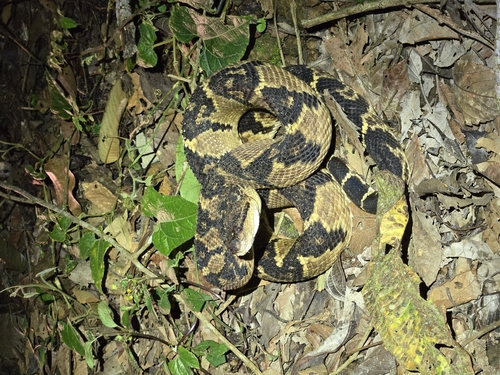
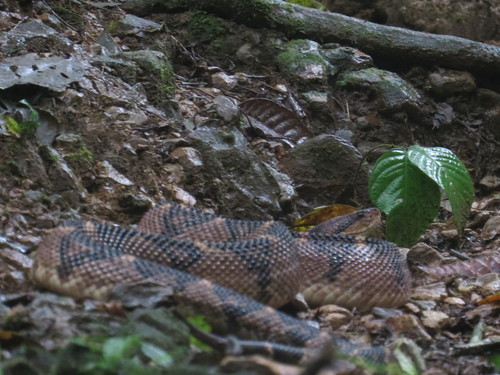
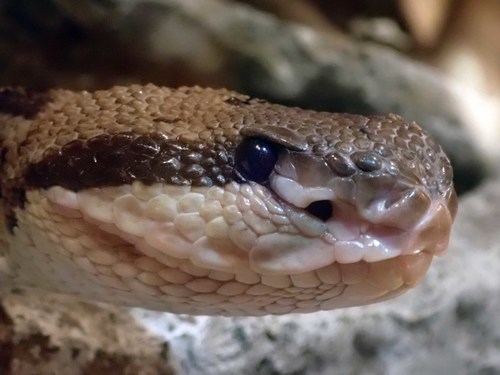
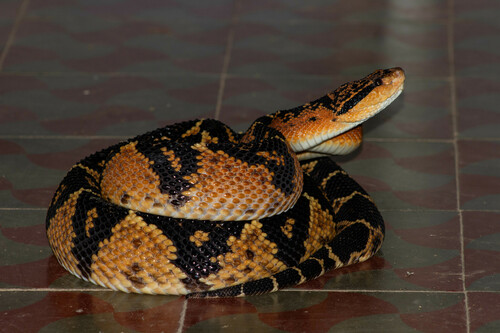
Lachesis is a genus of pit vipers in the family Viperidae, native to the tropical forests of the New World. The genus is named after one of the three Fates of Greek myth, the one who measured the thread of life. Our database lists 5 species, all 5 venomous. They are exceptional among vipers for their sheer size: the South American bushmaster regularly exceeds 3 meters, which makes it the longest venomous snake in the Americas and the longest viper anywhere on Earth. Documented members include the South American Bushmaster, Chocoan Bushmaster, Central American Bushmaster, Atlantic Forest Bushmaster, and Black-headed Bushmaster.
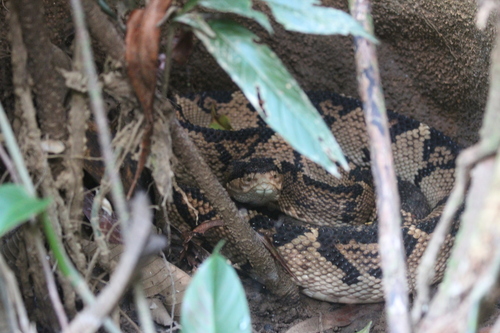
Bushmasters live in remote, undisturbed tropical rainforest, ranging from Central America south through the Amazon basin and along the Atlantic forest of Brazil. Their preference for deep, intact forest is the main reason encounters with people are relatively rare. You can recognize a bushmaster by its very large body, a distinctive rough scale texture in which the keeled scales are raised and almost bristly to the eye, and a bold pattern of dark diamonds or chevrons along the back. The tail narrows to a small horny spine at the tip, a feature that helps separate them from other large tropical vipers.
One of the most unusual aspects of bushmaster biology sets them apart from nearly all other New World pit vipers: they lay eggs rather than giving live birth. The female deposits a clutch and then remains with it, guarding the eggs through incubation. They are secretive, largely nocturnal ambush predators, lying still for long periods and striking at small mammals that pass within reach. This patient, hidden hunting style, combined with their remote habitat, means they spend most of their lives out of sight.
The venom of a bushmaster is a serious medical concern. These snakes have long fangs and can deliver a deep bite with a large venom yield. Bites are uncommon because the snake lives far from populated areas, but when they happen they are very serious medical emergencies. The remote rainforest terrain where bushmasters are found also makes reaching a hospital harder, which compounds the danger of any bite.
Treat every bushmaster, and every wild venomous snake, as dangerous and never to be handled. A bushmaster bite requires antivenom and hospital care. If a bite occurs, the only correct response is to get the person to emergency medical care as quickly as possible; do not rely on field remedies. The honest summary is that bushmasters are rarely met but genuinely dangerous, and respect from a distance is the right posture in any forest where they live.
Lachesis belongs to the Viperidae family (Vipers & pit vipers). Heavy-bodied venomous snakes with long, hinged, hollow fangs. Broad, triangular head distinct from a narrow neck, heavy body, and (usually) vertical, cat-like pupils. Pit vipers also have a heat-sensing pit; true vipers do not.
Danger: Every viper is venomous, and the family includes some of the world's most medically important snakes. Venom is typically hemotoxic, causing pain, swelling, tissue damage, and bleeding. Treat any viper bite as a medical emergency.
All species (5)
Keep learning
- Venomous vs Nonvenomous: How to Tell the DifferenceThe folk rules for telling venomous snakes apart, where each one fails, and why location-based identification beats guessing by sight.
- Are Snakes Dangerous? The Real Risk, in PerspectiveMost snakes are harmless and avoid people. Here is the honest picture of snakebite risk worldwide and how to lower your own.
- Snake Venom Explained: How It Works and WhyWhat snake venom actually is, why it evolved, the main venom types, fang delivery, how antivenom works, and why ranking the most venomous snake is hard.
- How Snakes Move, Hunt, and EatHow snakes move without legs, hunt as ambushers or active foragers, kill by constriction or venom, and swallow prey wider than their head.