
Genus · Lamprophiidae
Inyoka
The genus Inyoka contains a single species. It is not considered dangerous to humans.
About Swazi rock snake
Inyoka is a tiny southern African genus built around a single rock-dwelling snake first described in 2013.
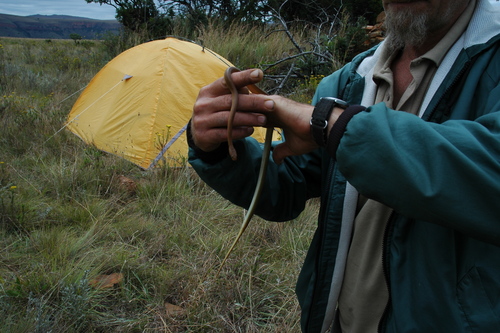
Inyoka is a monotypic genus, meaning it holds just one recognized species, the Swazi rock snake (Inyoka swazicus). It belongs to the family Lamprophiidae, a large and varied African group of advanced snakes that also includes house snakes, wolf snakes, and many small ground dwellers. The genus name comes from the Zulu and Swati word for snake. It was split out from related rock snakes because its anatomy and head scales set it apart enough to stand on its own.
The species is known from the rocky uplands of the region around Eswatini (formerly Swaziland) and adjacent parts of southern Africa. As the common name suggests, it is tied to rock outcrops, crevices, and the broken stony habitat where it can shelter and hunt. Lamprophiids of this kind tend to be secretive and slender, slipping into cracks and under stones rather than moving in the open, which is one reason so little has been documented about this particular snake.
In general terms, members of this family are small to medium nonvenomous snakes that pose no danger to people. The Swazi rock snake is harmless. Like its rock-snake relatives, it is expected to feed on small prey such as lizards and to lay eggs rather than bear live young, though detailed natural history for this rarely seen species remains thin. There is no reason to fear it, but as with any wild snake, the right approach is to leave it alone and observe from a distance rather than handle it.
Inyoka belongs to the Lamprophiidae family (African house snakes & allies). Common African snakes, including the familiar house snakes. Variable; many are smooth-scaled, secretive, and active at night.
Danger: Mostly harmless. A few are rear-fanged with mild venom of no medical significance.
All species (1)
Keep learning
- What Is a Snake? Anatomy and the BasicsA clear overview of what makes a snake a snake: limbless body plan, anatomy, evolution from lizards, species diversity, and why they are ectothermic.
- How Snakes Move, Hunt, and EatHow snakes move without legs, hunt as ambushers or active foragers, kill by constriction or venom, and swallow prey wider than their head.
- What Do Snakes Eat?All snakes are carnivores. Learn what snakes eat, how diet changes with size and age, how often they feed, and how they hunt and swallow prey.
- Venomous vs Nonvenomous: How to Tell the DifferenceThe folk rules for telling venomous snakes apart, where each one fails, and why location-based identification beats guessing by sight.