
Genus · Colubridae
Hydrops
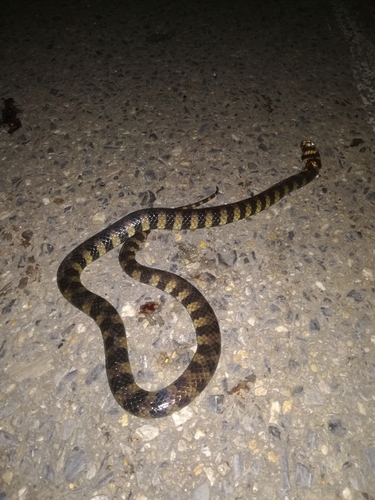
3 species make up the genus Hydrops. None are considered dangerous to humans.
About South American water snakes
Hydrops are secretive, aquatic South American snakes that mimic coral snake colors but pose no real threat to people.
Hydrops is a small genus of aquatic snakes native to tropical South America. They belong to the vast and varied colubrid lineage, the broad group of mostly harmless snakes that includes the majority of the world's species. Within that lineage, Hydrops sits among the New World water and swamp snakes, a set of forms built for life in slow rivers, flooded forests, marshes, and ponds rather than on dry land.
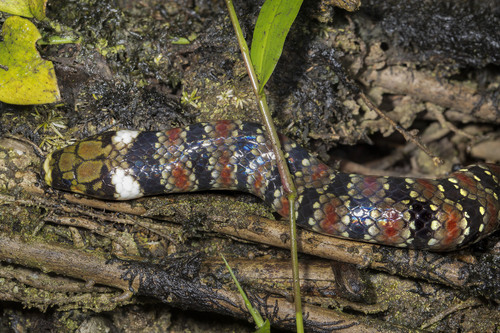
These snakes are slender and smooth, with eyes set somewhat high on the head, an arrangement common in animals that spend their lives partly submerged. Several members are boldly ringed in red, black, and pale bands, a pattern that strongly recalls the genuinely dangerous coral snakes that share their range. This resemblance is a defensive bluff: a predator that has learned to avoid coral snake colors may give a banded Hydrops a wide berth even though the water snake cannot deliver a comparable bite.
Recognizing Hydrops in general terms means looking at where and how the animal lives as much as the markings. They are tied to water and are rarely found far from it, they are most active in warmer, wetter conditions, and they tend to be retiring rather than aggressive. Color alone is unreliable in the field because so many harmless and dangerous snakes converge on the same ringed pattern, which is exactly why no banded snake should be picked up on looks.
Hydrops are part of the rear-fanged side of the colubrid radiation rather than front-fanged venomous snakes like vipers or elapids. Their saliva can subdue the small aquatic prey they specialize in, but they are not considered dangerous to humans and there is no record of them causing serious harm. As with any wild snake, the sensible rule is to observe and leave it alone. A defensive bite from any animal can still break skin and invite infection, so do not handle wild snakes, and if a bite occurs and symptoms develop or the snake's identity is uncertain, seek emergency care and contact US Poison Control at 1-800-222-1222 or local emergency services.
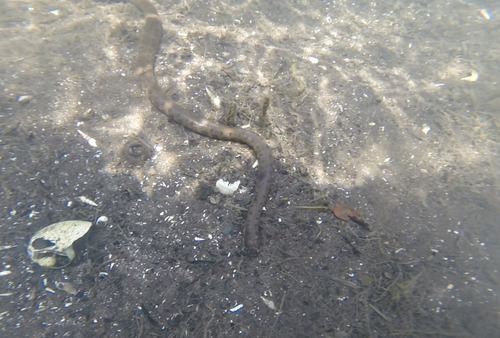
Ecologically these snakes are aquatic hunters that feed largely on fish and other small water animals such as eels and aquatic invertebrates, using waterways as both highway and pantry. Like many tropical colubrids they reproduce by laying eggs, and they live quiet, low-profile lives, hunting in cover and avoiding open confrontation. Their main role in the ecosystem is as a mid-level predator that helps keep populations of small aquatic prey in check.
Hydrops belongs to the Colubridae family (Colubrids). The largest snake family, and the one most snakes you meet belong to. Typically round pupils, a head only slightly wider than the neck, and no heat-sensing facial pit or rattle. Scales may be smooth and glossy or keeled and matte depending on the species.
Danger: Almost all colubrids are harmless. A small number are rear-fanged with medically significant venom, the boomslang and the twig (vine) snakes of Africa being the dangerous exceptions. Most colubrids will flee or bluff rather than bite.
All species (3)
Keep learning
- What Is a Snake? Anatomy and the BasicsA clear overview of what makes a snake a snake: limbless body plan, anatomy, evolution from lizards, species diversity, and why they are ectothermic.
- How Snakes Move, Hunt, and EatHow snakes move without legs, hunt as ambushers or active foragers, kill by constriction or venom, and swallow prey wider than their head.
- What Do Snakes Eat?All snakes are carnivores. Learn what snakes eat, how diet changes with size and age, how often they feed, and how they hunt and swallow prey.
- Venomous vs Nonvenomous: How to Tell the DifferenceThe folk rules for telling venomous snakes apart, where each one fails, and why location-based identification beats guessing by sight.