
Genus · Lamprophiidae
Hormonotus
The genus Hormonotus contains a single species. It is not considered dangerous to humans.
About African house snakes (Hormonotus)
A small African genus of slender, nocturnal snakes closely tied to the better-known house snakes of the lamprophiid family.
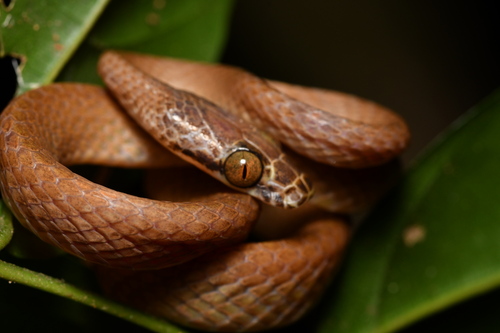
Hormonotus is a genus in the family Lamprophiidae, the large group of mostly African snakes that also contains the common house snakes (Boaedon and Lamprophis), wolf snakes, and many ground-dwelling relatives. The genus contains a single recognized species, the Uganda House Snake (Hormonotus modestus), found in the forests and forest edges of central and West Africa. It sits among the lamprophiids as one of the more forest-associated members, distinct from the open-country house snakes that share the common name.
These are slender, smooth-scaled snakes of modest size, typically well under a meter in length, with the plain brown or olive coloring that gives the species its name modestus. Like other house snakes, they have a relatively narrow head, smooth glossy scales, and the rounded body of a non-constricting to lightly constricting hunter. They are nocturnal and secretive, sheltering in leaf litter, under logs, and around the margins of human structures in forested regions, which is part of why house snakes are encountered near homes at all.
Hormonotus is not considered dangerous to people. The lamprophiid house snakes are non-venomous and rely on grip and constriction to subdue small prey such as rodents, lizards, and frogs, and they reproduce by laying eggs. They are generally harmless when left alone, but any wild snake can bite if cornered, and field identification of African snakes is difficult, so treat unknown snakes with caution and do not handle them. If a bite occurs or a snake cannot be confidently identified, contact emergency services or, in the US, Poison Control at 1-800-222-1222.
Hormonotus belongs to the Lamprophiidae family (African house snakes & allies). Common African snakes, including the familiar house snakes. Variable; many are smooth-scaled, secretive, and active at night.
Danger: Mostly harmless. A few are rear-fanged with mild venom of no medical significance.
All species (1)
Keep learning
- What Is a Snake? Anatomy and the BasicsA clear overview of what makes a snake a snake: limbless body plan, anatomy, evolution from lizards, species diversity, and why they are ectothermic.
- How Snakes Move, Hunt, and EatHow snakes move without legs, hunt as ambushers or active foragers, kill by constriction or venom, and swallow prey wider than their head.
- What Do Snakes Eat?All snakes are carnivores. Learn what snakes eat, how diet changes with size and age, how often they feed, and how they hunt and swallow prey.
- Venomous vs Nonvenomous: How to Tell the DifferenceThe folk rules for telling venomous snakes apart, where each one fails, and why location-based identification beats guessing by sight.