
Genus · Atractaspididae
Types of harlequin snakes
2 species make up the genus Homoroselaps, the snakes commonly called harlequin snakes. All of them are venomous.
About harlequin snakes
Small, brightly banded African burrowers that pack a real venom delivery into a snake most people mistake for harmless.
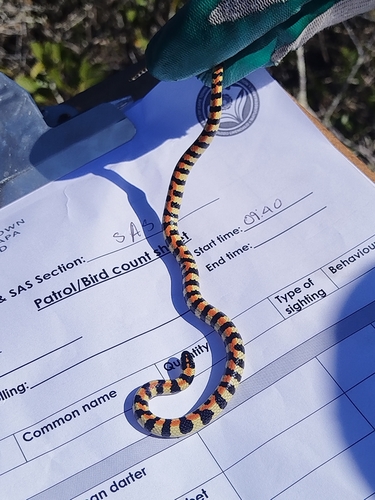
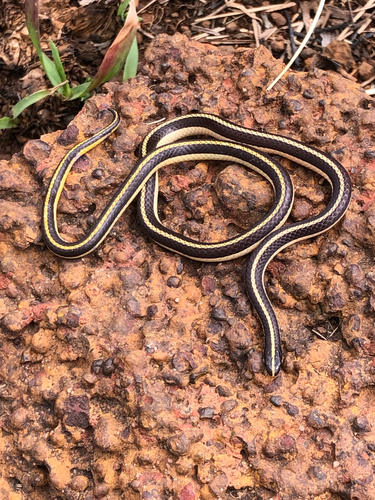
Homoroselaps is a tiny genus of just two species, the Spotted Harlequin Snake and the Striped Harlequin Snake, both restricted to southern Africa and especially South Africa. They sit in the family Atractaspididae, the same group that holds the stiletto snakes and other African burrowing venom snakes. That family placement is the key to understanding them: these are fossorial, secretive animals adapted to life in soil, under rocks, and inside old termite mounds rather than out in the open. They are small and slender, rarely much over a foot in length, and their bold coloration makes them stand out the moment they are uncovered.
You recognize harlequin snakes by their size and their striking pattern. The Spotted Harlequin Snake is patterned in black, yellow, and red or orange, often with a vivid orange to red dorsal stripe, while the Striped Harlequin Snake is plainer with fine longitudinal striping. Both have small heads barely distinct from the neck, smooth scales, and the cylindrical body of an animal built for pushing through soil. Because they are colorful and small, they are easily confused with harmless burrowing snakes, which is exactly why honest identification matters here.
These snakes are venomous, not harmless and not simply rear-fanged in the usual colubrid sense. As members of Atractaspididae they carry venom and fangs, and bites from Homoroselaps have caused local pain and swelling in people. Reported effects are generally mild compared with cobras or mambas, but mild is not the same as safe, and the genus should not be handled. Never pick up or handle a wild harlequin snake or any snake you cannot identify with certainty. If a bite occurs, treat it as a medical event, keep the person calm and still, and seek emergency care immediately. In the United States contact Poison Control at 1-800-222-1222 or call local emergency services; in southern Africa use your local emergency number and poison or snakebite hotline. Their ecology fits the burrowing lifestyle: they feed largely on other small fossorial reptiles such as legless skinks and other burrowing lizards and snakes, they lay eggs, and they spend most of their lives hidden underground, which is why even within their range they are rarely seen.
Homoroselaps belongs to the Atractaspididae family (Stiletto snakes (burrowing asps)). Burrowing venomous snakes that stab sideways, and cannot be safely held. Small, glossy, uniformly dark, with tiny eyes and a blunt head no wider than the neck. The side-stabbing strike is unique.
Danger: Venomous. Bites cause intense local pain and tissue damage; most are not life-threatening but require medical care. Never attempt to pick one up.
All species (2)
Keep learning
- Venomous vs Nonvenomous: How to Tell the DifferenceThe folk rules for telling venomous snakes apart, where each one fails, and why location-based identification beats guessing by sight.
- Are Snakes Dangerous? The Real Risk, in PerspectiveMost snakes are harmless and avoid people. Here is the honest picture of snakebite risk worldwide and how to lower your own.
- Snake Venom Explained: How It Works and WhyWhat snake venom actually is, why it evolved, the main venom types, fang delivery, how antivenom works, and why ranking the most venomous snake is hard.
- How Snakes Move, Hunt, and EatHow snakes move without legs, hunt as ambushers or active foragers, kill by constriction or venom, and swallow prey wider than their head.