
Genus · Colubridae
Types of whip snakes
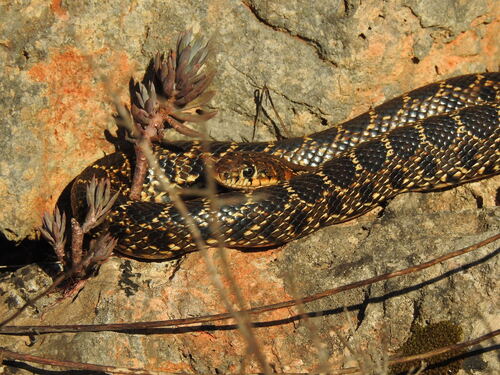
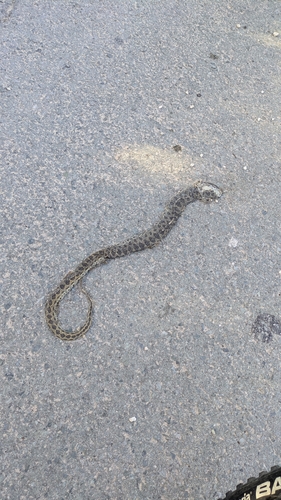
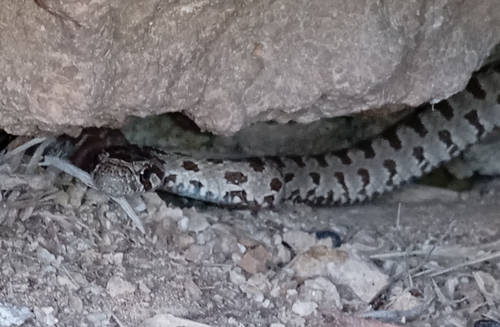
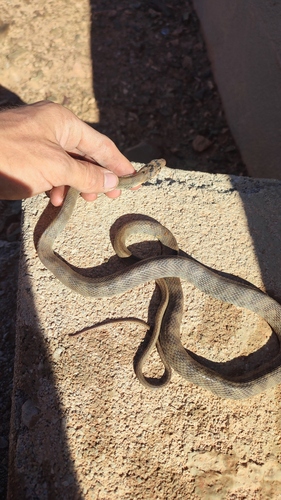
4 species make up the genus Hemorrhois, the snakes commonly called whip snakes. None are considered dangerous to humans.
About Old World whip snakes (racers)
Fast, slender, big-eyed colubrid racers of the Mediterranean, North Africa, and southwest-to-central Asia.
Hemorrhois is a small genus of nonvenomous colubrid snakes in the family Colubridae, the largest snake family in the world. The genus holds four recognized species, including the Horseshoe Whip Snake, the Asian Racer, the Spotted Whip Snake, and the Algerian Whip Snake. These are the agile, ground-and-rock racers often called whip snakes for their long, tapering bodies and quick, darting movement.
The genus is centered on the warm, dry belt that runs from the western Mediterranean across North Africa and through the Middle East into southwest and central Asia. Typical habitat is open and sun-exposed: rocky hillsides, dry stone walls, scrub, garrigue, semi-desert, and the edges of cultivated land. Members are strongly diurnal in the cooler parts of the season and shelter in rock crevices, rodent burrows, and stone piles.
In general terms, a Hemorrhois whip snake is recognized by a slim, muscular build, a relatively long tail, large eyes with round pupils, and smooth scales that give a clean, glossy look. Adults of several species reach roughly 1 to 1.5 meters. Patterning varies by species and region and can include blotches, bars, spots, or a distinctive horseshoe-shaped mark on the neck, so identification is best confirmed against the specific species and the local range rather than color alone.
These snakes are nonvenomous and harmless to people. They are not front-fanged vipers and pose no medical threat through a bite. Like many colubrids they are alert and will flee fast when approached; if cornered a wild snake may bluff, hiss, or bite defensively, and a bite from any wild animal can break skin and introduce infection. Do not handle wild snakes. If a person is bitten and there is any uncertainty about the species or any concerning reaction, treat it as a medical matter and contact emergency care, in the US Poison Control at 1-800-222-1222 or local emergency services.
Ecologically, Hemorrhois whip snakes are active visual hunters. They feed mainly on lizards, small mammals, nestling birds, and sometimes other snakes, overpowering prey by speed and constriction or pinning rather than venom. They are egg-laying (oviparous), with females depositing a clutch of eggs in summer in sheltered, warm sites. Their pace, large eyes, and preference for sun-baked rocky ground make them classic Old World racers.
Hemorrhois belongs to the Colubridae family (Colubrids). The largest snake family, and the one most snakes you meet belong to. Typically round pupils, a head only slightly wider than the neck, and no heat-sensing facial pit or rattle. Scales may be smooth and glossy or keeled and matte depending on the species.
Danger: Almost all colubrids are harmless. A small number are rear-fanged with medically significant venom, the boomslang and the twig (vine) snakes of Africa being the dangerous exceptions. Most colubrids will flee or bluff rather than bite.
All species (4)
Keep learning
- What Is a Snake? Anatomy and the BasicsA clear overview of what makes a snake a snake: limbless body plan, anatomy, evolution from lizards, species diversity, and why they are ectothermic.
- How Snakes Move, Hunt, and EatHow snakes move without legs, hunt as ambushers or active foragers, kill by constriction or venom, and swallow prey wider than their head.
- What Do Snakes Eat?All snakes are carnivores. Learn what snakes eat, how diet changes with size and age, how often they feed, and how they hunt and swallow prey.
- Venomous vs Nonvenomous: How to Tell the DifferenceThe folk rules for telling venomous snakes apart, where each one fails, and why location-based identification beats guessing by sight.