
Genus · Boidae
Exiliboa
The genus Exiliboa contains a single species. It is not considered dangerous to humans.
About Oaxacan dwarf boa
A tiny, secretive boa from the cool cloud forests of southern Mexico, harmless to people and rarely seen.
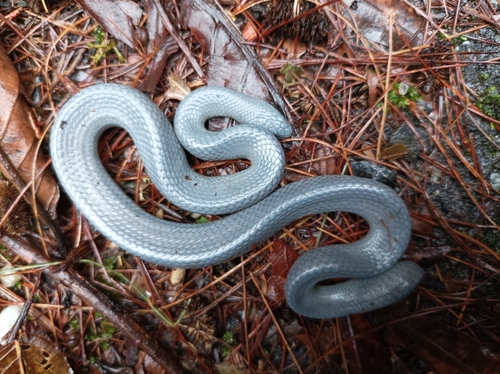
Exiliboa is a single-species genus in the boa family, Boidae. Its only member is the Oaxacan dwarf boa, Exiliboa placata, found in the highlands of Oaxaca in southern Mexico. As the name suggests, this is a small, dwarf boa rather than one of the giant constrictors most people picture when they hear the word boa. It sits in the New World dwarf boa group, a set of small, ground-dwelling and burrowing snakes that have adapted to life in leaf litter and cool, damp mountain forest rather than open lowland habitat.
This genus occupies a narrow range and a specialized home. The Oaxacan dwarf boa lives in cloud forest and pine-oak forest at high elevation, where it shelters under logs, rocks, moss, and deep leaf litter in cool, moist conditions. In general terms, members are recognizable as small, stout-bodied snakes with smooth scales, a blunt head not much wider than the neck, and dark coloration, often near-black, that suits a life spent hidden in damp ground cover. Like other boas, it is a constrictor with no venom. It is harmless to humans, not dangerous, and poses no medical threat. There is no need to handle wild snakes, but if any snakebite ever causes concern, contact US Poison Control at 1-800-222-1222 or local emergency services.
Ecologically, Exiliboa fits the pattern of small, secretive forest-floor boas. As a constrictor it subdues prey by coiling rather than by venom, and small dwarf boas of this kind typically feed on small animals such as amphibians and their eggs and other small prey found in the leaf litter. Like other members of the boa family, it gives birth to live young rather than laying eggs. It is nocturnal and reclusive, spending most of its time concealed in cover, which is why this high-elevation Mexican endemic is so seldom encountered.
Exiliboa belongs to the Boidae family (Boas). Powerful non-venomous constrictors that give birth to live young. Heavy body, smooth scales, and (in many species) heat-sensing pits along the lips. No rattle and no fangs.
Danger: Non-venomous and not dangerous to people. Large individuals are strong and can bite defensively, but they are not a venom threat.
All species (1)
Keep learning
- What Is a Snake? Anatomy and the BasicsA clear overview of what makes a snake a snake: limbless body plan, anatomy, evolution from lizards, species diversity, and why they are ectothermic.
- How Snakes Move, Hunt, and EatHow snakes move without legs, hunt as ambushers or active foragers, kill by constriction or venom, and swallow prey wider than their head.
- What Do Snakes Eat?All snakes are carnivores. Learn what snakes eat, how diet changes with size and age, how often they feed, and how they hunt and swallow prey.
- Venomous vs Nonvenomous: How to Tell the DifferenceThe folk rules for telling venomous snakes apart, where each one fails, and why location-based identification beats guessing by sight.