
Genus · Colubridae
Types of indigo snakes
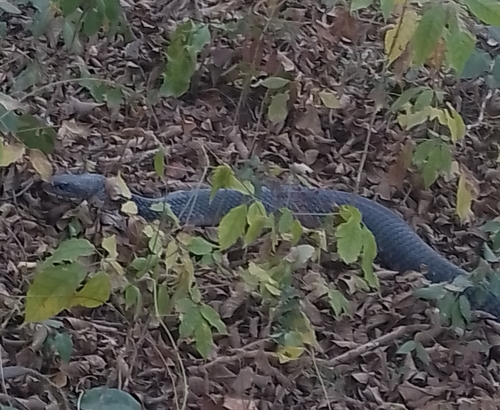
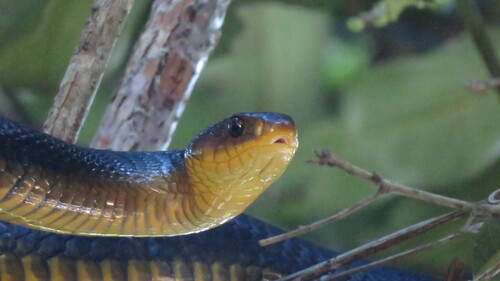
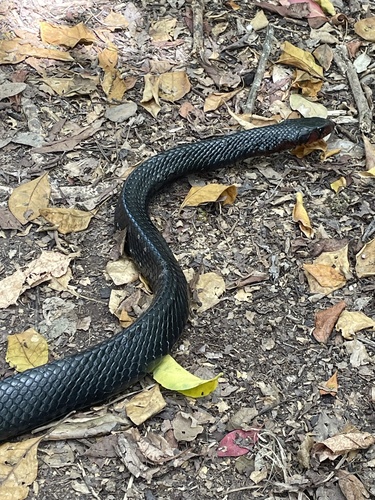
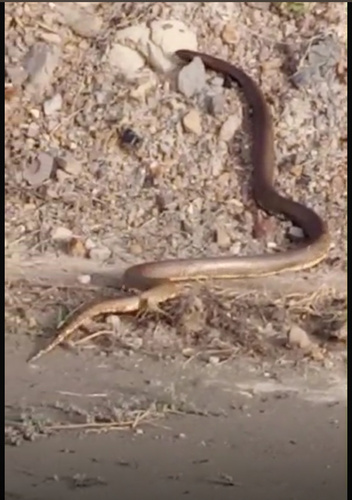
4 species make up the genus Drymarchon, the snakes commonly called indigo snakes. None are considered dangerous to humans.
About indigo snakes
The largest native snakes in North America, these glossy, fast-moving colubrids are harmless predators that even hunt venomous snakes.
Drymarchon is a genus of large, non-venomous snakes in the family Colubridae, the same family that holds most of the world's harmless snakes. Members are commonly called indigo snakes or, in Spanish-speaking regions, cribos. The genus ranges across the Americas, from the southeastern United States through Mexico and Central America and into much of South America. They favor a wide variety of habitats including pine flatwoods, sandhills, scrub, tropical dry forest, savanna, and the edges of wetlands, often using burrows dug by other animals, especially gopher tortoise burrows in the United States, for shelter.
These are heavy-bodied, smooth-scaled snakes that reach impressive lengths. The Eastern Indigo Snake is the longest native snake in North America, with large individuals exceeding 2.4 meters, roughly 8 feet. The scales have a high gloss, and in good light many show a striking blue-black or iridescent sheen, which is the source of the name indigo. Other species and populations vary in color and may show tan, reddish, or yellowish tones, particularly toward the head, throat, or tail, as suggested by names like the Yellow-tailed Indigo Snake.
In general terms, you can recognize members of this genus by their large size, thick body, smooth and shiny scales, and rounded head that is only slightly distinct from the neck, which is typical of harmless colubrids rather than the broad triangular head seen in many vipers. Color alone is not a reliable identification tool because it varies by species and region, so size, build, and scale gloss are more useful field cues. Always treat identification cautiously and rely on a qualified local expert when it matters.
Indigo snakes are non-venomous and pose no significant danger to people. They subdue prey by overpowering it rather than by venom or constriction, and they are powerful generalist predators. Their diet is broad and includes small mammals, birds, amphibians, lizards, eggs, and other snakes, and notably they will eat venomous snakes such as rattlesnakes, against whose venom they have considerable resistance. This snake-eating habit makes them ecologically valuable. As with any wild animal, a cornered indigo snake may bite defensively, so wild snakes should be observed and not handled.
Drymarchon snakes are egg-laying, with females depositing clutches that hatch into independent young. They are active, diurnal foragers that cover large home ranges, which makes intact habitat important for their survival. The Eastern Indigo Snake in particular is a protected species in the United States, threatened largely by habitat loss and fragmentation. If you ever cannot identify a snake and there is any chance it is venomous, do not handle it; keep your distance, and in the case of any snakebite, call emergency services or US Poison Control at 1-800-222-1222 immediately.
Drymarchon belongs to the Colubridae family (Colubrids). The largest snake family, and the one most snakes you meet belong to. Typically round pupils, a head only slightly wider than the neck, and no heat-sensing facial pit or rattle. Scales may be smooth and glossy or keeled and matte depending on the species.
Danger: Almost all colubrids are harmless. A small number are rear-fanged with medically significant venom, the boomslang and the twig (vine) snakes of Africa being the dangerous exceptions. Most colubrids will flee or bluff rather than bite.
All species (4)
Keep learning
- What Is a Snake? Anatomy and the BasicsA clear overview of what makes a snake a snake: limbless body plan, anatomy, evolution from lizards, species diversity, and why they are ectothermic.
- How Snakes Move, Hunt, and EatHow snakes move without legs, hunt as ambushers or active foragers, kill by constriction or venom, and swallow prey wider than their head.
- What Do Snakes Eat?All snakes are carnivores. Learn what snakes eat, how diet changes with size and age, how often they feed, and how they hunt and swallow prey.
- Venomous vs Nonvenomous: How to Tell the DifferenceThe folk rules for telling venomous snakes apart, where each one fails, and why location-based identification beats guessing by sight.