
Genus · Viperidae
Deinagkistrodon
The genus Deinagkistrodon contains a single species. It is venomous.
About Chinese moccasin (hundred-pacer)
A single heavy-bodied Asian pit viper famous for its sharply upturned snout and its dangerous, hemotoxic bite.
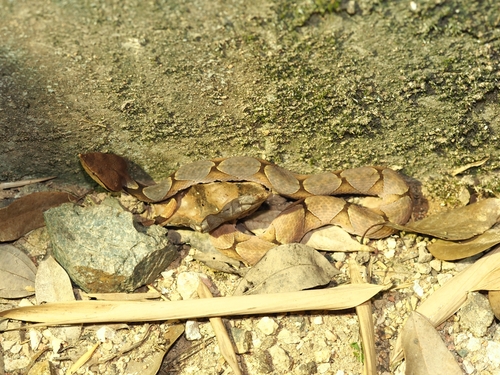
Deinagkistrodon is a monotypic genus, meaning it contains just one species, Deinagkistrodon acutus, commonly called the Chinese moccasin, sharp-nosed viper, or hundred-pacer. It belongs to the family Viperidae and the pit viper subfamily Crotalinae, the same group that includes rattlesnakes, copperheads, and the Asian Trimeresurus vipers. Like all pit vipers, it carries a pair of heat-sensing loreal pits between the eye and nostril that let it detect warm-blooded prey in darkness. It ranges across southern China, Taiwan, and northern Vietnam, where it favors forested hills, rocky slopes, stream margins, and the edges of agricultural land, often at low to moderate elevations.
In general terms, members of this genus are recognized by a thick, muscular body, a broad triangular head set off from a narrow neck, and a distinctive sharply pointed, upturned snout that gives the snake its sharp-nosed name. The dorsal pattern is typically a series of large dark triangular or diamond-shaped markings against a grayish to tan ground color, providing strong camouflage on leaf litter and rock. As a true viper it has long, hinged front fangs that fold back when the mouth is closed. The common nickname hundred-pacer reflects local lore about the bite, not a measured fact, but it signals the serious reputation this snake carries throughout its range.
This snake is venomous and is considered medically dangerous, with a primarily hemotoxic venom that can cause severe pain, swelling, tissue damage, blood-clotting problems, and bleeding. It is responsible for a meaningful share of serious snakebites within its range, and antivenom exists in regions where it occurs. Ecologically it is an ambush predator that lies still and waits for rodents, frogs, lizards, and other small animals, striking when prey passes close. Females lay eggs and may attend the clutch. It is generally sluggish and reluctant to flee, relying on camouflage, which makes accidental close encounters more likely. Never attempt to handle, capture, or kill a wild venomous snake, and if a bite occurs, treat it as a medical emergency. In the United States call Poison Control at 1-800-222-1222, and anywhere else contact local emergency services immediately.
Deinagkistrodon belongs to the Viperidae family (Vipers & pit vipers). Heavy-bodied venomous snakes with long, hinged, hollow fangs. Broad, triangular head distinct from a narrow neck, heavy body, and (usually) vertical, cat-like pupils. Pit vipers also have a heat-sensing pit; true vipers do not.
Danger: Every viper is venomous, and the family includes some of the world's most medically important snakes. Venom is typically hemotoxic, causing pain, swelling, tissue damage, and bleeding. Treat any viper bite as a medical emergency.
All species (1)
Keep learning
- Venomous vs Nonvenomous: How to Tell the DifferenceThe folk rules for telling venomous snakes apart, where each one fails, and why location-based identification beats guessing by sight.
- Are Snakes Dangerous? The Real Risk, in PerspectiveMost snakes are harmless and avoid people. Here is the honest picture of snakebite risk worldwide and how to lower your own.
- Snake Venom Explained: How It Works and WhyWhat snake venom actually is, why it evolved, the main venom types, fang delivery, how antivenom works, and why ranking the most venomous snake is hard.
- How Snakes Move, Hunt, and EatHow snakes move without legs, hunt as ambushers or active foragers, kill by constriction or venom, and swallow prey wider than their head.