
Genus · Atractaspididae
Chilorhinophis
The genus Chilorhinophis contains a single species. It is not considered dangerous to humans.
About two-headed snakes
Tiny, burrowing African snakes whose blunt, brightly banded tail mimics a second head to fool predators.
Chilorhinophis is a small genus of fossorial (burrowing) snakes in the family Atractaspididae, the African group that also contains the stiletto snakes and many of the so-called mole vipers and harlequin snakes. Only a couple of species are recognized, including the Congo two-headed snake, and they live in the soils and leaf litter of central and southeastern Africa. As atractaspidids, they sit among the rear-fanged and front-fanged burrowing lineages of Africa rather than with the typical colubrids people meet above ground, and they are very rarely encountered because they spend nearly all their lives underground.
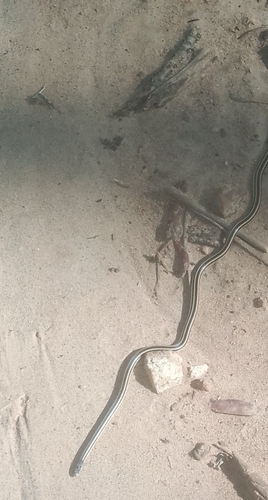
Members are slender, cylindrical, and short, usually well under a foot long, with smooth scales, a narrow body built for pushing through soil, and tiny eyes typical of animals that hunt in the dark. Their most striking feature is the tail: it is short, blunt, and boldly marked, and when threatened the snake hides its real head and waves the tail, presenting a decoy that gives the genus its English name. Coloration tends toward pale bodies with dark longitudinal stripes or bands, which adds to the confusion of which end is which.
These snakes are part of a family that includes venomous species, and the burrowing atractaspidids are best treated with caution rather than handled. Reliable details on the venom of Chilorhinophis specifically are limited because the animals are so seldom found and studied, so the honest framing is that they are small, secretive, and not known to be a serious threat to people, but they are not something to pick up. Like other small fossorial snakes in this family they are believed to feed on other small, elongate burrowing animals such as other snakes and worm-like reptiles, and they are thought to lay eggs. If anyone is ever bitten by a snake they cannot confidently identify, do not handle it; contact emergency services or, in the US, Poison Control at 1-800-222-1222.
Chilorhinophis belongs to the Atractaspididae family (Stiletto snakes (burrowing asps)). Burrowing venomous snakes that stab sideways, and cannot be safely held. Small, glossy, uniformly dark, with tiny eyes and a blunt head no wider than the neck. The side-stabbing strike is unique.
Danger: Venomous. Bites cause intense local pain and tissue damage; most are not life-threatening but require medical care. Never attempt to pick one up.
All species (1)
Keep learning
- What Is a Snake? Anatomy and the BasicsA clear overview of what makes a snake a snake: limbless body plan, anatomy, evolution from lizards, species diversity, and why they are ectothermic.
- How Snakes Move, Hunt, and EatHow snakes move without legs, hunt as ambushers or active foragers, kill by constriction or venom, and swallow prey wider than their head.
- What Do Snakes Eat?All snakes are carnivores. Learn what snakes eat, how diet changes with size and age, how often they feed, and how they hunt and swallow prey.
- Venomous vs Nonvenomous: How to Tell the DifferenceThe folk rules for telling venomous snakes apart, where each one fails, and why location-based identification beats guessing by sight.