
Genus · Homalopsidae
Types of bockadams
4 species make up the genus Cerberus, the snakes commonly called bockadams. None are considered dangerous to humans.
About dog-faced water snakes
Dog-faced water snakes are mud-dwelling Asian and Australasian water snakes that hunt fish in tidal and coastal shallows.
Cerberus is a small genus in the family Homalopsidae, the Indo-Australian mud snakes. Homalopsids are aquatic and semi-aquatic snakes built for life in soft mud, brackish water, and slow shallows, and Cerberus is one of the most water-bound members of the group. The common name dog-faced water snake comes from the blunt, rounded snout and the eyes set high on the head, a profile suited to a snake that watches the surface while the rest of the body stays submerged.
These snakes range across coastal South and Southeast Asia into the Australasian region, with our database holding four species: the Southeast Asian Bockadam, the Asian Bockadam, the Australian Bockadam, and the Palau Dog-faced Mud Snake. Bockadam is the widely used common name for snakes in this genus. They favor estuaries, mangroves, mudflats, tidal creeks, rice paddies, and other muddy, often brackish or saltwater habitats where many other snakes cannot live.
In general terms, members are stout, medium-sized snakes with heavily keeled scales that give the body a rough texture, a thickset build, and small upward-facing eyes and nostrils that let them breathe and watch while mostly submerged. Coloration tends toward muddy browns and grays with darker banding or streaking, camouflage that matches the silt they live in. They are not snakes most people encounter on dry land, so context matters: a stout, rough-scaled snake in coastal mud is the typical sighting.
Like other homalopsids, Cerberus snakes are rear-fanged and mildly venomous. They use enlarged grooved teeth at the back of the upper jaw and a mild venom to subdue fish, their main prey, which they catch in the shallows and along mudflats. The venom is adapted to small aquatic prey and these snakes are not considered dangerous to people, but no wild snake should be handled. Treat any snake bite as a medical matter, keep away from the mouth, and do not attempt to capture or restrain a wild animal.
Ecologically they are ambush and active hunters of fish and other small aquatic animals, most active around tides and at night when they move through mangrove channels and flooded ground. Homalopsids in this genus give birth to live young rather than laying eggs, a common pattern among aquatic snakes that rarely leave the water. Their abundance in mangrove and estuary systems makes them an important link in coastal food webs, feeding on small fish and in turn feeding wading birds and larger predators.
Cerberus belongs to the Homalopsidae family (Mud & water snakes). Aquatic, mud-dwelling snakes with upward-facing eyes and nostrils. Stout, often drab snakes with upturned nostrils, found in or near muddy water.
Danger: Rear-fanged with mild venom; not considered dangerous to humans.
All species (4)
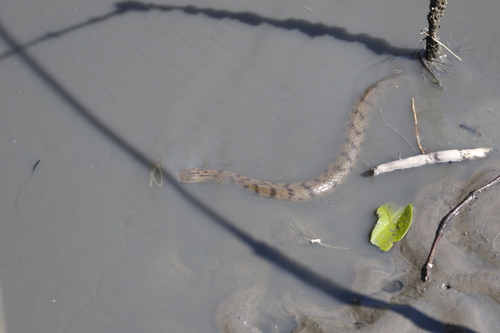
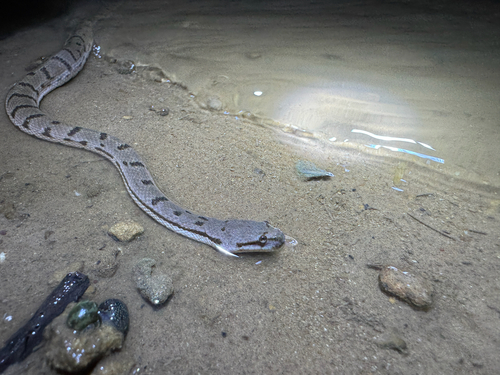
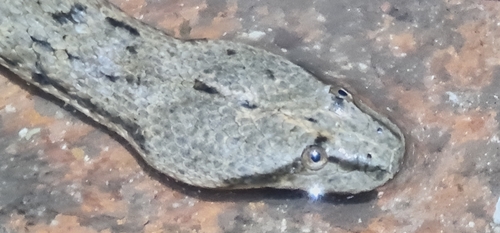
Keep learning
- What Is a Snake? Anatomy and the BasicsA clear overview of what makes a snake a snake: limbless body plan, anatomy, evolution from lizards, species diversity, and why they are ectothermic.
- How Snakes Move, Hunt, and EatHow snakes move without legs, hunt as ambushers or active foragers, kill by constriction or venom, and swallow prey wider than their head.
- What Do Snakes Eat?All snakes are carnivores. Learn what snakes eat, how diet changes with size and age, how often they feed, and how they hunt and swallow prey.
- Venomous vs Nonvenomous: How to Tell the DifferenceThe folk rules for telling venomous snakes apart, where each one fails, and why location-based identification beats guessing by sight.