
Genus · Viperidae
Types of vipers
3 species make up the genus Cerastes, the snakes commonly called vipers. All of them are venomous.
About horned vipers and sand vipers
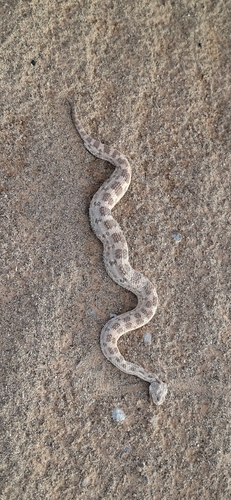
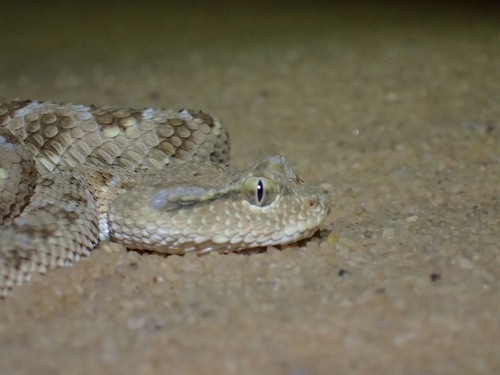
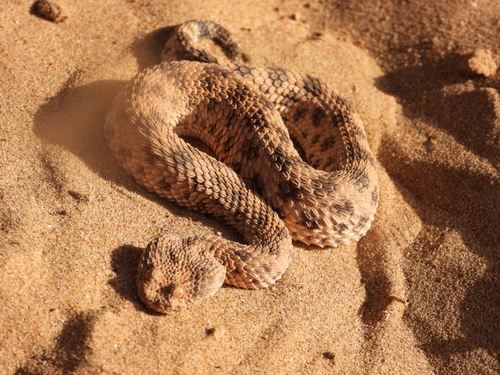
Cerastes are the desert vipers of North Africa and the Middle East, several of which wear a small pointed scale above each eye like a horn.
Cerastes is a genus of true vipers in the family Viperidae, native to the arid lands of North Africa, the Arabian Peninsula, and parts of the Middle East. The genus is small, with only a handful of recognized species, including the Desert Horned Viper, the Arabian Horned Viper, and the Sahara Sand Viper. All are squat, broad-headed snakes built for life on sand and bare rock.
What sets the group apart is its adaptation to desert living. Members are typically pale, sandy, or yellowish with darker blotches that break up their outline against the ground. Several species carry a single sharp, hornlike scale projecting above each eye, which gives the genus its best-known common name. The head is broad and triangular, the body short and stout, and the keeled scales help the snake grip loose sand. Some species lack the horns entirely, so the horn is a useful clue but not a requirement for the genus.
These are ambush hunters. A Cerastes viper often buries itself in sand using a sideways shuffling motion until only the eyes and the top of the head remain exposed, then waits for prey to pass. Diet centers on small desert animals such as lizards, small rodents, and occasionally birds and large insects. Like many desert vipers, members move with a sidewinding gait across open sand, which limits how much of the body touches the hot surface. They are mostly active at night, sheltering by day in burrows, under rocks, or beneath the sand.
Reproduction varies within the genus. Several Cerastes species lay eggs rather than giving live birth, which is somewhat unusual among vipers and ties them to the warm, stable conditions of their desert range. Beyond breeding, these snakes are generally slow-moving and rely on camouflage and stillness rather than flight, though a threatened individual can rub its rough scales together to produce a rasping warning sound.
Cerastes vipers are venomous, and as front-fanged members of the family Viperidae they should be treated as medically significant. Their venom can cause serious tissue damage, swelling, and bleeding effects, and bites are a real risk to people who work or travel in their range. Never handle a wild horned or sand viper, and do not rely on its slow, buried habits to make it harmless, since a partly hidden snake is easy to step on. If a bite occurs, keep the person calm and still, remove tight items near the bite, and seek emergency medical care immediately. In the United States contact Poison Control at 1-800-222-1222, and elsewhere call local emergency services.
Cerastes belongs to the Viperidae family (Vipers & pit vipers). Heavy-bodied venomous snakes with long, hinged, hollow fangs. Broad, triangular head distinct from a narrow neck, heavy body, and (usually) vertical, cat-like pupils. Pit vipers also have a heat-sensing pit; true vipers do not.
Danger: Every viper is venomous, and the family includes some of the world's most medically important snakes. Venom is typically hemotoxic, causing pain, swelling, tissue damage, and bleeding. Treat any viper bite as a medical emergency.
All species (3)
Keep learning
- Venomous vs Nonvenomous: How to Tell the DifferenceThe folk rules for telling venomous snakes apart, where each one fails, and why location-based identification beats guessing by sight.
- Are Snakes Dangerous? The Real Risk, in PerspectiveMost snakes are harmless and avoid people. Here is the honest picture of snakebite risk worldwide and how to lower your own.
- Snake Venom Explained: How It Works and WhyWhat snake venom actually is, why it evolved, the main venom types, fang delivery, how antivenom works, and why ranking the most venomous snake is hard.
- How Snakes Move, Hunt, and EatHow snakes move without legs, hunt as ambushers or active foragers, kill by constriction or venom, and swallow prey wider than their head.