
Genus · Lamprophiidae
Types of striped snakes
2 species make up the genus Bothrophthalmus, the snakes commonly called striped snakes. None are considered dangerous to humans.
About African striped snakes
A small genus of glossy, striped burrowing snakes from the forests of tropical Africa.
Bothrophthalmus is a genus in the family Lamprophiidae, a large and mostly African group of snakes that also includes the wolf snakes, house snakes, and many other ground-dwelling species. The genus holds only a couple of recognized species, the best known being the Red-Black Striped Snake (Bothrophthalmus lineatus). These are forest snakes of central and western tropical Africa, where they live close to the ground in leaf litter, soil, and the cover of decaying logs. Within Lamprophiidae they sit among the secretive, terrestrial members of the family rather than the tree-climbing or aquatic lineages.
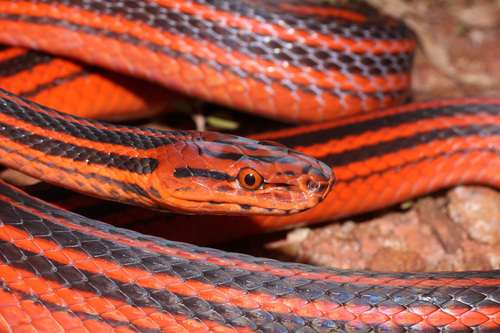
Members are recognized in general terms by a slender, smooth-scaled body with a glossy finish and a pattern of dark longitudinal stripes running the length of the body. The Red-Black Striped Snake shows striking black and reddish striping that makes it one of the more visually distinctive small snakes of the African forest floor. The head is not strongly set off from the neck, in keeping with a body built for moving through litter and loose soil. Like most lamprophiids, they are nonconstricting to lightly constricting hunters of small prey rather than large, conspicuous predators.
These snakes are not considered dangerous to people. They lack the front-fang venom delivery of vipers, cobras, and their relatives, and there is no medically significant venom associated with the genus. Their ecology follows the general pattern of small African ground snakes: a diet of small vertebrates such as frogs, lizards, and small rodents, secretive habits, and reproduction by laying eggs as is typical for lamprophiids. As with any wild snake, the responsible practice is to observe from a distance and not handle or capture it. If anyone is bitten by a snake they cannot confidently identify, treat it as a medical matter and contact emergency services or, in the United States, Poison Control at 1-800-222-1222.
Bothrophthalmus belongs to the Lamprophiidae family (African house snakes & allies). Common African snakes, including the familiar house snakes. Variable; many are smooth-scaled, secretive, and active at night.
Danger: Mostly harmless. A few are rear-fanged with mild venom of no medical significance.
All species (2)
Keep learning
- What Is a Snake? Anatomy and the BasicsA clear overview of what makes a snake a snake: limbless body plan, anatomy, evolution from lizards, species diversity, and why they are ectothermic.
- How Snakes Move, Hunt, and EatHow snakes move without legs, hunt as ambushers or active foragers, kill by constriction or venom, and swallow prey wider than their head.
- What Do Snakes Eat?All snakes are carnivores. Learn what snakes eat, how diet changes with size and age, how often they feed, and how they hunt and swallow prey.
- Venomous vs Nonvenomous: How to Tell the DifferenceThe folk rules for telling venomous snakes apart, where each one fails, and why location-based identification beats guessing by sight.