
Genus · Atractaspididae
Types of asps
10+ species make up the genus Atractaspis, the snakes commonly called asps. All of them are venomous.
About stiletto snakes (mole vipers, burrowing asps)
Burrowing African and Middle Eastern snakes that stab sideways with fangs no front-fanged or rear-fanged snake can, making them nearly impossible to hold safely.
Atractaspis is a genus of fossorial snakes in the family Atractaspididae, the group that gives the family its name. They are best known by the common names stiletto snake, mole viper, and burrowing asp. Despite the name mole viper, they are not true vipers (family Viperidae); the resemblance is a case of similar burrowing lifestyles producing similar body plans. The genus holds roughly 20 recognized species, 10+ of which appear in our database, including the Southern Stiletto Snake, the Israeli Mole Viper, Peters' Burrowing Asp, and Anderson's Stiletto Snake.
The genus is centered on sub-Saharan Africa, with several species reaching North Africa and the Middle East, including parts of the Arabian Peninsula and the Levant. As burrowers, they favor loose or sandy soils, leaf litter, and the moisture under rocks and debris. They spend most of their lives underground or just below the surface and typically come out at night or after rain, which is when people are most likely to encounter one.
In general appearance, Atractaspis species are small to medium snakes with cylindrical bodies, smooth glossy scales, a short blunt tail, and a narrow head that is barely distinct from the neck. Most are uniformly dark, often black, brown, or purplish, and the eyes are small, all consistent with a life spent underground. Their defining trait is hidden in the mouth: very long fangs mounted near the front of the jaw that can be erected and swung out sideways past nearly closed lips. This lets the snake strike to the side and even backward, so the usual safe grip behind the head does not protect a handler.
These snakes are venomous and genuinely dangerous, not rear-fanged in the mild colubrid sense and not harmless. The sideways stabbing strike makes them notoriously difficult to restrain, and bites have occurred when people picked up a snake they believed was safely held. Envenomation effects vary by species and can include intense local pain, swelling, and tissue damage; some species carry venom of medical significance. Do not attempt to handle, restrain, or pick up any wild Atractaspis. If a bite occurs, treat it as a medical emergency: call US Poison Control at 1-800-222-1222 or your local emergency services right away, and do not rely on field first aid.
Ecologically, stiletto snakes are specialized underground hunters. They feed largely on other burrowing animals such as small rodents, nestling mammals, reptiles, and other snakes, often killing prey within tight tunnels where the sideways fang stroke is an advantage in confined space. They are egg-laying (oviparous), producing small clutches. Their secretive, nocturnal, fossorial habits mean they are encountered far less often than their reputation suggests, but the combination of a hard-to-hold body and dangerous venom is exactly why they earn caution.
Atractaspis belongs to the Atractaspididae family (Stiletto snakes (burrowing asps)). Burrowing venomous snakes that stab sideways, and cannot be safely held. Small, glossy, uniformly dark, with tiny eyes and a blunt head no wider than the neck. The side-stabbing strike is unique.
Danger: Venomous. Bites cause intense local pain and tissue damage; most are not life-threatening but require medical care. Never attempt to pick one up.
All species (15)
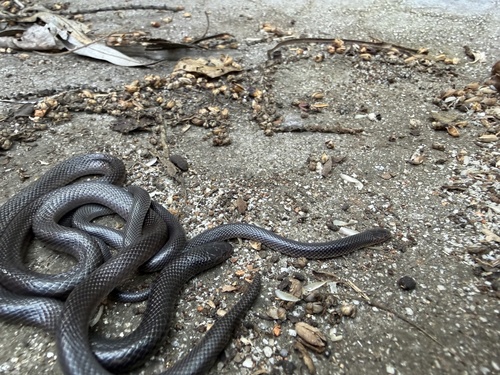 Southern Stiletto SnakeAtractaspis bibroniiVenomous
 Israeli Mole ViperAtractaspis engaddensisVenomous
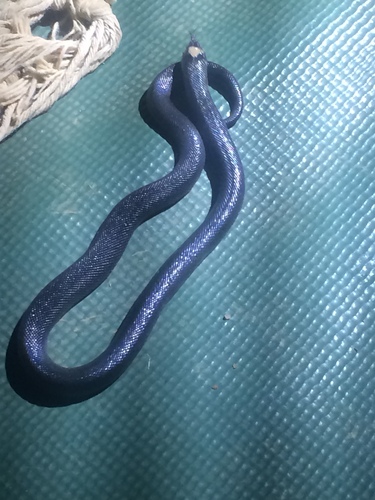 Peters' Burrowing AspAtractaspis fallaxVenomous
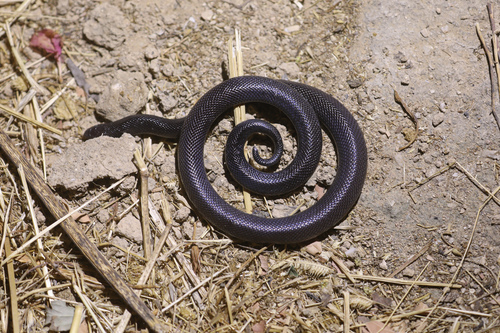 Anderson's Stiletto SnakeAtractaspis andersoniiVenomous
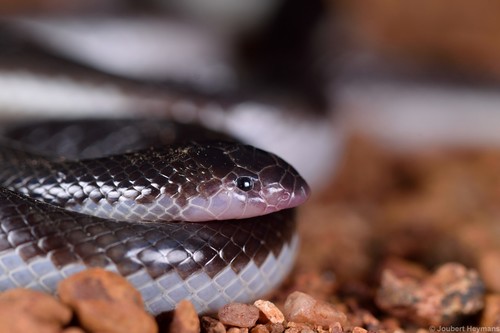 Beaked Burrowing AspAtractaspis duerdeniVenomous
 Variable Burrowing AspAtractaspis irregularisVenomous
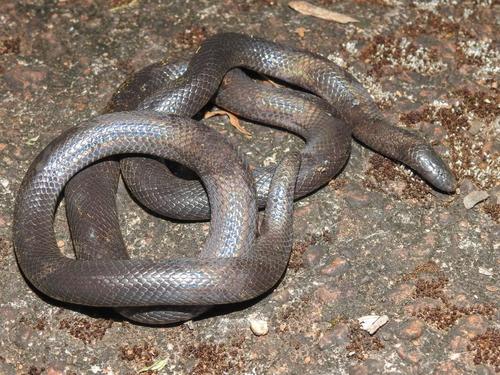 Western Forest Stiletto SnakeAtractaspis aterrimaVenomous
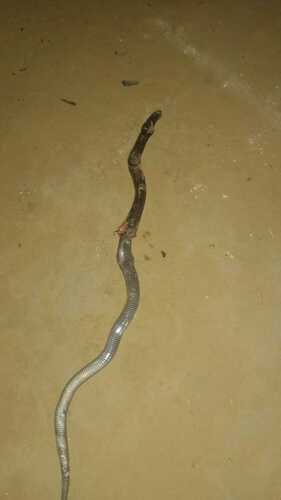 Watson’s Burrowing AspAtractaspis watsoniVenomous
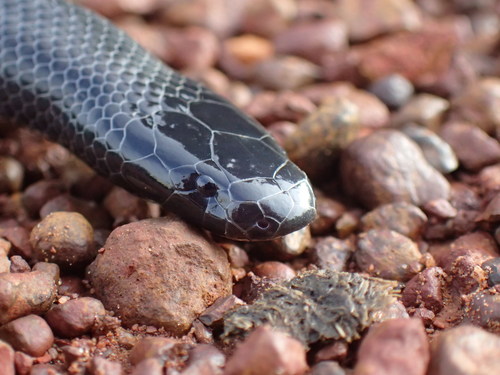 Congo Burrowing AspAtractaspis congicaVenomous
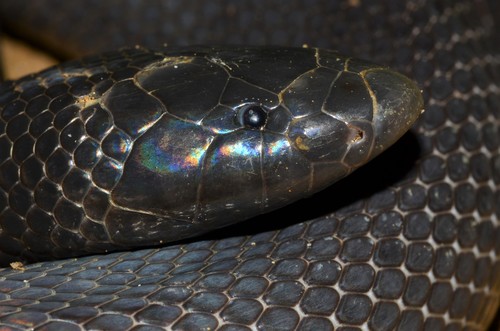 Fat Burrowing AspAtractaspis corpulentaVenomous
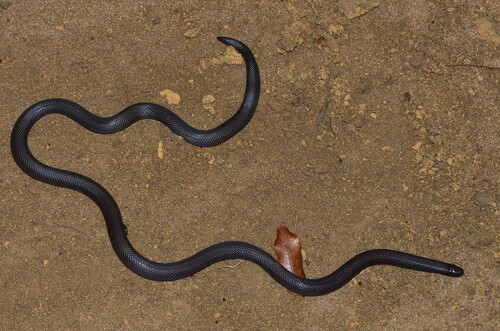 Reticulate Burrowing AspAtractaspis reticulataVenomous
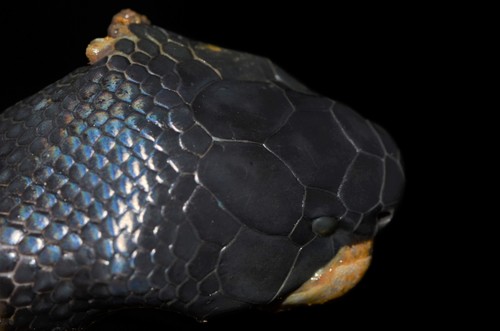 Boulenger's Burrowing AspAtractaspis boulengeriVenomous
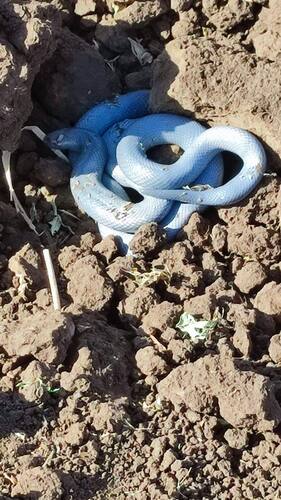 Phillips' Burrowing AspAtractaspis phillipsiVenomous
- No photoDahomey Burrowing AspAtractaspis dahomeyensisVenomous
- No photoSahelian Burrowing AspAtractaspis micropholisVenomous
Keep learning
- Venomous vs Nonvenomous: How to Tell the DifferenceThe folk rules for telling venomous snakes apart, where each one fails, and why location-based identification beats guessing by sight.
- Are Snakes Dangerous? The Real Risk, in PerspectiveMost snakes are harmless and avoid people. Here is the honest picture of snakebite risk worldwide and how to lower your own.
- Snake Venom Explained: How It Works and WhyWhat snake venom actually is, why it evolved, the main venom types, fang delivery, how antivenom works, and why ranking the most venomous snake is hard.
- How Snakes Move, Hunt, and EatHow snakes move without legs, hunt as ambushers or active foragers, kill by constriction or venom, and swallow prey wider than their head.