
Genus · Atractaspididae
Types of centipede-eaters
6 species make up the genus Aparallactus, the snakes commonly called centipede-eaters. None are considered dangerous to humans.
About centipede-eaters
Small, secretive African snakes that specialize in hunting centipedes.
Aparallactus is a genus of small, slender, burrowing snakes placed in the family Atractaspididae, the same family that holds the stiletto snakes and other African and Middle Eastern fossorial species. The genus is found across sub-Saharan Africa, and our database includes 6 species, among them the Cape Centipede-Eater, the Reticulated Centipede-Eater, the Black Centipede-Eater, and the Western Forest Centipede-Eater. The common name reflects their defining trait: they feed heavily on centipedes.
These are typically small snakes with smooth scales, a narrow body, and a small head that is barely distinct from the neck, a build well suited to life in soil, leaf litter, and under stones and logs. Many species carry a dark head or neck band against a lighter body, though coloration varies between species and across their range. Because they are secretive and spend most of their time hidden, they are encountered far less often than their wide distribution would suggest.
They occupy a range of habitats across the African continent, from savanna and grassland to forest floor and rocky ground, generally wherever soil and ground cover provide places to burrow and prey to hunt. Their lifestyle is largely fossorial and nocturnal or crepuscular, so sightings often come from turning over cover objects or from snakes moving after rain.
Aparallactus species are rear-fanged: they have enlarged, grooved teeth toward the back of the upper jaw and a mild venom adapted to subduing centipedes and other invertebrate prey. They are not considered dangerous to people and there are no reliable records of serious envenomation in humans, but rear-fanged does not mean harmless. No wild snake should be handled, and a bite from any wild snake warrants caution. Do not attempt to handle, capture, or provoke one. If a bite occurs, seek medical care promptly. In the US contact Poison Control at 1-800-222-1222, or contact local emergency services in your region.
Ecologically, these snakes are specialist predators that help regulate centipede populations, and at least some species are known to lay eggs rather than give live birth, consistent with many small egg-laying snakes. Their diet, small size, and burrowing habits make them a quiet but important part of the ground-level food web across their range.
Aparallactus belongs to the Atractaspididae family (Stiletto snakes (burrowing asps)). Burrowing venomous snakes that stab sideways, and cannot be safely held. Small, glossy, uniformly dark, with tiny eyes and a blunt head no wider than the neck. The side-stabbing strike is unique.
Danger: Venomous. Bites cause intense local pain and tissue damage; most are not life-threatening but require medical care. Never attempt to pick one up.
All species (6)
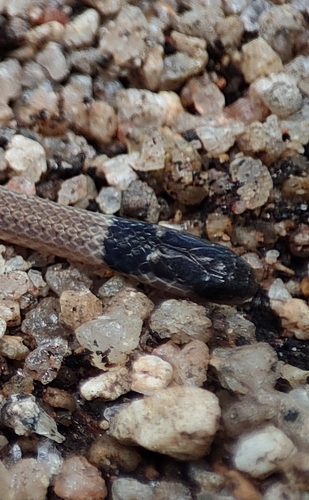 Cape Centipede-EaterAparallactus capensisHarmless
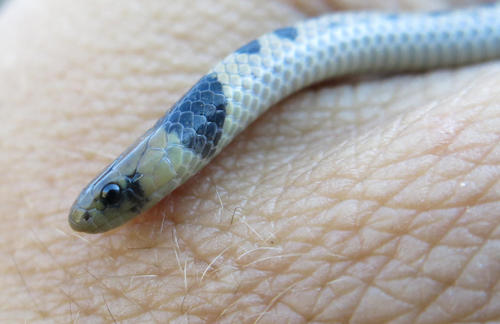 Reticulated Centipede-EaterAparallactus lunulatusHarmless
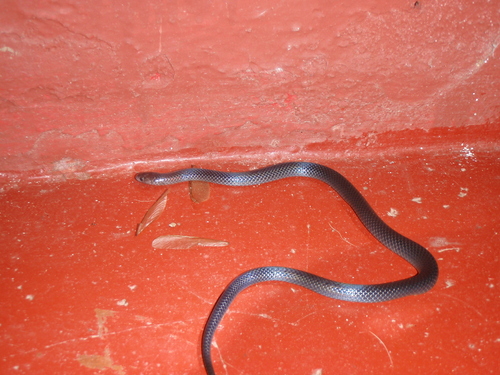 Black Centipede-EaterAparallactus guentheriHarmless
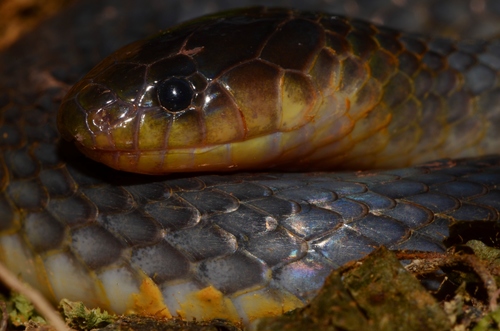 Western Forest Centipede-eaterAparallactus modestusHarmless
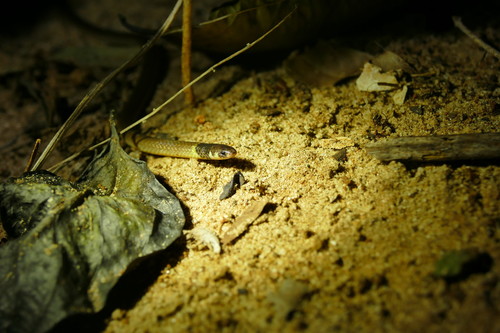 Jackson’s centipede-eaterAparallactus jacksoniiHarmless
- No photoUsambara Centipede-eaterAparallactus werneriHarmless
Keep learning
- What Is a Snake? Anatomy and the BasicsA clear overview of what makes a snake a snake: limbless body plan, anatomy, evolution from lizards, species diversity, and why they are ectothermic.
- How Snakes Move, Hunt, and EatHow snakes move without legs, hunt as ambushers or active foragers, kill by constriction or venom, and swallow prey wider than their head.
- What Do Snakes Eat?All snakes are carnivores. Learn what snakes eat, how diet changes with size and age, how often they feed, and how they hunt and swallow prey.
- Venomous vs Nonvenomous: How to Tell the DifferenceThe folk rules for telling venomous snakes apart, where each one fails, and why location-based identification beats guessing by sight.