
Genus · Anomochilidae
Types of pipe snakes
2 species make up the genus Anomochilus, the snakes commonly called pipe snakes. None are considered dangerous to humans.
About dwarf pipe snakes
Tiny, secretive burrowing snakes from Southeast Asia that are among the least-seen serpents on Earth.
Anomochilus is the only genus in the family Anomochilidae, a small lineage of primitive burrowing snakes found in Southeast Asia. Members are commonly called dwarf pipe snakes because they resemble the true pipe snakes (family Cylindrophiidae) in body plan but are smaller and even more rarely encountered. Two species sit in our database, the Mountain Pipe Snake and Leonard's Pipe Snake. These snakes belong to the broad group of basal, non-venomous fossorial snakes that retain ancient features, and they are known to science from only a handful of specimens, which makes detailed life-history information genuinely scarce.
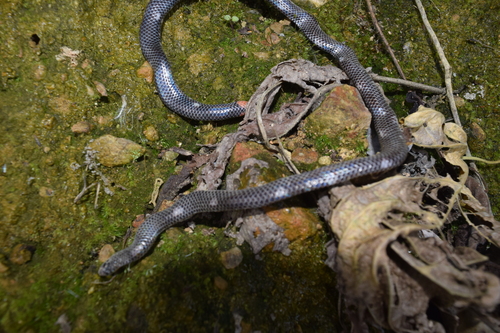
In general terms, dwarf pipe snakes are small, slender, cylindrical animals with smooth, glossy scales, a short blunt tail, and a small head that is not distinct from the neck, all adaptations for life pushing through soil and leaf litter. They live in forest habitats across parts of Borneo, the Malay Peninsula, and Sumatra, where they spend their lives underground or beneath ground cover, which is why people rarely see them. Their coloration tends toward dark bodies marked with paler spots or bands. Because so few have ever been studied, much of what is said about them is inferred from their close relatives among the primitive burrowing snakes.
These snakes are non-venomous and harmless to people. They are not rear-fanged and pose no medical danger; their small mouths and burrowing lifestyle mean they are built for tunneling, not for biting humans. Like related fossorial snakes, they are believed to feed on slender prey such as worms and other soft-bodied burrowing animals, and the family is thought to lay eggs. The honest takeaway is that Anomochilus is one of the most poorly known snake groups alive, prized by herpetologists precisely because encounters are so unusual. If you are ever unsure about any wild snake or are bitten, treat it as a medical situation and contact emergency services or US Poison Control at 1-800-222-1222.
Anomochilus belongs to the Anomochilidae family (Dwarf pipe snakes). Rare, primitive burrowing snakes of Southeast Asia. Small, cylindrical, blunt-tailed burrowers; difficult to find or identify.
Danger: Harmless.
All species (2)

Keep learning
- What Is a Snake? Anatomy and the BasicsA clear overview of what makes a snake a snake: limbless body plan, anatomy, evolution from lizards, species diversity, and why they are ectothermic.
- How Snakes Move, Hunt, and EatHow snakes move without legs, hunt as ambushers or active foragers, kill by constriction or venom, and swallow prey wider than their head.
- What Do Snakes Eat?All snakes are carnivores. Learn what snakes eat, how diet changes with size and age, how often they feed, and how they hunt and swallow prey.
- Venomous vs Nonvenomous: How to Tell the DifferenceThe folk rules for telling venomous snakes apart, where each one fails, and why location-based identification beats guessing by sight.