
Genus · Typhlopidae
Types of blind snakes
10+ species make up the genus Afrotyphlops, the snakes commonly called blind snakes. None are considered dangerous to humans.
About African blind snakes
Small burrowing blind snakes of sub-Saharan Africa that look more like shiny worms than snakes.
Afrotyphlops is a genus of blind snakes in the family Typhlopidae, the largest family of blind snakes. The genus is restricted almost entirely to Africa, mostly south of the Sahara, and includes a range of fossorial species that spend nearly all of their lives underground. As the common name suggests, these are true blind snakes, part of the broad group of typhlopids that share a worm-like body plan and a life built around burrowing.
Members of Typhlopidae, including Afrotyphlops, are recognized by traits that set them apart from typical snakes. They have small, smooth, cylindrical bodies covered in tight glossy scales that are uniform around the body, a blunt head that is not distinct from the neck, and eyes reduced to dark spots under the head scales rather than functional eyes. The mouth is small and tucked underneath the snout, and the tail is short and often ends in a tiny spine. Some Afrotyphlops species are among the larger blind snakes, with a few reaching well over a foot in length, but they remain slender and worm-like throughout.
These snakes are burrowers found in soil, leaf litter, sandy ground, termite mounds, and similar moist or loose substrates across savanna, grassland, woodland, and forest-edge habitats. They are rarely seen on the surface except after heavy rain or when soil is disturbed, which is when most people encounter them. Their range spans much of sub-Saharan Africa, with different species occupying different regions of the continent.
Afrotyphlops blind snakes are harmless to people. They are not venomous, they are not rear-fanged, and their tiny mouths are built for feeding on soft-bodied invertebrates, not for biting humans. Their diet is dominated by ants and termites, including the eggs, larvae, and pupae they find inside nests, and they locate this prey by following chemical trails underground. Like many blind snakes, several Afrotyphlops species lay eggs. They pose no danger and are often mistaken for earthworms.
Even though these snakes are harmless, the general rule with any wild snake still applies: identification in the field is not always certain, so it is wise not to handle a wild snake you cannot confidently identify. If a person is ever bitten by a snake and there is any doubt about the species, treat it as a medical situation and contact emergency care. In the US that means Poison Control at 1-800-222-1222 or local emergency services, and elsewhere the equivalent local emergency number.
Afrotyphlops belongs to the Typhlopidae family (Blindsnakes). Tiny, worm-like burrowing snakes that raid ant and termite nests. Looks like a small, glossy earthworm with smooth scales and no obvious neck, eyes, or pattern.
Danger: Harmless. They do not bite people and have no venom.
All species (13)
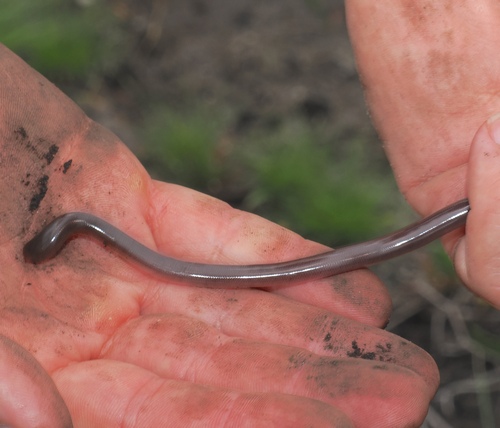 Bibron's Blind SnakeAfrotyphlops bibroniiHarmless
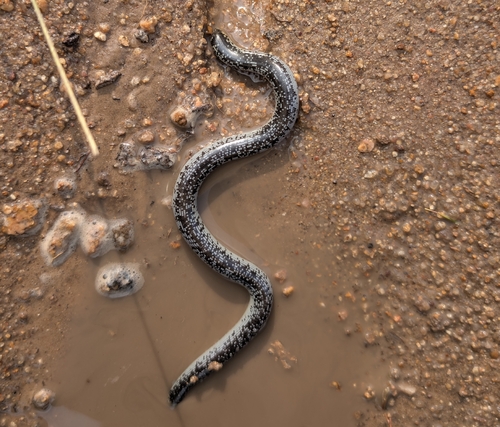 Schlegel’s Beaked blind snakeAfrotyphlops schlegeliiHarmless
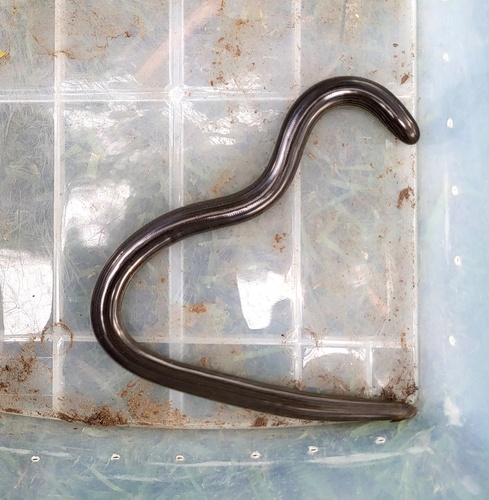 Zambezi Blind SnakeAfrotyphlops dingaHarmless
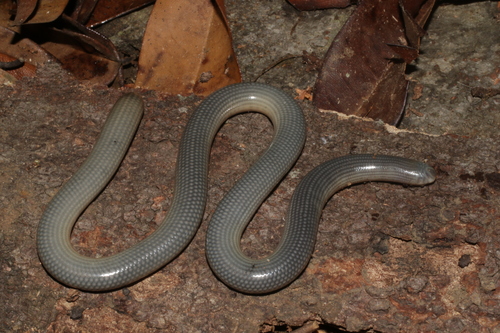 Common Lined Worm SnakeAfrotyphlops lineolatusHarmless
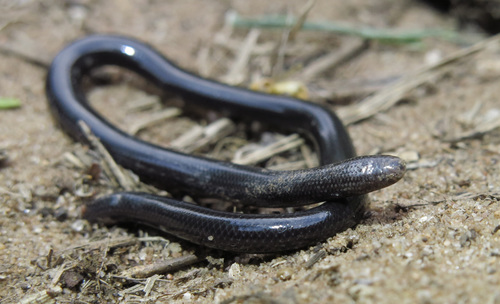 Fornasini's Blind SnakeAfrotyphlops fornasiniiHarmless
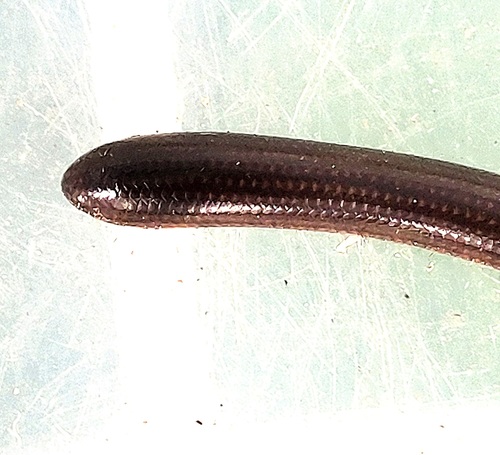 Slender Blind SnakeAfrotyphlops obtususHarmless
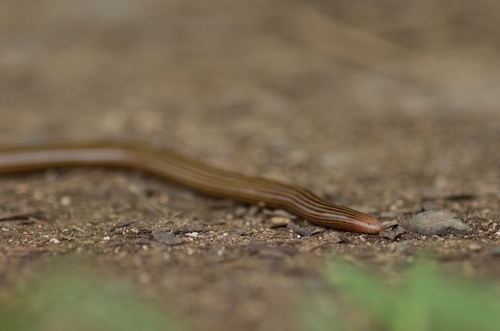 Elegant Worm SnakeAfrotyphlops elegansHarmless
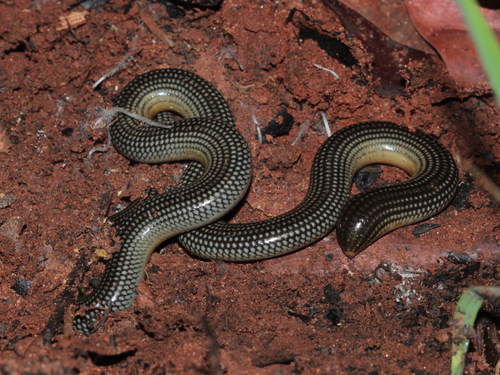 Schmidt’s blind-snakeAfrotyphlops schmidtiHarmless
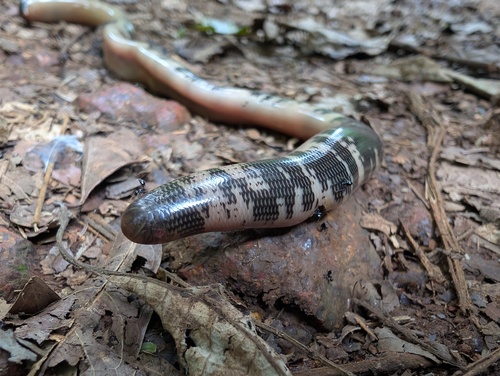 Spotted Blind SnakeAfrotyphlops punctatusHarmless
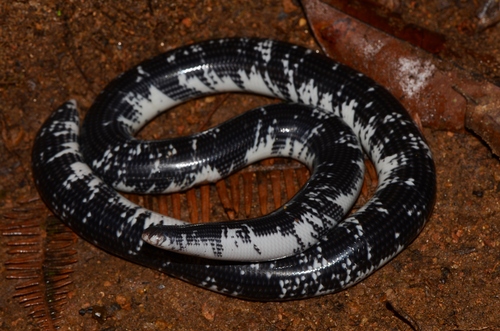 Afrotyphlops liberiensisHarmless
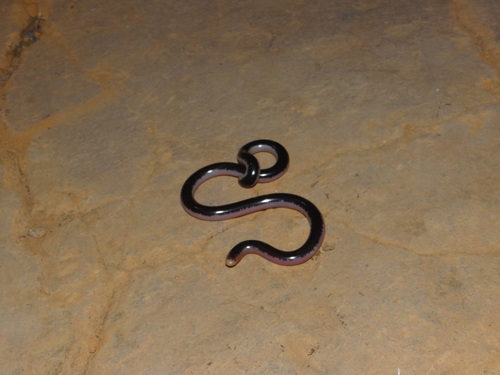 Afrotyphlops nigrocandidusHarmless
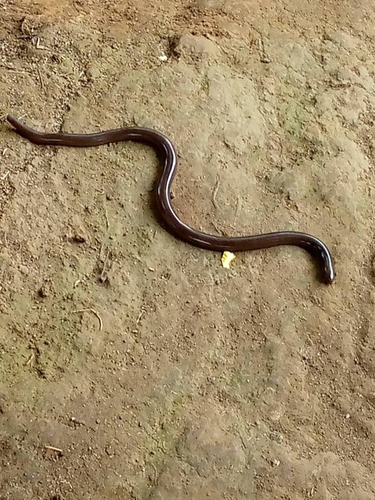 Angola blind snakeAfrotyphlops angolensisHarmless
 Blotched blind snakeAfrotyphlops congestusHarmless
Keep learning
- What Is a Snake? Anatomy and the BasicsA clear overview of what makes a snake a snake: limbless body plan, anatomy, evolution from lizards, species diversity, and why they are ectothermic.
- How Snakes Move, Hunt, and EatHow snakes move without legs, hunt as ambushers or active foragers, kill by constriction or venom, and swallow prey wider than their head.
- What Do Snakes Eat?All snakes are carnivores. Learn what snakes eat, how diet changes with size and age, how often they feed, and how they hunt and swallow prey.
- Venomous vs Nonvenomous: How to Tell the DifferenceThe folk rules for telling venomous snakes apart, where each one fails, and why location-based identification beats guessing by sight.