
Regional guide
Snakes in Florida: Venomous Species, Common Harmless Ones, and Pythons
A field guide to snakes in Florida: the six venomous species, the harmless snakes you will see most, and the invasive Burmese python in the Everglades.
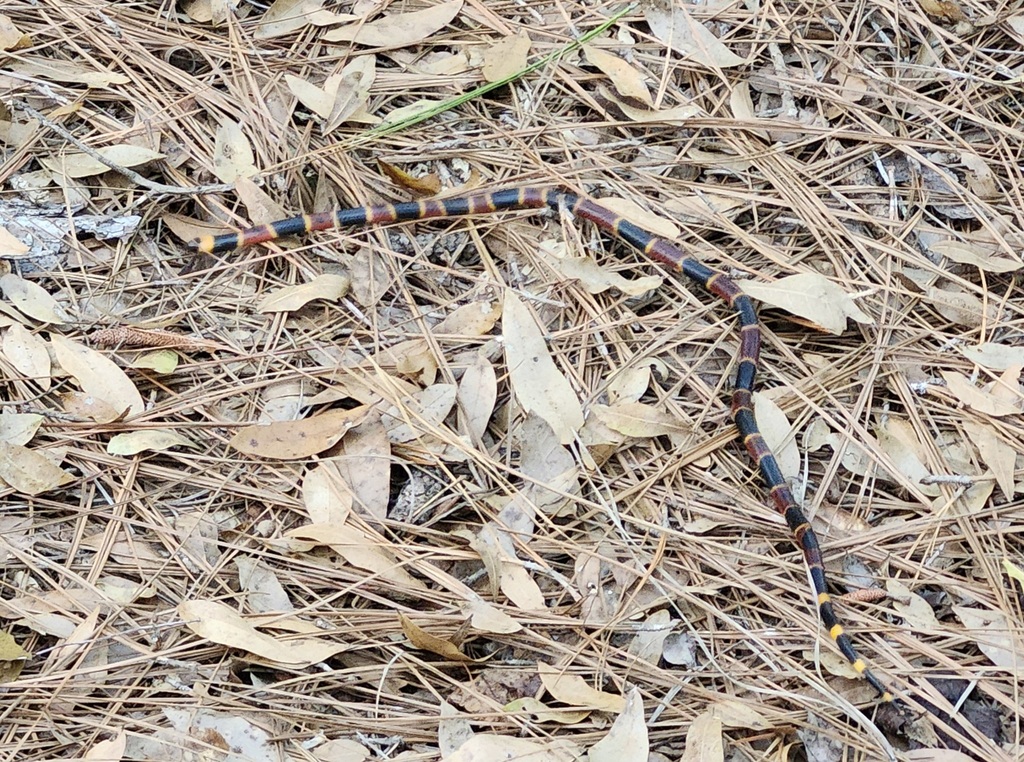
Florida has a rich snake fauna, with around fifty native species spread across its swamps, pine flatwoods, scrub, and suburbs. The overwhelming majority are harmless and beneficial, helping control rodents and other pests. Only six species are venomous, and a single invasive species, the Burmese python, has become a major story in the south of the state.
This guide covers Florida's venomous snakes, the harmless snakes you are most likely to meet, and what to know about pythons. For a full county-level breakdown, see the Florida snake guide.
Eastern Coral Snake
The eastern coral snake is Florida's only elapid, a relative of cobras with potent neurotoxic venom. It has bright bands of red, yellow, and black, with the red and yellow bands touching. The old rhyme, red touches yellow, kill a fellow, works for coral snakes in the United States, but it is not reliable everywhere, so it is a memory aid rather than a rule. Coral snakes are shy and secretive, and bites are rare.
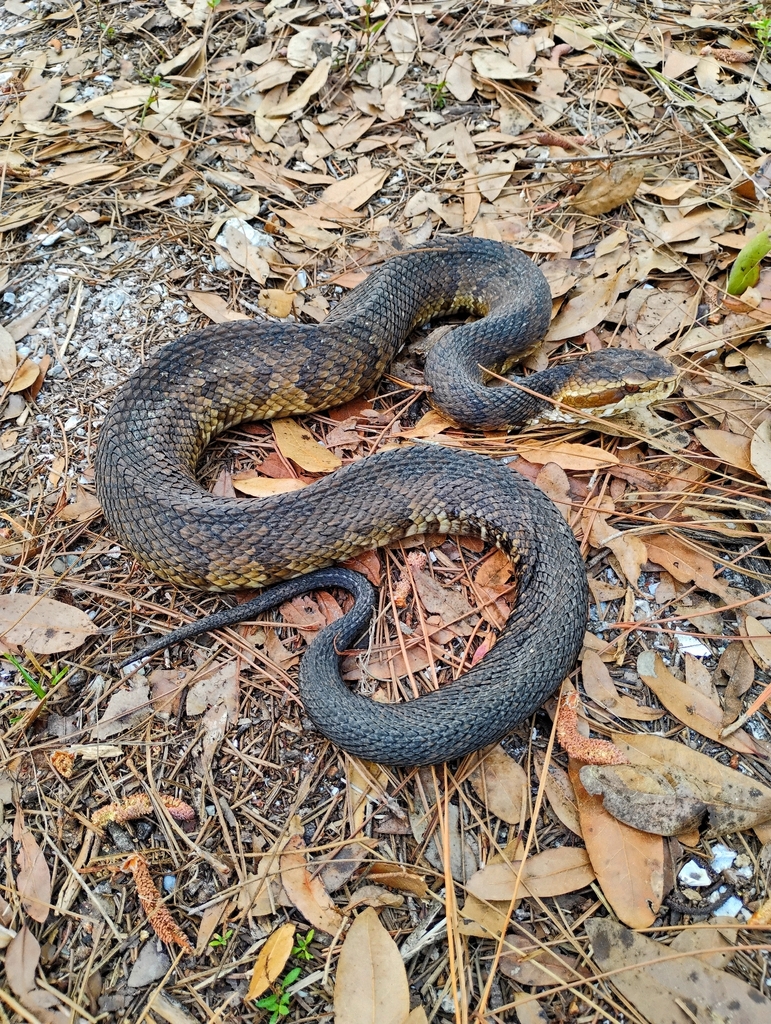
Cottonmouth
The Florida cottonmouth, also called the water moccasin, is a semi-aquatic pit viper found around lakes, ponds, ditches, and slow rivers. When threatened it may gape its mouth open to show the white interior, which gives the species its name. It is heavy-bodied and is often confused with the many harmless watersnakes that share the same habitats. If you want to tell them apart, see our cottonmouth versus watersnake comparison.
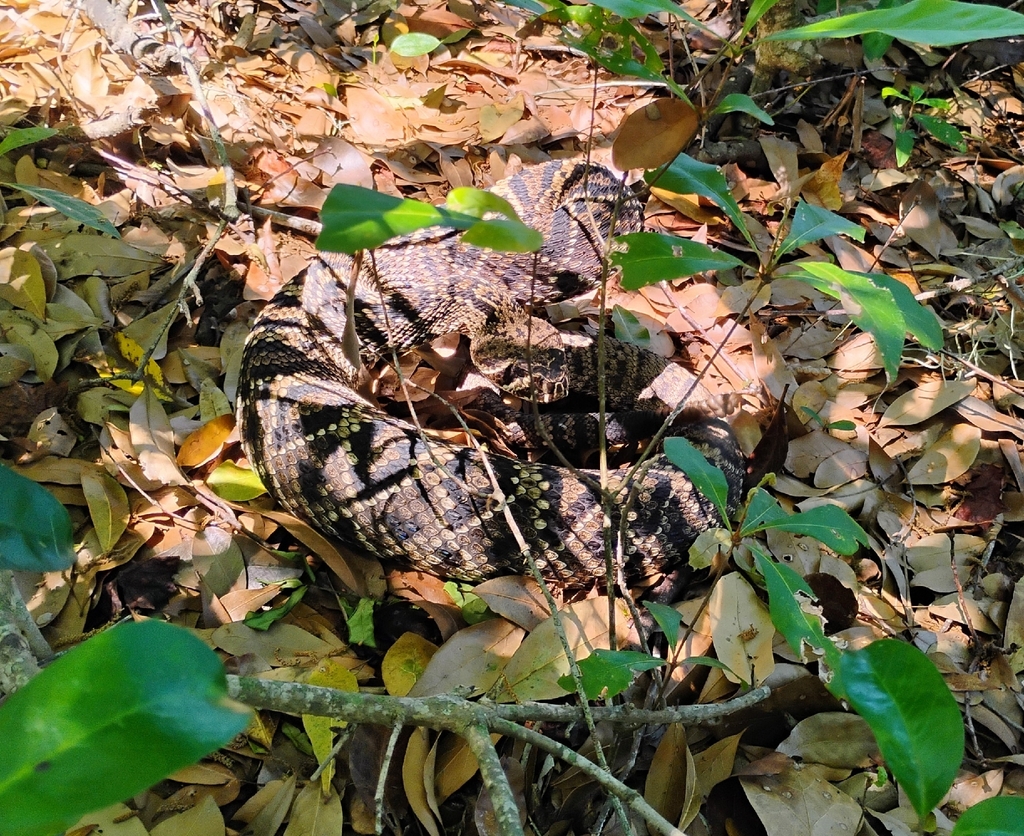
Rattlesnakes of Florida
Florida has three rattlesnakes. The eastern diamondback rattlesnake is the largest venomous snake in North America and the one to know best; it favors pine flatwoods, scrub, and palmetto. The timber rattlesnake, often called the canebrake locally, occurs in the northern part of the state. The small pygmy rattlesnake is widespread and easy to miss, with a rattle so faint it can sound like an insect.
Copperhead
The eastern copperhead is the sixth venomous species, but in Florida it is restricted to a small area of the western Panhandle along certain river systems. Most of the state has no copperheads at all. It is a pit viper with coppery, hourglass-shaped crossbands, and its bite, while painful, is rarely life threatening to a healthy adult.
Common Harmless Snakes
The snakes you are most likely to see in a Florida yard are harmless. A few of the most common include:
- The eastern ratsnake, a large climber that is excellent at controlling rats around homes and barns.
- The North American racer, a fast, slender black or grayish snake often seen darting across yards and trails.
- Watersnakes, which are frequently mistaken for cottonmouths but are non-venomous.
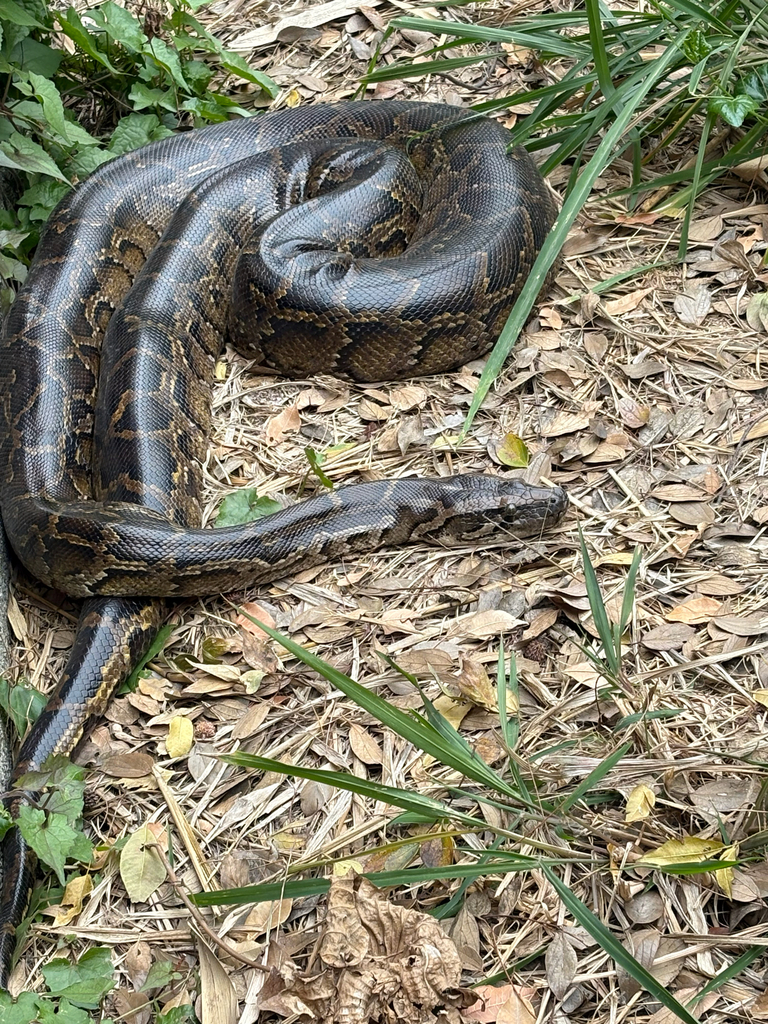
The Burmese Python
The Burmese python is not native to Florida. Released and escaped pet snakes established a breeding population in the Everglades, where these large constrictors have spread and reduced numbers of native mammals. They are non-venomous and not a typical danger to people, but they are an ecological problem, and the state runs removal programs. If you see one, report it rather than approach it.
When Are Florida Snakes Most Active
Florida's warm climate means snakes can be active year-round, but they are most visible in the warmer, wetter months from spring into fall. On hot summer days many species shift to dawn, dusk, and nighttime activity, so an evening walk near water is a more likely time to meet a cottonmouth than midday. Cooler winter days bring some species out to bask. Because the seasons here are mild, it pays to stay alert near suitable habitat in any month.
Staying Safe Around Florida Snakes
Most Florida snakes are harmless, and even the venomous ones would rather avoid you. The majority of bites happen when people try to catch or kill a snake, so the safest response to any snake is to step back and let it leave. Watch where you put your hands and feet near water, woodpiles, and palmetto, keep yards trimmed to reduce hiding spots, and wear closed shoes when walking in tall grass or along wetland edges.
To find out exactly which species occur in your county, use the Florida guide, see the full venomous snakes list, or try the identification tool when you have a photo.