
Species spotlight
Copperhead Snake Facts: Common Bites, Rarely Fatal
Copperhead snake facts: this US pit viper causes many bites but is rarely fatal. Learn its hourglass crossbands, camouflage habit, and how to identify it.
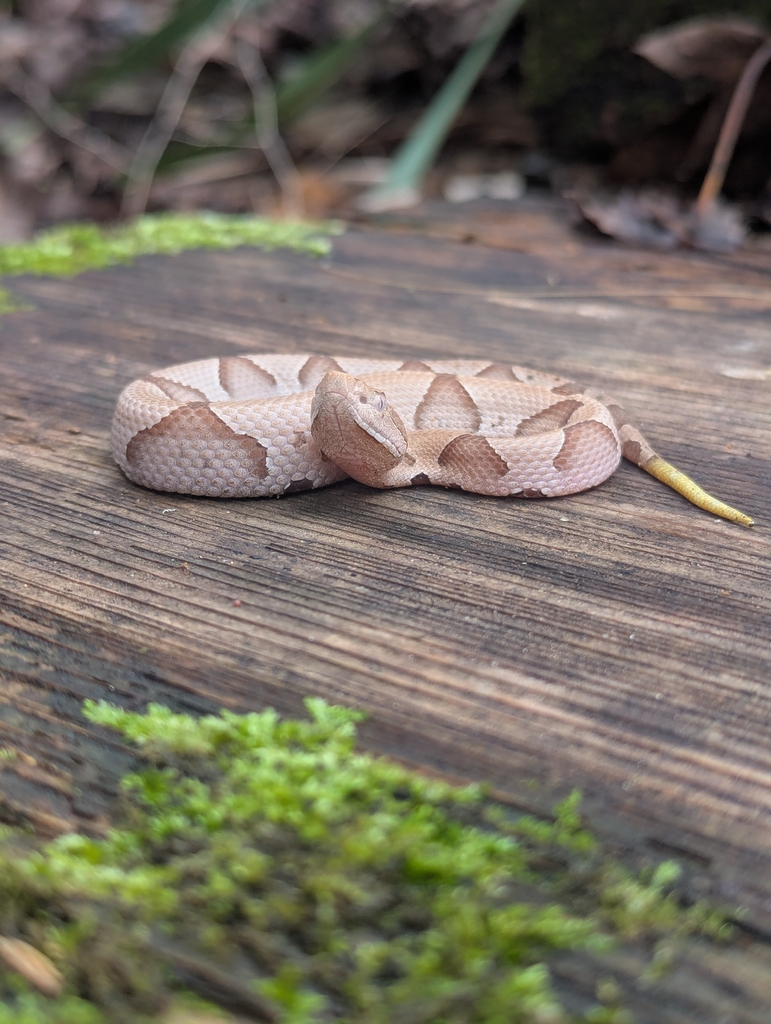
The copperhead, Agkistrodon contortrix, is responsible for more snakebites than almost any other species in the United States, yet it is rarely fatal. This is a calm, well-camouflaged pit viper of the eastern and central states, and most of its bites are defensive nips from a snake that froze in place and was stepped on or grabbed. Its copper-toned hourglass crossbands and freeze-first behavior are the keys to understanding it.
Where the copperhead lives
Copperheads range across much of the eastern and central United States, from New England and the mid-Atlantic south to the Gulf and west into Texas. They are adaptable, living in deciduous forest, rocky hillsides, stream edges, and the wood lines and gardens of suburbs. See what else shares its range on our United States snakes page and across our state and county pages.
They like cover: leaf litter, logs, stone walls, and brush piles. Because they tolerate edge habitat near homes, they are one of the venomous snakes people most often encounter in their own yards.
Size and appearance
Copperheads are medium-sized and fairly stout, usually about 2 to 3 feet long. The head is broad and somewhat triangular, often with a coppery or rusty tint, and like all U.S. pit vipers they have vertical, cat-like pupils and a heat-sensing pit between the eye and the nostril.
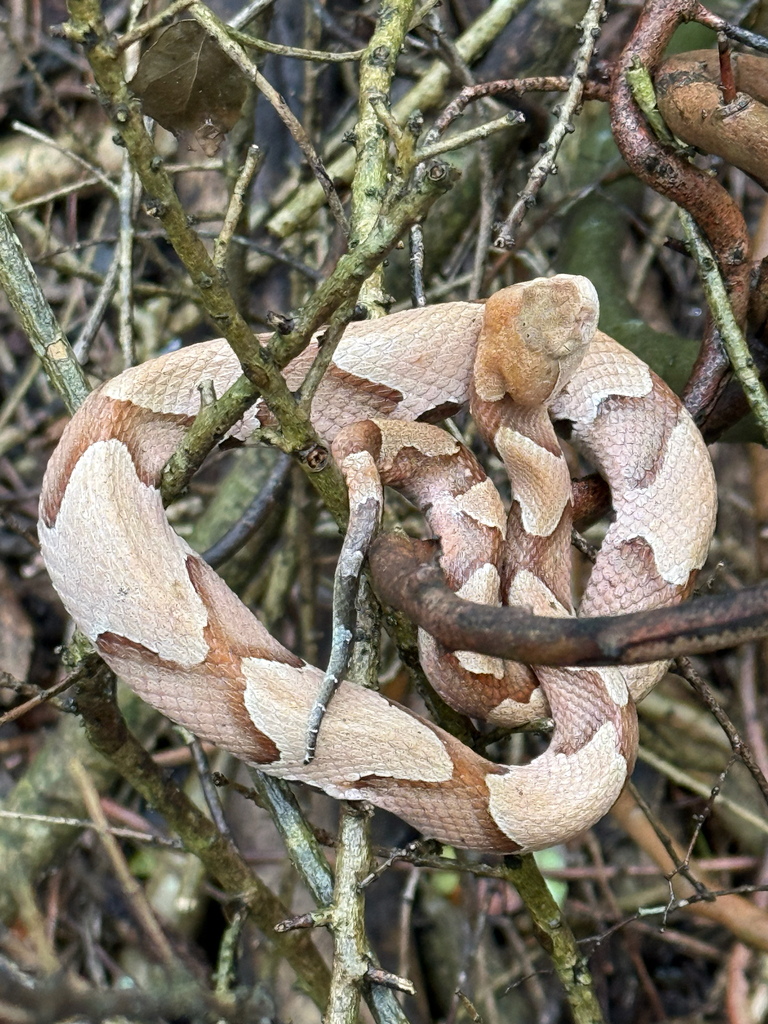
The body is tan to pinkish with darker chestnut crossbands. The bands are the signature feature: each one is wider on the sides and pinches narrow across the back, forming an hourglass or saddlebag shape. Against dead leaves the whole pattern disappears.
Venom and danger to people
Copperhead venom is hemotoxic but relatively mild compared with that of many vipers. A bite is painful and causes swelling, bruising, and tissue effects, and it always warrants medical evaluation, but it is very rarely life-threatening to a healthy adult. Children, older adults, and people with health conditions can have more serious reactions, so every bite should be taken seriously.
Copperheads account for a large share of U.S. venomous bites largely because they are common, live near people, and rely on camouflage rather than fleeing. When threatened they typically freeze, trusting their pattern, which means people step on them or reach near them without realizing they are there. Most bites happen when someone tries to handle or kill the snake. For context see the four types of venomous snakes in the US and most venomous snakes.
How to identify a copperhead
From a safe distance, look for this combination:
- Hourglass or saddlebag crossbands, wide on the sides and narrow over the back
- A tan, pinkish, or coppery base color
- A broad, somewhat triangular head, often with a copper tint
- Vertical, cat-like pupils and a heat-sensing facial pit
- A tendency to freeze and rely on camouflage rather than flee
The hourglass crossbands are the most reliable mark. Harmless snakes like young rat snakes or watersnakes have blotches that are wider across the back, the opposite of the copperhead's pinch. Read the full eastern copperhead profile or learn how to tell if a snake is venomous.
Notable facts
- It causes a large share of U.S. venomous snakebites but is rarely fatal
- Its hourglass crossbands pinch narrow across the back
- It freezes and relies on camouflage instead of fleeing
- Baby copperheads have a bright yellow or green tail tip used as a lure
- It is a pit viper, with vertical pupils and a heat-sensing pit
The copperhead is a common, mild-venomed snake that earns its high bite count through camouflage and proximity, not aggression. Watch where you step and reach in copperhead country, never try to handle or kill one, and the risk drops to almost nothing. Keep exploring with the identification tool or the snakes index.