
Identification
Watersnake vs Cottonmouth: How to Tell Them Apart
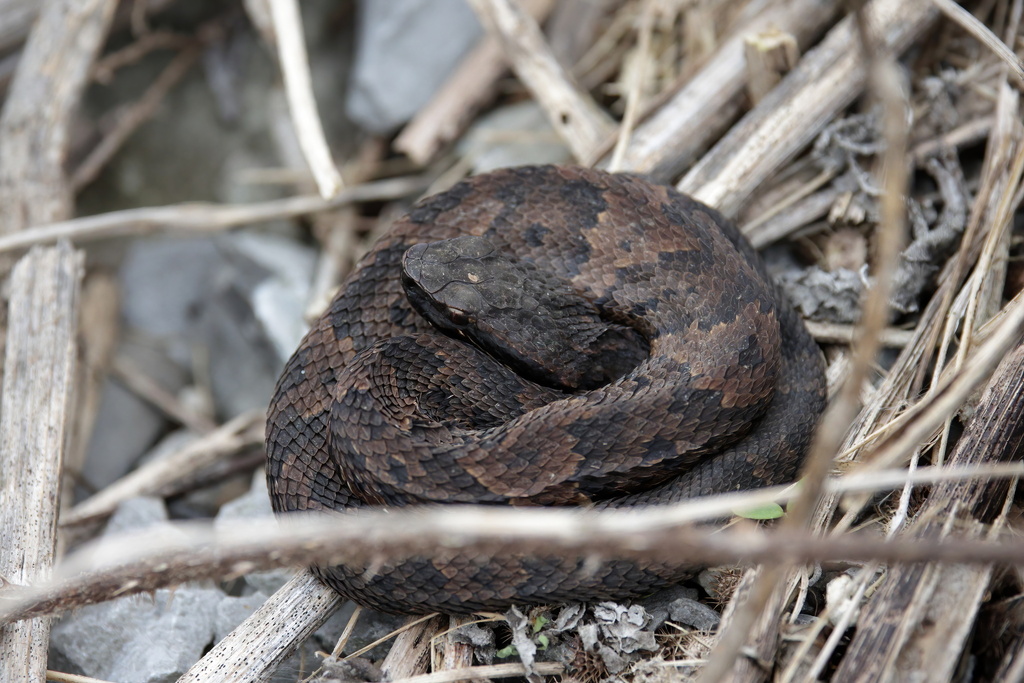
Across the southeastern and eastern United States, harmless watersnakes are mistaken for venomous cottonmouths every day, and the mistake costs many harmless snakes their lives. This guide breaks down the reliable visual and behavioral differences so you can identify what you are looking at from a safe distance. When in doubt, treat any unidentified snake as if it could be venomous and leave it alone.
Why the Two Get Confused
Northern watersnakes (genus Nerodia) and cottonmouths (Agkistrodon piscivorus) share the same habitats: ponds, slow rivers, swamps, lake edges, and drainage ditches. Both are stout, dark, semi-aquatic snakes that bask near water and swim readily, so a quick glance gives you little to work with. Watersnakes are also famous for flattening their heads and bodies and striking when cornered, which makes a harmless animal look and act far more dangerous than it is.
The practical consequence is that watersnakes are killed in huge numbers by people who assume any thick snake near water is a cottonmouth. Learning a few consistent differences protects you and the animal. No single trait is foolproof on its own, so the goal is to combine several signals rather than rely on one.
Range and Habitat Overlap
Cottonmouths live in the southeastern United States, from southeastern Virginia down through Florida and west into central Texas, plus parts of the Mississippi Valley north to southern Illinois and Indiana. If you are north or west of that range, the thick water snake you are seeing is almost certainly a harmless watersnake, not a cottonmouth. Checking a reliable range map for your specific county is one of the fastest ways to narrow the possibilities.
Watersnakes are far more widespread, with various Nerodia species found across most of the eastern and central United States. Within the cottonmouth range the two genuinely overlap, which is exactly where careful identification matters most. Habitat alone will not separate them because both use the same wetlands.
Head Shape and Eyes
Cottonmouths are pit vipers and have a noticeably blocky, triangular head that is distinctly wider than the neck, with a flat top and prominent brow ridges that give them a scowling look. They also have a heat-sensing pit between each eye and nostril, and vertical, cat-like pupils. These are reliable viper traits, but you should never get close enough to study a pupil or a facial pit on a wild snake.
Watersnakes have a more slender, rounded head that blends into the neck, round pupils, and no facial pits. The catch is that a frightened watersnake will flatten its head into a triangle to look threatening, which fools many people. So head shape helps, but read it alongside the other signals rather than treating a flat head as proof of a cottonmouth.
Swimming and Resting Behavior
How the snake moves in the water is one of the most useful field clues. Cottonmouths typically swim with the head up and much of the body riding high and buoyant on the surface. Watersnakes usually swim lower, with only the head and a thin line of the back showing while the body stays submerged.
Behavior on land and when threatened also differs. A cornered cottonmouth often holds its ground, coils, and gapes its mouth open to display the white interior, the gape that gives the species its name. Watersnakes are more likely to flee into the water, but if trapped they will flatten out, strike repeatedly, and release a foul musk. A gaping white mouth is a strong cottonmouth signal, while a fast retreat into the water leans watersnake.
Body Pattern and Color
Young cottonmouths and watersnakes can both show bold crossband patterns, which adds to the confusion. On cottonmouths the bands are often widest along the sides and narrow toward the spine, sometimes described as wide at the bottom, and the pattern fades as the animal ages until many adults look nearly solid dark brown, olive, or black. Juvenile cottonmouths frequently have a bright yellow or greenish tail tip used as a lure.
Watersnake banding varies by species but is often more uniform or even wider across the back, and the pattern usually stays visible into adulthood, though older watersnakes can also darken. A useful but not perfect tip is the underside: many watersnakes have bold dark spots or half-moon markings on a lighter belly, while cottonmouth bellies tend toward a more mottled or dark appearance. Because pattern overlaps heavily, use it only in combination with head, eyes, swimming style, and range.
The Safe Bottom Line
No matter how confident you feel, do not handle, capture, or kill a wild snake to identify it. Most bites happen when people try to catch or harass a snake, and a harmless watersnake bite, while it can bleed and sting, is medically minor compared with a venomous cottonmouth bite. Give any snake space and let it leave on its own.
If you want a definite identification, photograph the snake from a safe distance and share it with a regional herpetology group, a state wildlife agency, or an iNaturalist-style community. These resources can confirm the species without anyone getting near the animal. When you cannot identify a snake with confidence, the correct assumption is to treat it as venomous and keep your distance.
Frequently asked
- Is a snake swimming with its whole body on top of the water a cottonmouth?
- It leans that way. Cottonmouths commonly swim high and buoyant with much of the body on the surface, while watersnakes usually swim low with mostly just the head showing. Treat it as one clue among several, not proof, and check whether you are even inside the cottonmouth range.
- Do watersnakes have triangular heads like venomous snakes?
- Not naturally, but they fake it. A watersnake has a slender, rounded head, yet when threatened it flattens its head and neck into a triangle to look dangerous. That is why head shape alone is unreliable and you should combine it with swimming style, range, and behavior.
- What should I do if a watersnake or cottonmouth bites me?
- Treat any bite from a snake you cannot positively identify as potentially venomous. Move away from the snake, stay calm, keep the bitten limb still and at about heart level, remove rings or tight items, and get emergency care right away. In the US call Poison Control at 1-800-222-1222 or 911. Do not cut the wound, suck out venom, apply a tourniquet, or apply ice.
- How can I tell them apart without getting close?
- Rely on distance-friendly signals: your geographic range relative to where cottonmouths live, how the snake swims (high and buoyant versus low and submerged), and threat behavior (open white gaping mouth versus fleeing into water). Take a zoomed photo and ask a local herpetology group to confirm rather than approaching.
- Are watersnakes dangerous?
- Watersnakes are non-venomous and not dangerous to people in any medical sense, though they will bite hard and release musk if grabbed, and the bite can bleed because of mild anticoagulants in their saliva. The simplest course is to leave them alone; they help control fish and amphibian populations and pose no real threat when not handled.
Last reviewed June 22, 2026. Informational only, and not a substitute for professional medical or wildlife advice.