
Identification
Snake or Legless Lizard? How to Tell
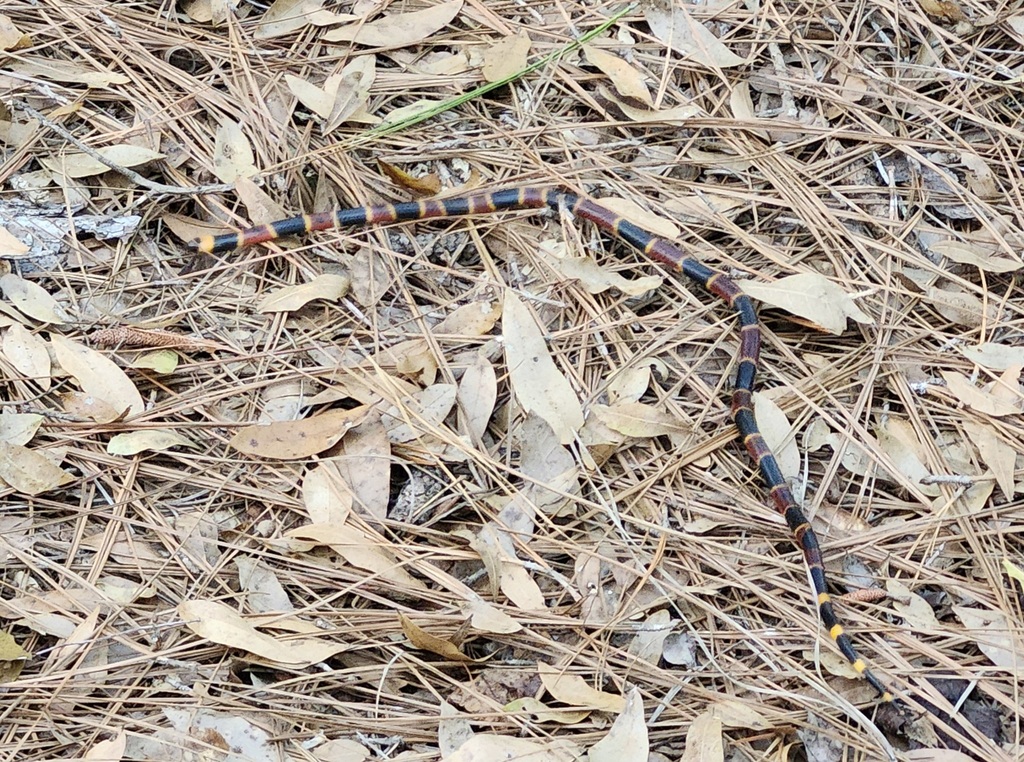
Several lizard families have lost their legs over evolutionary time, so a slender, limbless reptile in the grass is not automatically a snake. Legless lizards and snakes look alike at a glance, but they differ in features you can actually see, including movable eyelids, external ear openings, and how the tail breaks. This guide walks through the reliable tells so you can identify what you are looking at without picking it up.
Why Legless Lizards Exist and Get Confused With Snakes
Limblessness has evolved many separate times in lizards. Burrowing and grass-dwelling lifestyles favor a long, narrow body that pushes through soil and dense vegetation, and legs become a hindrance in those conditions. The result is a group of reptiles that converged on a snake-like shape without being snakes. Common examples include glass lizards in North America, slow worms in Europe, and various legless lizards in Australia and elsewhere.
Because the body plan is so similar, people regularly mistake one for the other. The good news is that lizards kept the internal and surface anatomy of their lizard relatives even after the legs disappeared. Snakes lack several of those features entirely. That gives you a checklist of differences that hold up across most species you are likely to encounter.
Eyelids: The Single Most Reliable Tell
Lizards have movable eyelids and can blink. Snakes do not. Instead of eyelids, a snake has a fixed transparent scale called a spectacle, or brille, that covers and protects the eye permanently. That is why a snake appears to stare without ever closing its eyes.
If you can watch the animal blink, or see a distinct eyelid that opens and closes, you are almost certainly looking at a lizard. This one feature resolves most identifications on its own. It is hardest to use at a distance or with a fast-moving animal, which is why the other tells below are worth knowing too.
Ear Openings on the Side of the Head
Most lizards, including legless ones, have visible external ear openings, which look like small holes or slits just behind and below the eye. Snakes have no external ear openings at all. They sense vibration through the jaw and inner ear rather than through an outer opening.
Look at the side of the head in good light. A clear ear hole points to a lizard. A smooth, uninterrupted head with no opening points to a snake. Combined with the eyelid check, ear openings give you two independent and easy-to-spot confirmations.
Tail Length and the Ability to Drop the Tail
In snakes, the tail is the short portion behind the vent, the single opening on the underside near the rear of the body. The vent usually sits well past the midpoint, so most of a snake is body, not tail. In many legless lizards, especially glass lizards, the tail is very long and can make up more than half of the total length.
Many lizards can also shed their tail when grabbed by a predator, a process called caudal autotomy. The dropped tail often wriggles to distract the attacker, then the lizard regrows a shorter, sometimes oddly colored replacement. Snakes cannot do this. A reptile with a regrown or visibly broken-and-healed tail is a lizard. Never test this by grabbing a wild animal, since you can injure it and you may not be able to confirm whether it is venomous.
Scales, Skin Texture, and Body Stiffness
Glass lizards and some other legless lizards have a flexible groove of folded skin running along each side of the body. This fold lets the body expand for breathing, eating, and carrying eggs, since their belly scales are not as specialized as a snake's. Snakes lack this lateral groove and instead have a single row of wide, overlapping belly scales, called ventral scutes, that run across the full width of the underside and aid in locomotion.
Texture and rigidity differ too. Legless lizards often feel stiffer and more brittle, which is part of why glass lizards are named for how easily the tail snaps. Snakes are generally more uniformly flexible along the whole body. If you can safely see the underside of a dead or photographed animal, the belly-scale pattern is a strong indicator: full-width single scutes mean snake.
Movement, Tongue, and Behavior
Snakes move with smooth, continuous lateral undulation and can climb, swim, and strike with notable control. Many legless lizards move more stiffly and clumsily by comparison, and they tend to stay close to ground cover. Glass lizards in particular often look jerky rather than fluid when they move.
Tongue shape is another clue, though it is harder to see. Snakes have a deeply forked tongue they flick frequently to sample scent. Many legless lizards have a tongue that is notched or only slightly forked, and they flick it less dramatically. Behavior alone is not definitive, but combined with the eyelid and ear checks it usually settles the question.
What to Do When You Cannot Tell and Why It Matters
If you genuinely cannot tell whether a limbless reptile is a snake or a lizard, treat it as a potentially venomous snake and keep your distance. Do not pick it up to inspect it. The features that confirm a lizard, such as eyelids and ear openings, can be seen from a safe distance or in a zoomed photo, so there is no reason to handle the animal to identify it.
Both snakes and legless lizards are beneficial. They eat insects, slugs, rodents, and other pests, and most species in any given area are harmless to people. The right response to either one is to leave it alone and let it move on. If you want a confirmed identification, photograph the head and body from a safe distance and submit it to a local herpetology group, a university extension service, or a community identification platform.
Frequently asked
- What is the fastest way to tell a snake from a legless lizard?
- Watch for blinking. Lizards have movable eyelids and can blink, while snakes have a fixed transparent scale over each eye and never close them. Visible ear openings on the side of the head also indicate a lizard, since snakes have none.
- Are legless lizards venomous or dangerous?
- No. Legless lizards such as glass lizards and slow worms are not venomous and are harmless to people. They eat insects, slugs, and small invertebrates. If you cannot confirm what you are looking at, stay back and treat it as a possible venomous snake until you have identified it safely from a distance or a photo.
- Why does a legless lizard have such a long tail?
- In many legless lizards the tail makes up more than half the total length and can be dropped to escape predators, then regrown. Snakes have a short tail behind the vent and cannot shed it. A reptile with a regrown or broken-and-healed tail is a lizard.
- Can you tell them apart from the belly scales?
- Often, yes. Snakes have a single row of wide belly scales that span the full width of the underside and help them move. Legless lizards lack these and frequently have a flexible fold of skin along each side of the body. Only check this on a photo or a dead animal, never by handling a live wild reptile.
- I found a limbless reptile in my yard and cannot identify it. What should I do?
- Leave it alone and give it space. Both snakes and legless lizards are beneficial and will move on by themselves. Take a clear photo of the head and body from a safe distance and submit it to a local herpetology group, university extension office, or community ID platform for a confirmed identification.
Last reviewed June 22, 2026. Informational only, and not a substitute for professional medical or wildlife advice.