
Biology & behavior
Snake Anatomy: Inside a Snake
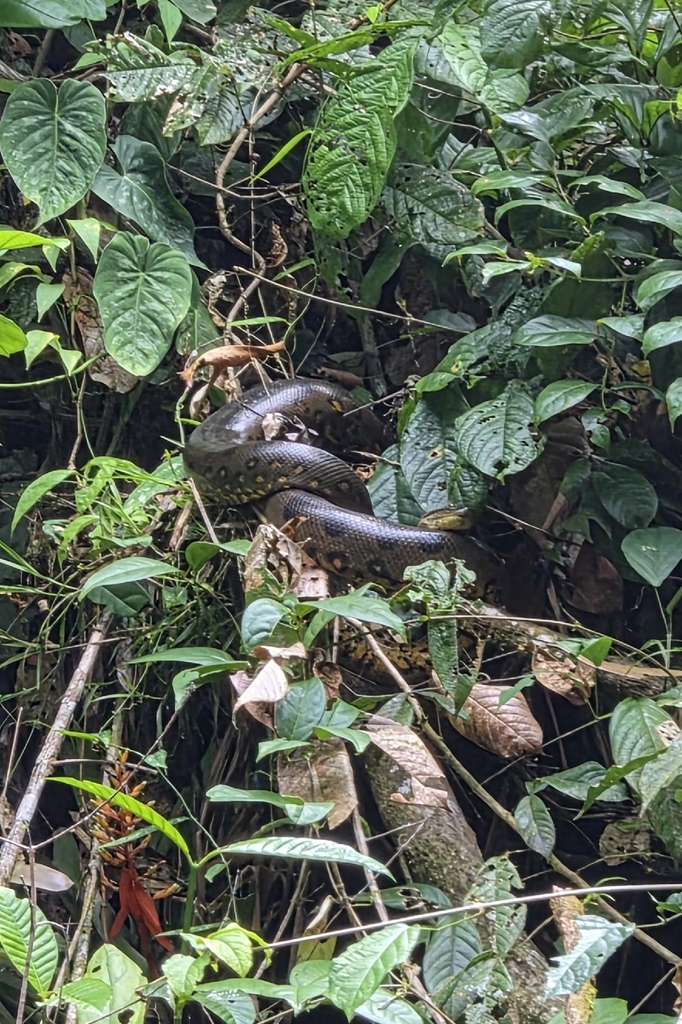
Snakes are vertebrates built on a radically stretched body plan: hundreds of ribs, paired organs arranged front to back instead of side by side, and a skull engineered to swallow prey wider than the snake's own head. Understanding that internal layout explains nearly everything a snake does, from how it moves and breathes to how it senses and feeds. This guide walks through the major systems one at a time in clear terms.
The skeleton: a spine built for length
A snake's skeleton is dominated by the vertebral column. Depending on the species, a snake can have roughly 130 to over 400 vertebrae, far more than the 33 a human has. Each trunk vertebra carries a pair of ribs, so a snake's rib count runs into the hundreds. There is no sternum tying the ribs together at the front, which lets the body flex and the rib cage spread to accommodate large prey and to grip the ground during movement.
The vertebrae interlock with extra joints that most other animals lack, giving the spine both flexibility and strength. This is what lets a snake coil tightly, climb, and still resist being crushed by struggling prey. Snakes have no limbs, no pelvic girdle in most species, and no shoulder girdle. A few primitive groups, such as pythons and boas, retain tiny vestigial hind-limb remnants called pelvic spurs, visible as small claws near the vent, which are evolutionary leftovers from limbed ancestors.
Internal organs: stretched and staggered
Because a snake is essentially a long tube, its organs cannot sit side by side the way a mammal's do. Instead they are elongated and staggered front to back. The heart sits well forward and can shift position slightly, which helps it function regardless of the snake's posture. Snakes have a three-chambered heart, with two atria and one ventricle that is partially divided.
Paired organs are reduced or offset to fit the narrow body. Most snakes have only one functional lung; the left lung is greatly reduced or absent, while the right lung is long and extends far down the body. Many species also have a tracheal lung that assists with breathing. The liver is long and slender, the kidneys are elongated and positioned one ahead of the other rather than at the same level, and the digestive tract runs nearly the full length of the animal. This staggered layout is the single most distinctive feature of snake internal anatomy.
The skull and jaws: built to swallow whole
Snakes do not chew. They swallow prey whole, often prey much larger in diameter than their own head, and the skull is engineered specifically for this. The bones of a snake's skull are loosely connected and highly mobile rather than fused into a rigid box. The two halves of the lower jaw are not fixed together at the chin; they are joined by a stretchy ligament, so each side can move independently and spread apart.
A common myth is that snakes dislocate or unhinge their jaws. They do not. Instead, the lower jaw connects to the skull through a free-floating quadrate bone that acts like an extra hinge, dramatically increasing the gape. The snake then walks its jaws over the prey, advancing one side while the other holds, using backward-curving teeth to ratchet the meal inward. Most snakes' teeth are recurved and meant for gripping, not cutting.
Skin and scales: a single continuous surface
A snake's body is covered in scales made of keratin, the same protein in human fingernails. Scales are not separate plates glued on; they are folds of a single continuous layer of skin. Dorsal scales protect the back and sides, while broad belly scales called ventral scales run crosswise underneath and help grip surfaces during locomotion. The arrangement and count of scales is so consistent within a species that herpetologists use it for identification.
Snakes grow throughout life and periodically shed their outer skin in a process called ecdysis, usually in one piece. Before shedding, the eyes often turn cloudy or bluish because the clear scale covering each eye, the spectacle or brille, also sheds. Snakes have no movable eyelids; the fixed transparent spectacle is why a snake's stare appears unblinking. The skin itself is dry and not slimy, a frequent misconception.
Senses: how a snake reads the world
Snakes rely heavily on chemical sensing. The forked tongue flicks out to collect scent particles from the air and ground, then delivers them to the vomeronasal organ, also called the Jacobson's organ, located in the roof of the mouth. The fork lets the snake sense direction, comparing concentration on each tine to follow a trail. This is the primary way many snakes track prey and mates.
Hearing and sight are more limited. Snakes have no external ears and no eardrum; they detect vibrations through the jawbone and ground rather than airborne sound. Vision varies widely by species, from sharp in active daytime hunters to dim in burrowers. Pit vipers, pythons, and boas add a remarkable sense: heat-sensing pit organs on the face that detect the infrared signature of warm prey, effectively letting them see body heat in the dark.
The venom system in venomous species
Only some snakes are venomous, and their venom apparatus is a specialized part of the head anatomy. Venom is produced in modified salivary glands, usually located behind the eyes, and travels through a duct to the fangs. Fang design varies. Vipers have long, hinged front fangs that fold back when the mouth is closed and swing forward to strike. Elapids, such as cobras and coral snakes, have shorter fixed front fangs. Many rear-fanged species have grooved teeth set further back in the mouth.
Venom itself is a complex mix of proteins and enzymes that evolved primarily to subdue and begin digesting prey, not to harm humans. Effects differ by species and can target blood, tissue, or the nervous system. None of this anatomy makes a wild venomous snake safe to approach or handle. Do not attempt to handle, capture, or identify a wild venomous snake up close. If a bite occurs, treat it as a medical emergency: call US Poison Control at 1-800-222-1222 or 911, keep the person calm and still, and get to emergency care. Do not cut, suck, apply a tourniquet, or use ice.
Reproductive and excretory anatomy
Most internal waste and reproductive functions exit through a single opening called the cloaca, located on the underside near the start of the tail. The position of this vent is the dividing line between body and tail. Male snakes have paired reproductive organs called hemipenes, normally held inverted inside the base of the tail, which is one reason a male's tail often looks slightly thicker and longer past the vent than a female's.
Snakes reproduce in different ways depending on species. Many lay eggs, a strategy called oviparity, while others, including many vipers and boas, give live birth in a form called viviparity or ovoviviparity. The reproductive tract, like the rest of the snake, is elongated to fit the body. As with other organs, the staggered, lengthwise arrangement is the recurring theme of snake anatomy.
Frequently asked
- Do snakes really unhinge or dislocate their jaws?
- No. That is a myth. The lower jaw stays attached, but it connects through a mobile quadrate bone and the two jaw halves are joined by a stretchy ligament rather than fused, so the mouth can open extremely wide without anything dislocating.
- How many bones does a snake have?
- It varies by species, but a snake can have several hundred vertebrae, with a pair of ribs on most trunk vertebrae. That adds up to many hundreds of bones, far more than the roughly 206 bones in an adult human.
- Do snakes have two lungs?
- Most snakes have only one fully functional lung, the long right lung. The left lung is greatly reduced or absent because the narrow body cannot fit two full-sized lungs side by side. Some species also have a tracheal lung that aids breathing.
- Can snakes hear?
- Snakes have no external ears or eardrum, so they do not hear airborne sound the way we do. They detect ground vibrations and low-frequency sound through their jawbone and inner ear, which is enough to sense approaching movement.
- Why do snakes flick their tongues?
- The forked tongue collects scent particles from the air and surfaces and delivers them to the Jacobson's organ in the roof of the mouth. The fork helps the snake sense which direction a scent is stronger, so it can follow prey, mates, or trails.
Last reviewed June 22, 2026. Informational only, and not a substitute for professional medical or wildlife advice.