
Biology & behavior
Can Snakes Climb, Swim, and Dig?
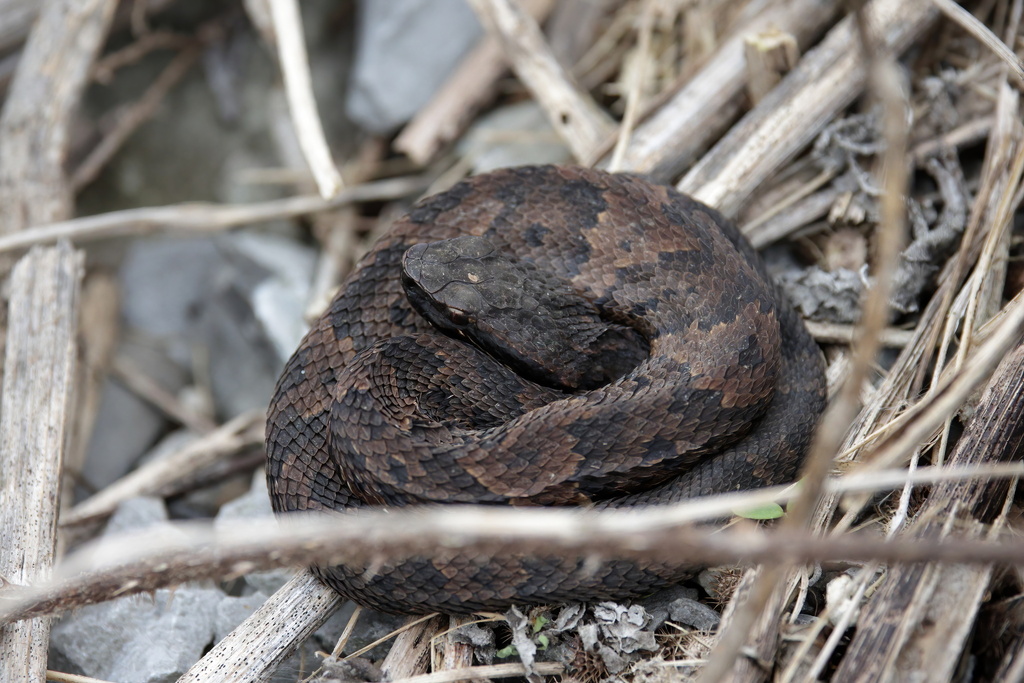
Snakes are far more mobile than most people expect. The same animal can climb a tree, cross a pond, and slip into a ground burrow within a single day. Understanding how snakes climb, swim, dig, and even glide explains why they show up in attics, garages, and other spots that seem out of reach, and why fully sealing a building against them is so difficult.
Yes, many snakes climb well
Climbing is normal snake behavior, not an exception. Rat snakes, racers, many tree snakes, and a range of other species regularly climb trees, fences, brick walls, and rough siding.
Snakes climb using a method called concertina locomotion. They anchor part of the body against a surface or crevice, push or pull, then re-anchor with another section. Belly scales catch on bark, mortar lines, screen, and other small irregularities for grip.
This is why snakes turn up in places people assume are safe. A rat snake hunting birds or eggs can reach a roofline, follow a gutter, and enter an attic through a gap near the eaves or a vent.
How a snake gets into a wall or attic
Snakes do not need much. A gap roughly the width of a pencil can be enough for a smaller individual, and they readily follow vertical surfaces upward.
Common routes include rough exterior walls, downspouts, overhanging tree branches that touch the roof, and utility lines entering the building. Once at the top, snakes look for the same openings rodents use: soffit gaps, roof vents, and spaces where pipes or wires pass through.
In many cases a snake in an attic is following prey. Where there are mice or rats, a climbing snake may simply be hunting and end up inside.
Nearly all snakes can swim
Swimming is close to universal among snakes. Even species that spend their lives on dry land can swim when they need to cross water, escape a threat, or reach prey.
Snakes swim by moving the body in lateral waves, pushing against the water much like an eel. Most land snakes ride fairly high, with the head above the surface and the body near the top of the water.
Because swimming is so common, a snake crossing a pool, pond, or flooded yard is not necessarily a water specialist. It may just be a terrestrial snake getting from one place to another.
Water snakes and sea snakes are the specialists
Some snakes are built for water. Watersnakes in the genus Nerodia hunt fish and amphibians in rivers, lakes, and wetlands and are strong, frequent swimmers. They are harmless but are often mistaken for venomous species.
Sea snakes go further. They are fully marine, with a paddle-shaped tail and the ability to take in some oxygen through their skin, which lets them stay submerged for long stretches. They live in warm coastal waters and are not found in North American backyards.
Telling a harmless watersnake from a venomous cottonmouth by sight is tricky for non-experts. The key practical rule is to leave any swimming snake alone and let it pass.
The cottonmouth chasing myth
A persistent story claims that cottonmouths, also called water moccasins, chase people across the water or on land. This is not supported by how the animals actually behave.
Cottonmouths are venomous and will stand their ground when cornered. A threatened cottonmouth may hold its position, gape to show the white lining of its mouth, vibrate its tail, or release musk. Those are warnings, not pursuit.
What people read as chasing is usually a snake heading toward the nearest cover, which can happen to be in the observer's direction, or a snake in the water moving toward the only available bank. Researchers who have tested this found that cottonmouths overwhelmingly try to flee or bluff rather than advance. Give any cottonmouth room and it will leave.
Burrowing: a few dig, many borrow
True digging is limited to certain snakes. Specialized burrowers such as wormsnakes and various sand-dwelling species have reinforced, often pointed snouts that let them push through loose soil.
Most snakes do not excavate their own tunnels. Instead they use existing holes made by rodents, chipmunks, turtles, and other animals, along with natural cracks, root channels, and gaps under rocks, logs, and slabs.
This matters for the home. Snakes commonly shelter in old rodent burrows next to a foundation, under decks and sheds, in wood and rock piles, and in mulch. Reducing those harborage spots does more than trying to find a den a snake dug itself.
The gliding flying snakes of Asia
A small group of tree-dwelling snakes in the genus Chrysopelea, native to South and Southeast Asia, can glide from tree to tree. They are commonly called flying snakes, though they do not truly fly.
A flying snake launches from a high branch, flattens its body into a wider, concave shape, and undulates in the air to generate lift and steer. This lets it travel a meaningful horizontal distance to a lower target.
These snakes are not found in North America and pose no household concern there. They are worth knowing about because they show just how far snake locomotion can range, from gliding through the air to swimming the open ocean.
Why this makes snake-proofing hard
Put the abilities together and the problem is clear. A snake can arrive over the ground, up a wall, across water, or through an existing burrow, so there is no single entry point to block.
Effective exclusion focuses on the basics rather than chasing every behavior. Seal gaps a quarter inch and larger around the foundation, doors, vents, pipes, and utility lines. Install tight door sweeps and screen vents and weep holes.
Then remove the reasons snakes come close: control rodents, keep grass short, clear wood, rock, and debris piles, move firewood off the ground and away from walls, and trim branches that bridge to the roof. You will not make a property perfectly snakeproof, but you can make it far less attractive and much harder to enter.
Frequently asked
- Can snakes really climb straight up a wall?
- Many can climb rough or textured vertical surfaces such as brick, stucco, screen, and bark by anchoring sections of the body in small irregularities. Perfectly smooth surfaces like clean glass or sheet metal are much harder for them and usually stop a climb.
- Do all snakes swim?
- Nearly all snakes can swim when they need to, including species that live entirely on land. Water snakes and sea snakes are the true specialists, but seeing a snake in the water does not mean it is one of them.
- Will a cottonmouth chase me?
- No. Cottonmouths defend themselves with warnings such as gaping, tail vibration, and musk, and they generally try to escape. What looks like chasing is usually a snake moving toward cover or the nearest bank. Give it space and it will leave.
- Do snakes dig their own burrows?
- A few specialized species dig in loose soil, but most snakes do not. They use burrows made by rodents and other animals, along with natural cracks and spaces under rocks, logs, decks, and debris.
- Are flying snakes dangerous to me?
- Flying snakes live only in South and Southeast Asia and glide between trees rather than truly flying. They are not found in North America and are not a household concern there.
- How did a snake get into my attic?
- Most likely it climbed. Snakes follow rough walls, downspouts, utility lines, or overhanging branches to the roof, then enter through soffit gaps, vents, or openings around pipes, often while hunting rodents already inside.
Last reviewed June 22, 2026. Informational only, and not a substitute for professional medical or wildlife advice.