
Genus · Colubridae
Xyelodontophis
The genus Xyelodontophis contains a single species. It is not considered dangerous to humans.
About dagger-tooth vine snakes
A rare African colubrid known from a single slender, tree-dwelling species with an unusual enlarged fang in the front of the jaw.
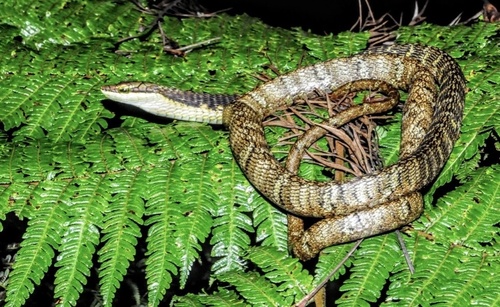
Xyelodontophis is a small genus in the family Colubridae, the largest and most diverse snake family in the world. As currently understood it contains a single species, the dagger-tooth vine snake (Xyelodontophis uluguruensis), described from the Uluguru Mountains of eastern Tanzania. The genus name refers to the distinctive dagger-shaped front tooth that set it apart when it was first recognized. It sits among the slender, arboreal colubrids of East Africa and is closely allied to the well-known vine and twig snakes of the genus Thelotornis.
This is a forest snake of montane East Africa, and what little is recorded comes from wooded and forest-edge habitats in the mountains of Tanzania. Members are slender and elongated in the typical vine-snake mold, built for moving through branches and foliage rather than living on the ground. In general terms, snakes of this body plan are recognized by a very thin body, a long tapering tail, large eyes, and a narrow head, with coloration that blends into twigs and leaves. Because the species is so rarely encountered, field identification rests mostly on its overall vine-snake shape and its mountain-forest range rather than on a long list of confirmed field marks.
Xyelodontophis is rear-fanged, meaning it carries enlarged grooved teeth toward the back of the upper jaw rather than hollow front fangs like a viper or cobra. Its close relatives in Thelotornis are among the few rear-fanged colubrids whose venom is genuinely dangerous to people, capable of interfering with blood clotting, and there is no commercial antivenom for that group. Given that relationship and how little is known about this snake specifically, it should be treated with caution and never handled. Do not attempt to catch, restrain, or pick up any wild snake of this type. If a bite occurs, treat it as a medical emergency, keep the person calm and still, and seek care immediately by calling local emergency services or, in the United States, Poison Control at 1-800-222-1222. As an arboreal predator in the vine-snake mold, this genus is expected to hunt small vertebrates such as lizards and frogs, relying on slow, deliberate movement and camouflage; details of its reproduction and behavior remain poorly documented because of how seldom it is found.
Xyelodontophis belongs to the Colubridae family (Colubrids). The largest snake family, and the one most snakes you meet belong to. Typically round pupils, a head only slightly wider than the neck, and no heat-sensing facial pit or rattle. Scales may be smooth and glossy or keeled and matte depending on the species.
Danger: Almost all colubrids are harmless. A small number are rear-fanged with medically significant venom, the boomslang and the twig (vine) snakes of Africa being the dangerous exceptions. Most colubrids will flee or bluff rather than bite.
All species (1)
Keep learning
- What Is a Snake? Anatomy and the BasicsA clear overview of what makes a snake a snake: limbless body plan, anatomy, evolution from lizards, species diversity, and why they are ectothermic.
- How Snakes Move, Hunt, and EatHow snakes move without legs, hunt as ambushers or active foragers, kill by constriction or venom, and swallow prey wider than their head.
- What Do Snakes Eat?All snakes are carnivores. Learn what snakes eat, how diet changes with size and age, how often they feed, and how they hunt and swallow prey.
- Venomous vs Nonvenomous: How to Tell the DifferenceThe folk rules for telling venomous snakes apart, where each one fails, and why location-based identification beats guessing by sight.