
Genus · Xenotyphlopidae
Xenotyphlops
The genus Xenotyphlops contains a single species. It is not considered dangerous to humans.
About Madagascar blindsnakes
A tiny, burrowing blindsnake genus found only in northern Madagascar, so specialized it sits in a family all its own.
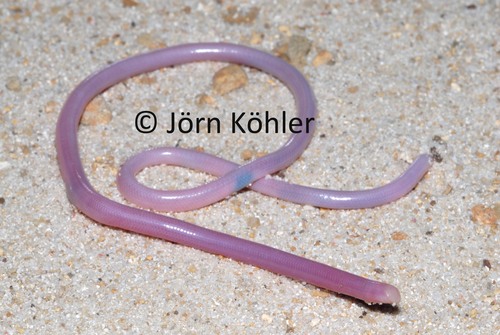
Xenotyphlops is a genus of small, worm-like blindsnakes that lives only in the dry sandy soils of far northern Madagascar. It is the sole genus in the family Xenotyphlopidae, meaning it is distinct enough from all other blindsnakes to stand apart at the family level. The best known member is the Madagascar blindsnake, a secretive species that spends almost its entire life underground. These are not the snakes most people picture: they are slender, cylindrical, and easily mistaken for earthworms.
Like other blindsnakes, members of Xenotyphlops have a tube-shaped body, smooth scales, and eyes reduced to dark spots beneath the skin, since vision is of little use in soil. What sets the genus apart is its head structure, including a distinctive enlarged, rounded scale at the snout that helps it push through sand. They are burrowing animals adapted to a fossorial life, and they are very rarely seen at the surface. Because so few specimens have ever been found, much about their biology is known only in broad outline drawn from the family and related blindsnakes.
These snakes are completely harmless to people. They have no venom, tiny mouths, and feed on small soil invertebrates such as ant and termite larvae, like other blindsnakes. They pose no danger and cannot meaningfully bite a human. If you ever encounter one, there is no medical concern, though as a rule any unfamiliar wild snake is best observed rather than handled. For any snakebite emergency anywhere, contact US Poison Control at 1-800-222-1222 or your local emergency services.
Xenotyphlops belongs to the Xenotyphlopidae family (Madagascar blindsnake). A single, critically rare blindsnake found only in Madagascar. A small, pale, worm-like blindsnake with a distinctive round head shield.
Danger: Harmless.
All species (1)
Keep learning
- What Is a Snake? Anatomy and the BasicsA clear overview of what makes a snake a snake: limbless body plan, anatomy, evolution from lizards, species diversity, and why they are ectothermic.
- How Snakes Move, Hunt, and EatHow snakes move without legs, hunt as ambushers or active foragers, kill by constriction or venom, and swallow prey wider than their head.
- What Do Snakes Eat?All snakes are carnivores. Learn what snakes eat, how diet changes with size and age, how often they feed, and how they hunt and swallow prey.
- Venomous vs Nonvenomous: How to Tell the DifferenceThe folk rules for telling venomous snakes apart, where each one fails, and why location-based identification beats guessing by sight.