
Genus · Elapidae
Walterinnesia
The genus Walterinnesia contains a single species. It is venomous.
About desert black snakes
Walterinnesia are glossy, all-black desert cobras of the Middle East and a few are dangerously venomous.
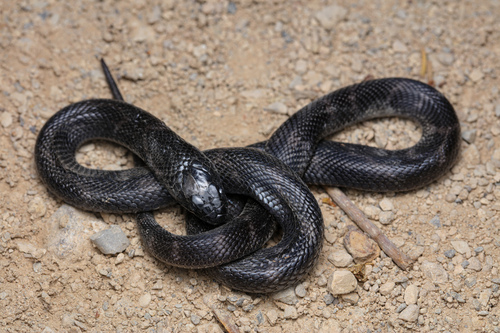
Walterinnesia is a small genus in the family Elapidae, the same front-fanged group that includes true cobras, mambas, coral snakes, and sea snakes. The best known member is the Western Black Desert Cobra (Walterinnesia aegyptia), with a second recognized species ranging farther east. These snakes are uniform glossy black or very dark, with smooth shiny scales, a body that is moderately stout, and no hood display of the kind people expect from typical cobras. They are sometimes called desert black snakes or black desert cobras because of that color and where they live.
The genus is tied to the arid lands of the Middle East and adjacent regions, including parts of Egypt, the Levant, the Arabian Peninsula, and nearby dry country. Members favor deserts, semi-deserts, rocky slopes, and sparse scrub, and they are largely nocturnal, sheltering in burrows, under rocks, or in vegetation during the heat of the day and emerging after dark to hunt. Like most elapids they lay eggs. Their diet centers on small vertebrates such as lizards, smaller snakes, rodents, and amphibians, which they subdue with venom.
These are genuinely venomous front-fanged snakes and should be treated as dangerous, not handled. The uniform black coloring can cause people to mistake them for harmless dark snakes, which is exactly why caution matters. The safe response to any wild snake, especially one you cannot confidently identify in this region, is to keep your distance and leave it alone. If a bite occurs, treat it as a medical emergency, keep the person calm and still, and get to professional medical care immediately rather than attempting any field treatment. In the United States contact Poison Control at 1-800-222-1222, and elsewhere call local emergency services.
Walterinnesia belongs to the Elapidae family (Cobras, mambas, coral & sea snakes). Front-fanged venomous snakes, many with potent neurotoxic venom. Usually slender with a head barely wider than the neck and fixed front fangs (not the folding fangs of vipers). Coral snakes are boldly ringed; sea snakes have a flattened, paddle-like tail.
Danger: All elapids are venomous and the family is responsible for a large share of fatal snakebites worldwide. Many are shy, but bites can be life-threatening. Treat any bite as a medical emergency.
All species (1)
Keep learning
- Venomous vs Nonvenomous: How to Tell the DifferenceThe folk rules for telling venomous snakes apart, where each one fails, and why location-based identification beats guessing by sight.
- Are Snakes Dangerous? The Real Risk, in PerspectiveMost snakes are harmless and avoid people. Here is the honest picture of snakebite risk worldwide and how to lower your own.
- Snake Venom Explained: How It Works and WhyWhat snake venom actually is, why it evolved, the main venom types, fang delivery, how antivenom works, and why ranking the most venomous snake is hard.
- How Snakes Move, Hunt, and EatHow snakes move without legs, hunt as ambushers or active foragers, kill by constriction or venom, and swallow prey wider than their head.