
Genus · Colubridae
Wallaceophis
The genus Wallaceophis contains a single species. It is not considered dangerous to humans.
About Wallace's striped snake
A single rare, harmless colubrid known only from a small part of western India.
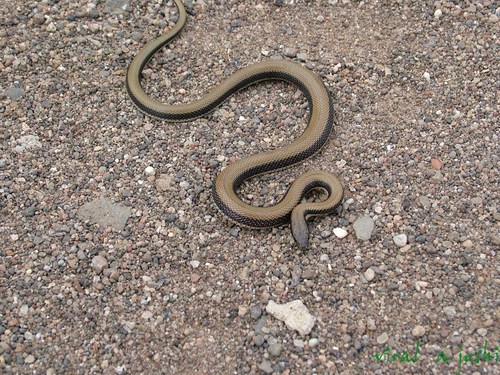
Wallaceophis is a genus in the large family Colubridae, the group that holds the majority of the world's snakes. It was named in 2016 and contains just one described species, Wallace's striped snake (Wallaceophis gujaratonis). As a monotypic genus, everything known about it comes from this one slender, ground-dwelling species. The name honors the naturalist Alfred Russel Wallace, and the species name points to Gujarat in western India, where the snake was found.
Members are recognized in general terms by the traits typical of slim terrestrial colubrids: a moderately elongate body, smooth or lightly keeled scales, and a patterned back. The common name reflects longitudinal striping along the body. Because the genus is so poorly known and restricted to a small area of the Indian subcontinent, fine identification is best left to regional snake references and local herpetologists rather than to broad rules.
Like the vast majority of colubrids, this snake is harmless to people. It is not a member of the front-fanged venomous families such as vipers or elapids, and it poses no medical threat in normal encounters. Even so, no wild snake should be picked up or handled, since identification in the field is easy to get wrong and any bite carries infection risk. If a venomous snake bite is ever suspected, treat it as an emergency and contact local emergency services or, in the US, Poison Control at 1-800-222-1222. As a typical small colubrid it would be expected to feed on small prey such as lizards or invertebrates and to live a secretive, ground-based life, though detailed diet, reproduction, and behavior for this rare species remain little documented.
Wallaceophis belongs to the Colubridae family (Colubrids). The largest snake family, and the one most snakes you meet belong to. Typically round pupils, a head only slightly wider than the neck, and no heat-sensing facial pit or rattle. Scales may be smooth and glossy or keeled and matte depending on the species.
Danger: Almost all colubrids are harmless. A small number are rear-fanged with medically significant venom, the boomslang and the twig (vine) snakes of Africa being the dangerous exceptions. Most colubrids will flee or bluff rather than bite.
All species (1)
Keep learning
- What Is a Snake? Anatomy and the BasicsA clear overview of what makes a snake a snake: limbless body plan, anatomy, evolution from lizards, species diversity, and why they are ectothermic.
- How Snakes Move, Hunt, and EatHow snakes move without legs, hunt as ambushers or active foragers, kill by constriction or venom, and swallow prey wider than their head.
- What Do Snakes Eat?All snakes are carnivores. Learn what snakes eat, how diet changes with size and age, how often they feed, and how they hunt and swallow prey.
- Venomous vs Nonvenomous: How to Tell the DifferenceThe folk rules for telling venomous snakes apart, where each one fails, and why location-based identification beats guessing by sight.